- Places to go
- Things to do
- Book your trip
- More
Get instant answers to your Greece travel questions
Including the ancient monuments of Athens, Delphi, Mycenae and Epidaurus, the majesty of the Meteora, the romance of Nafplio, the Venetian harbours and Minoan heritage of Crete, and the Cycladic sophistication of Santorini – this 15-day itinerary in Greece is designed to be completed in full or in part. It combines ancient history, mainland landscapes and island life and is for anyone who wants to experience the full depth and variety of Greece, moving between iconic landmarks and quieter, less-visited corners in a single trip.
To minimise packing and unpacking, use Athens, Nafplio, Chania, Rethymno and Santorini as your main bases and explore nearby highlights as day trips. The itinerary is designed to be flexible, so extend your stay anywhere, or add and remove destinations to suit your time and interests. May-June and September-October offer a combination of comfortable temperatures, fewer crowds and good conditions for the beaches of the Athens Riviera.
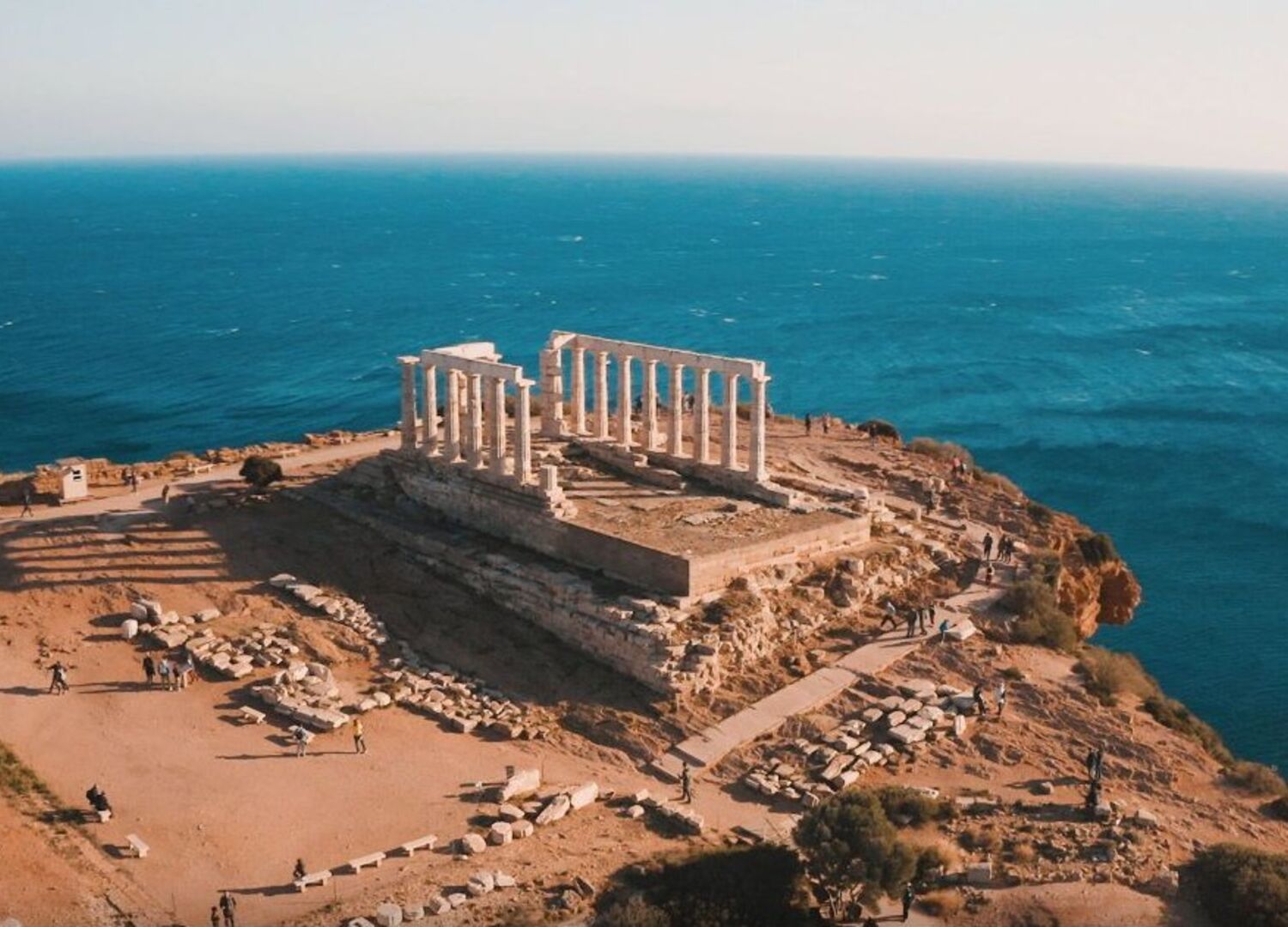
The first day of your Greece itinerary takes you to Sounion at the tip of Attica – easily reached from Athens city centre or the airport – where the Temple of Poseidon has presided since the mid-5th century BC. Your first of many swims and seafood meals follow as naturally as the sun setting over the Aegean.
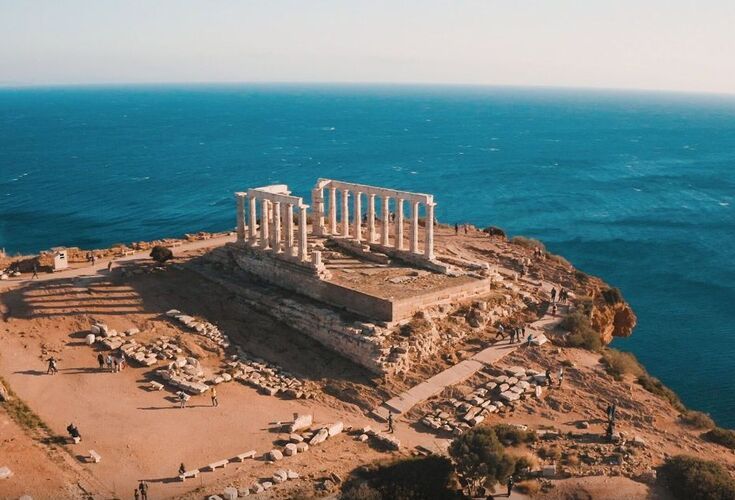
The Temple of Poseidon at Cape Sounion was built in around 444-440 BC – the same era as the Parthenon and other great monuments of the Acropolis. It formed part of a Sacred Triangle with the Temple of Aphaia on Aegina and the Temple of Hephaestus in Athens, replacing an earlier temple destroyed by the Persians. After the Athenians defeated Xerxes at Salamis, they marked the victory by placing a captured enemy trireme here as an offering to the sea god Poseidon, to whom the temple is dedicated. The setting does the rest. On a clear day, the islands of Kea, Kythnos and Aegina are visible from the clifftop, and the beach below offers the rare treat of swimming with a 2,500-year-old temple looking down on you. Lord Byron was so taken with the place that he scratched his name into the marble.
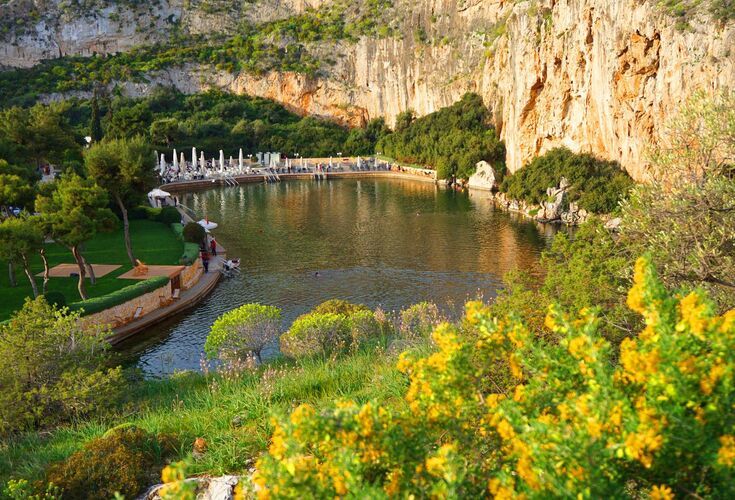
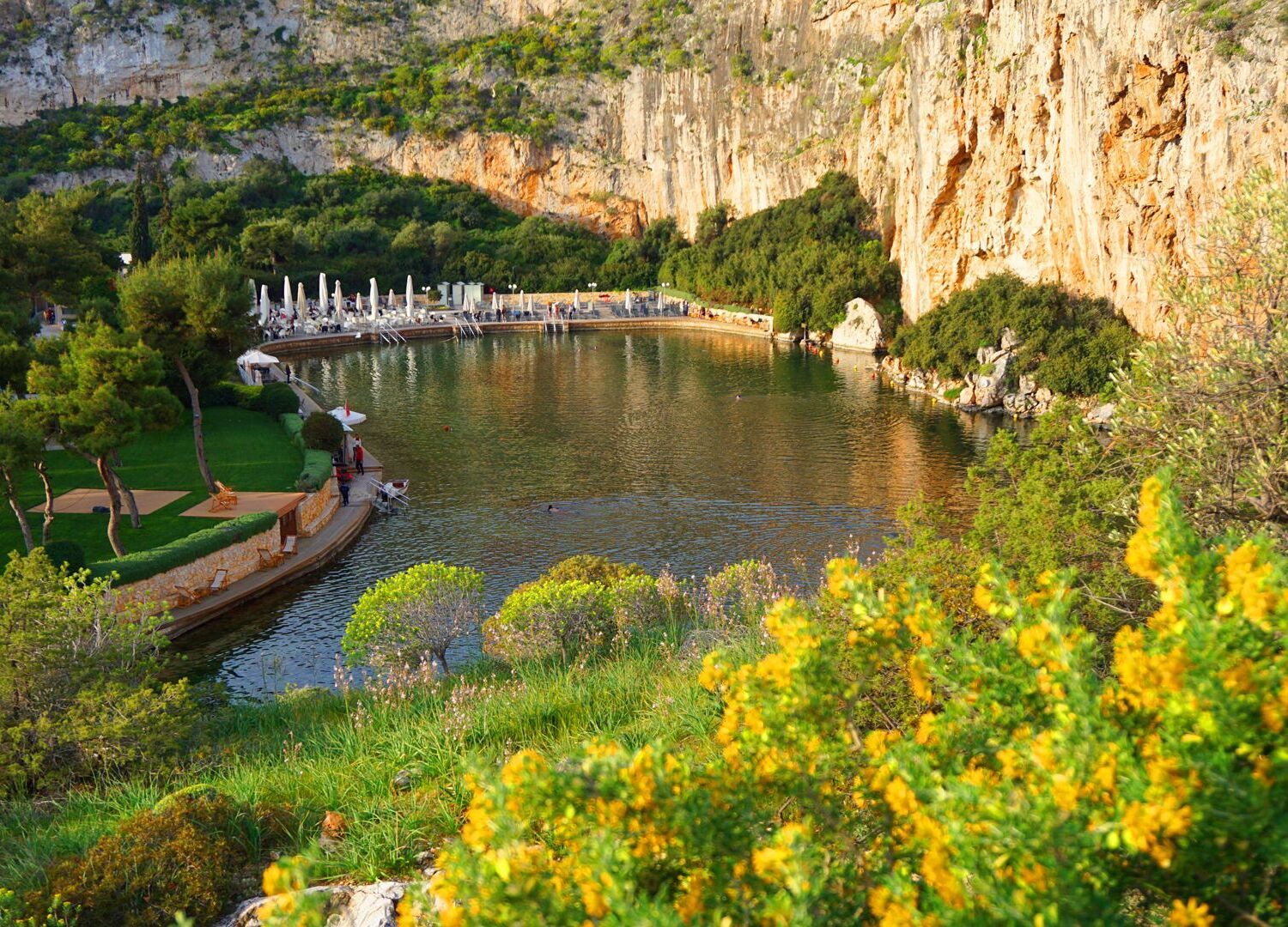
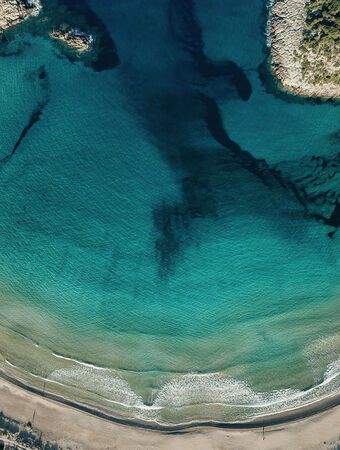
You'll have spotted swimming spots all the way down the coast on your drive to Cape Sounion, so the only decision now will be which beach style you’re after. There's Sounion beach below the temple and other quiet spots such as Legrena, KAPE and Althea just a short drive away. Closer to Athens are the resort-style beaches of the Athens Riviera – Voula, Varkiza and Vouliagmeni. Or for a different kind of swimming experience, how about Lake Vouliagmeni? It was created when the roof of an enormous cave collapsed around 2,000 years ago and has mineral-rich water that maintains a pleasant 21–28°C year-round. The Garra Rufa fish supply the natural exfoliation.
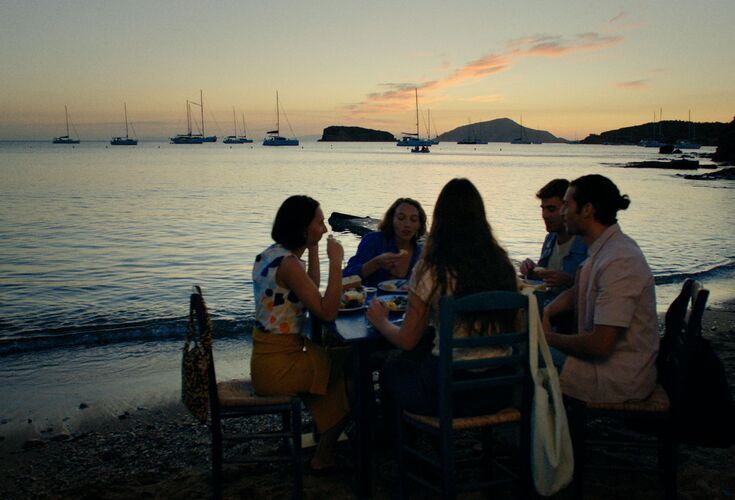
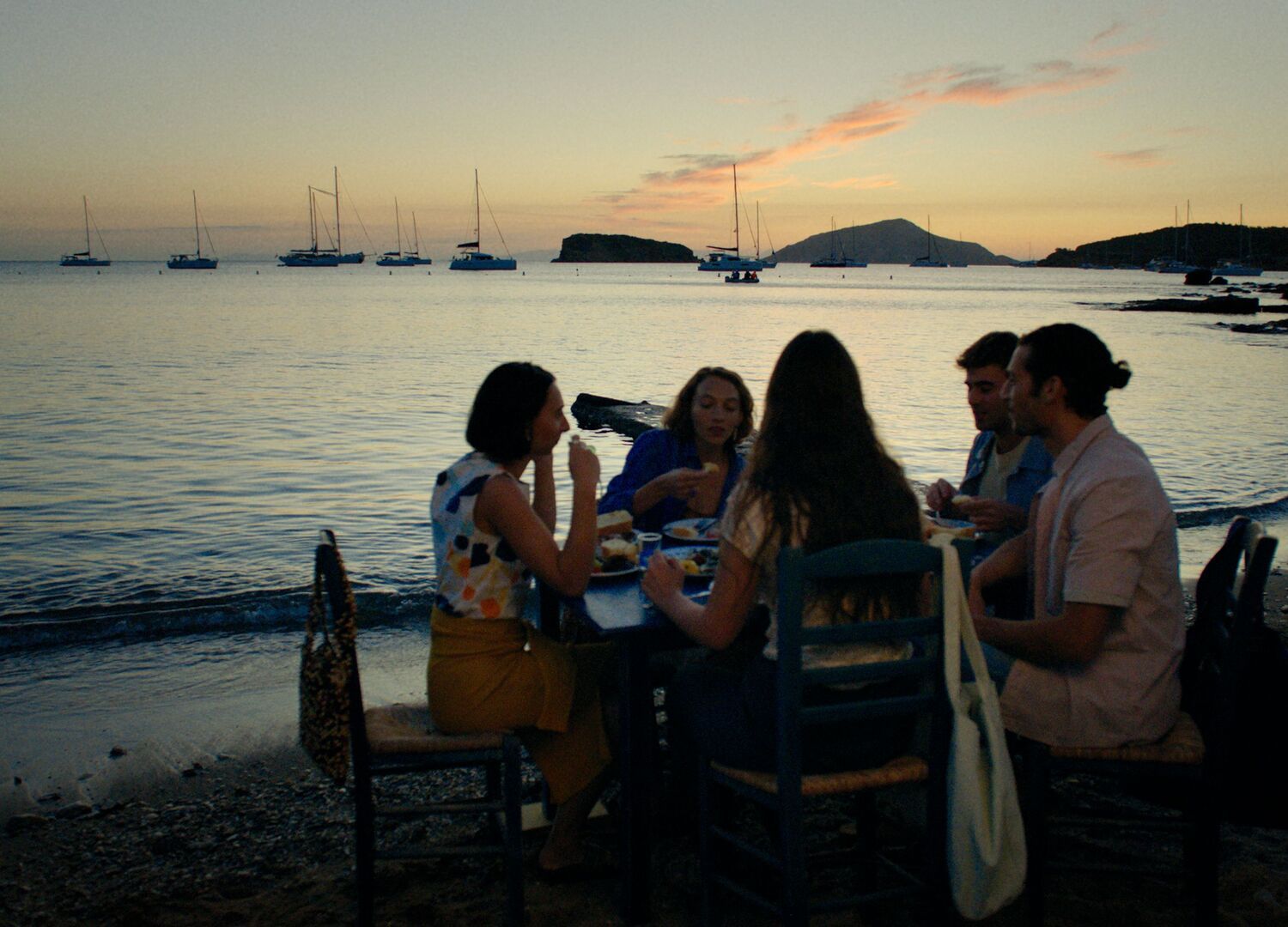
If you choose a swimming spot close to Cape Sounion, the natural choice for a seafood lunch or dinner is a local fish taverna. Or if you've made it as far as the resort beaches of the Athens Riviera, then Vouliagmeni, Kavouri or nearby Glyfada have a different feel altogether. This is where the dining and nightlife scene of the Athens Riviera finds its natural home, with stylish seaside restaurants offering higher-end Mediterranean cuisine. There's also a choice of cocktail bars and sundowner spots if you're in no hurry to call it a day.
A full day in the heart of Athens, taking in 2,500 years of history without ever straying far from the shadow of the Acropolis. From the Sacred Rock itself and the Acropolis Museums, you wander the island-like lanes of Anafiotika and streets of Plaka, and explore some of the most iconic public spaces of ancient Athens.
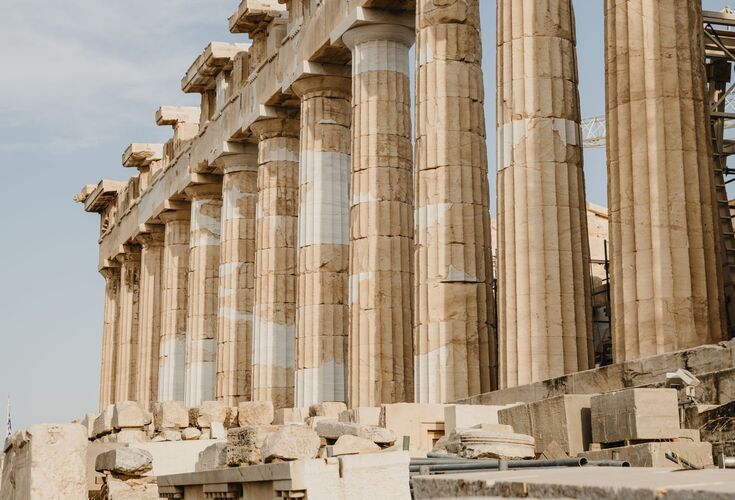
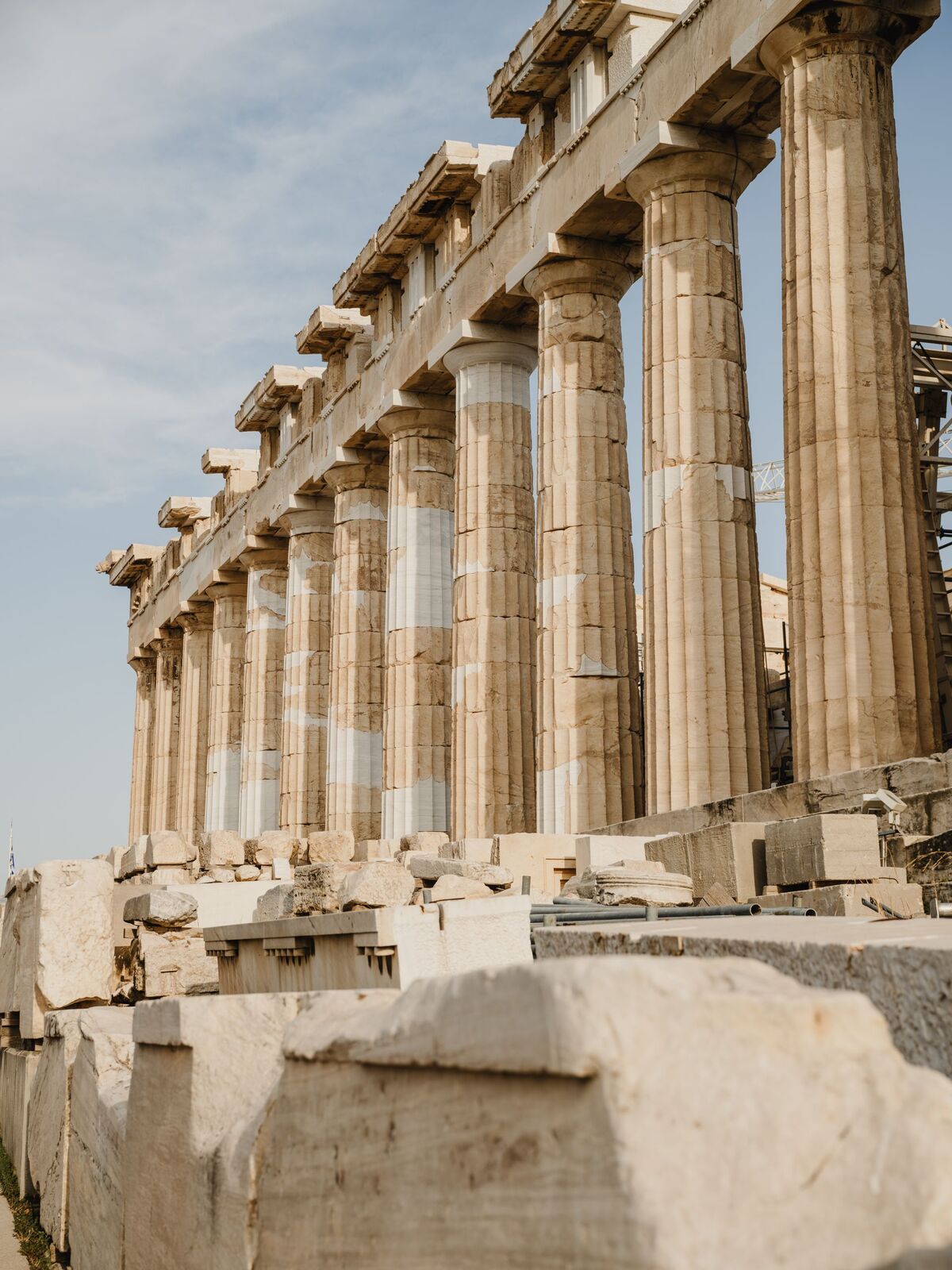
No holidays that start in the Greek capital could begin anywhere else. The Acropolis has presided over Athens for more than 2,500 years – a natural hilltop fortress, a place of worship, and the centrepiece of Pericles' great 5th-century BC reconstruction project. Up close, it reveals itself as a masterpiece of architecture and artistry: the Parthenon, the Erechtheion with its Caryatids, the Temple of Athena Nike and the grand gateway of the Propylaea, all within a UNESCO World Heritage Site that has lost none of its power to stop you in your tracks. Directly below, the Acropolis Museum puts everything into context. Spread across four floors, it houses the sculptures, artefacts and everyday objects unearthed from the Sacred Rock and the neighbourhood beneath it, culminating in the top-floor Parthenon Gallery – positioned to mirror the temple itself.
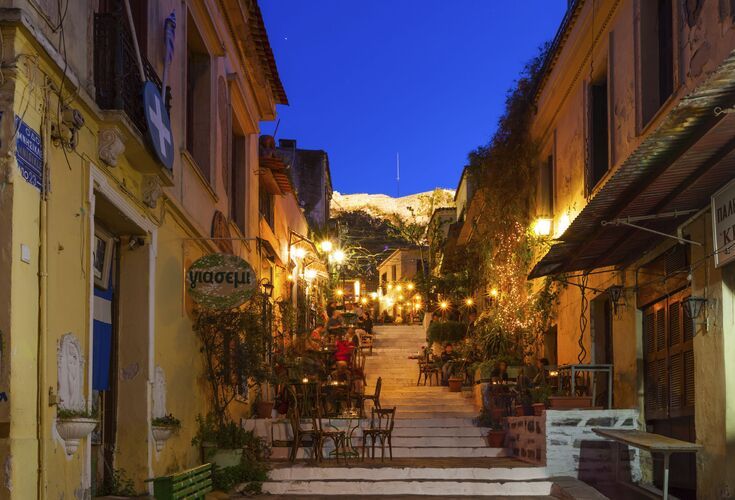
Exploring the neighbourhoods around the Acropolis is like walking around an open-air museum. Plaka is full of shaded squares, neoclassical facades, Byzantine churches and the occasional ancient ruin appearing between the souvenir shops and taverna tables. A short distance away is Anafiotika, a district on the slopes of the Sacred Rock built by workers from the Cycladic island of Anafi in the 19th century. Its whitewashed houses, winding streets and scent of jasmine give it the feel of a Greek island rather than a district of central Athens. There are plenty of coffee and food spots here before you head down to the Roman Agora, where the 1st-century BC Tower of the Winds still stands as one of the ancient world's most ingenious structures: sundial, weathervane and water-powered clock in one.
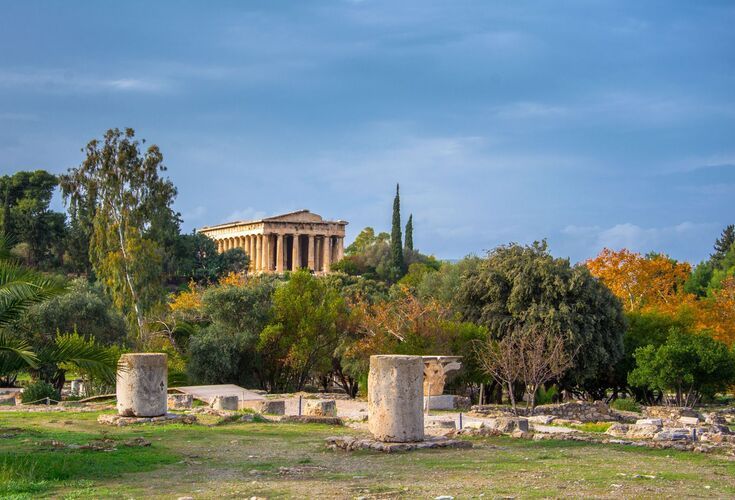
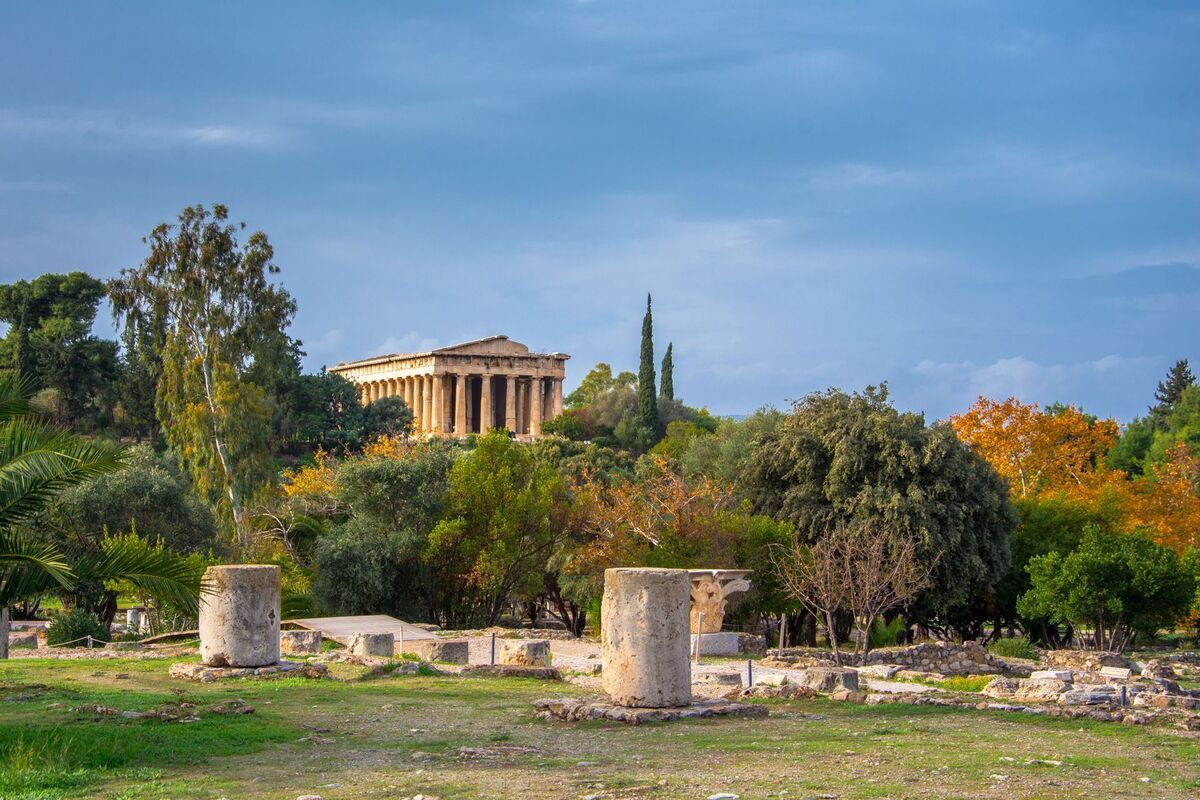
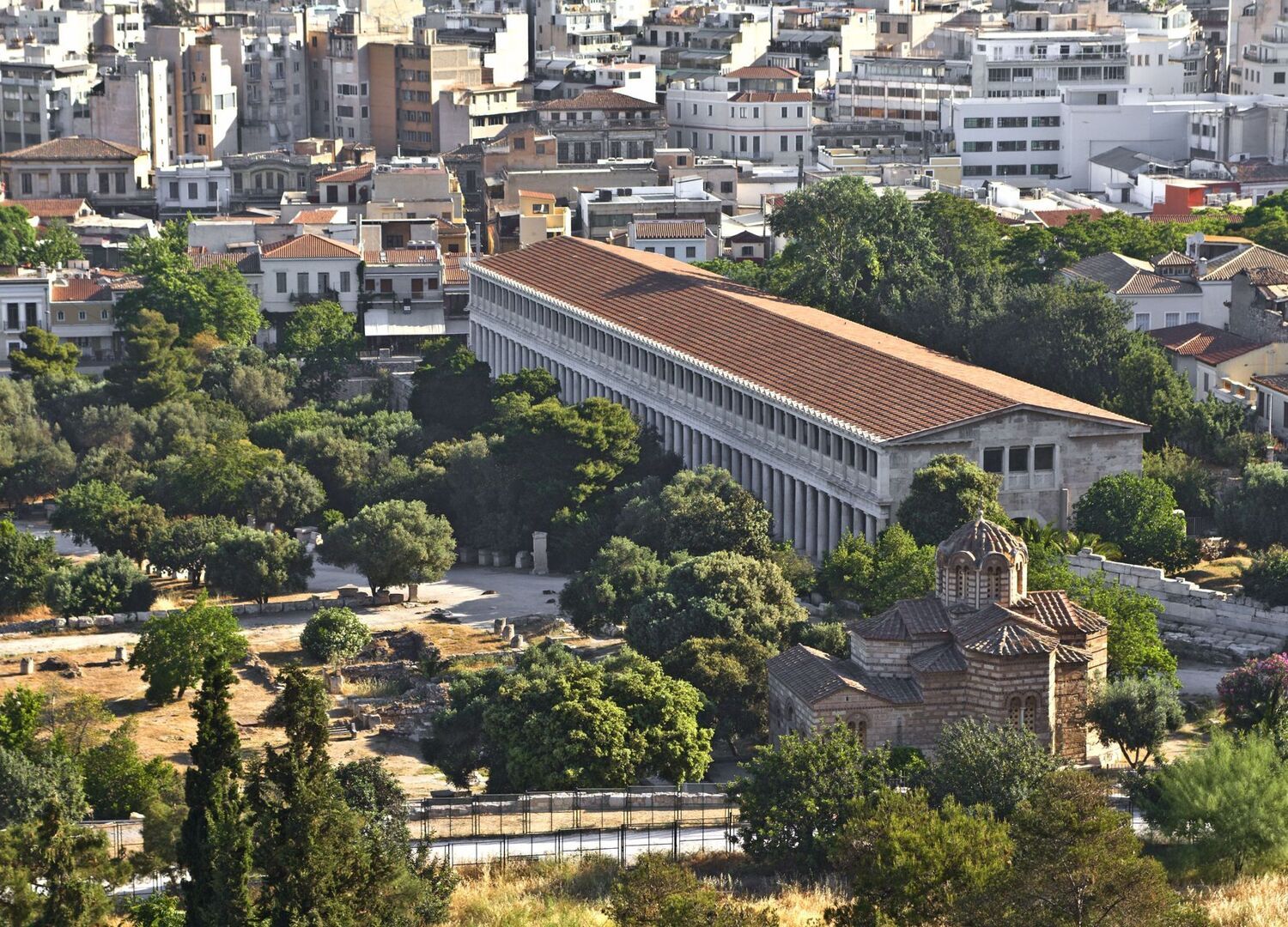
A five-minute walk from the Roman Agora brings you to the Ancient Agora – the beating heart of public life in ancient Athens, where Socrates debated, Aristotle taught and St Paul preached to early Christians. Beside it stands the Stoa of Attalos, a beautifully reconstructed 2nd-century BC marketplace with an elegant mix of Doric and Ionic columns that now houses a small but rewarding museum. Taking pride of place is the Temple of Hephaestus – built in the 5th century BC and probably the best-preserved ancient Greek temple, surrounded by a garden and decorated with friezes depicting the labours of Hercules and the myths of Theseus.
Local tip: The neighbourhood of Psyrri – just to the north – offers a cooler, more urban side of Athens, with traditional tavernas sitting alongside street art and lively bars.
Day three completes your time in Athens with a day dedicated to some of its many museums and cultural landmarks hidden in plain sight. The day closes with a stroll through the National Garden to Zappeion and the Panathenaic Stadium, ending in up-and-coming Pangrati for dinner or drinks.
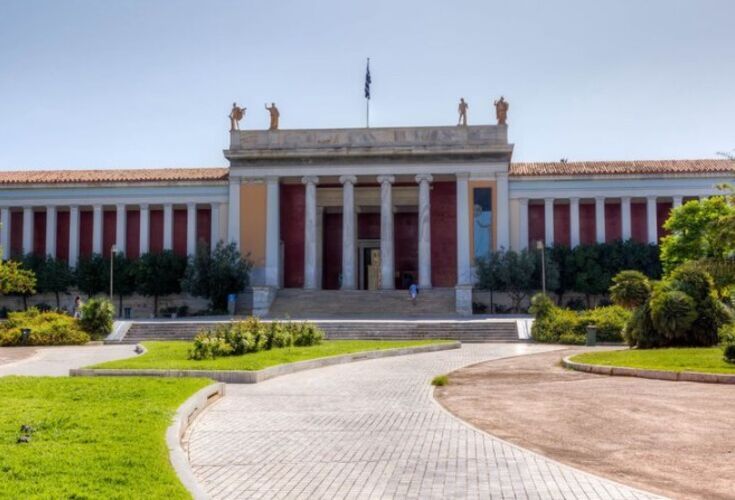
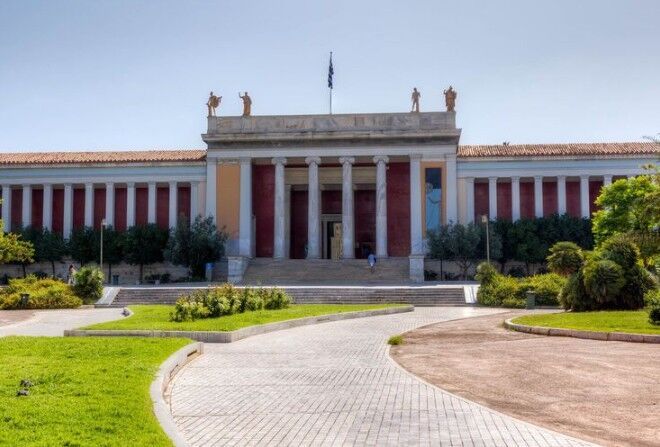
The National Archaeological Museum is Greece's largest museum, housed in a 19th-century neoclassical building in the Exarchia district. More than 11,000 artefacts from the Neolithic period to late antiquity fill 8,000 square metres of exhibition space, showcasing why Greece is considered the cradle of western civilisation. Five permanent collections tell the story: Prehistoric Antiquities, with the gold Mask of Agamemnon and the enigmatic Cycladic figurines. Sculpture, tracing Greek art from the archaic kouros to the masterpieces of the Periclean age. Bronze, starring the imposing Artemision Bronze and the Antikythera Mechanism, a 1st-century BC navigational instrument of astonishing sophistication. And Vases and Minor Arts, bringing to life the rise of the city-state and the great Panhellenic Games.
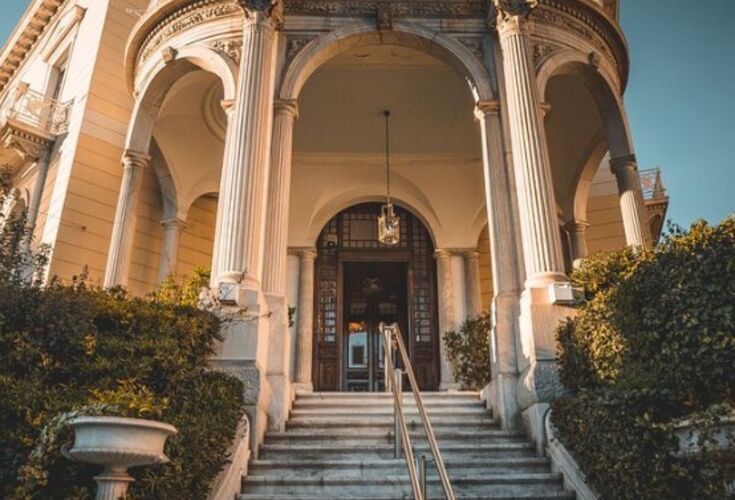
Wherever you are in Athens, there'll be a museum that tells you something else about this great city and Greece as a whole. It's up to you to pick the one grabs your attention most. The Byzantine and Christian Museum showcases early Christian art in an elegant neo-Byzantine villa, while the Benaki Museum of Greek Culture and the Museum of Cycladic Art are world-class private museums housed in gorgeous neoclassical buildings. For art enthusiasts, the National Gallery displays six centuries of Greek painting and sculpture, and the Museum of Contemporary Art offers a modern take on art and ideas in a landmark former brewery. Finally, the Museum of Ancient Greek Technology has working reconstructions of ancient inventions, and the Museum of Greek Folk Musical Instruments offers an absorbing journey through sound and tradition.
Local tip: Several museums are also excellent spots for a bite or drink. The Byzantine and Christian Museum has a cafe-restaurant in its garden, the Benaki Museum offers a rooftop terrace with views over the National Garden, and the Museum of Cycladic
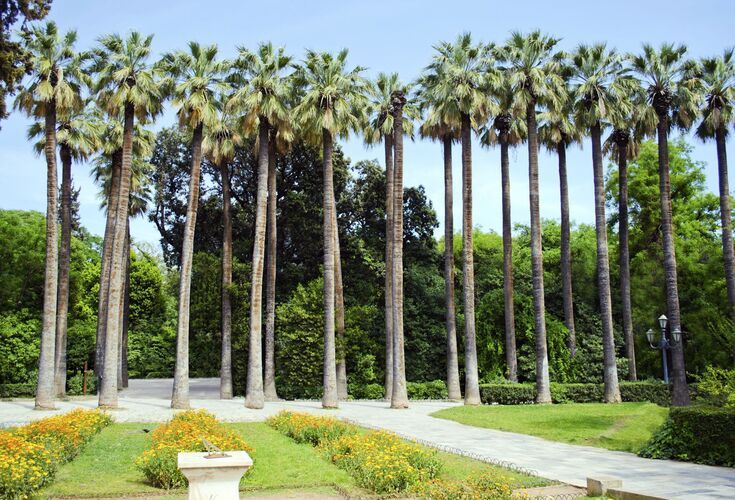
The final stop of the day is a short walking tour from Syntagma Square where the Hellenic Parliament presides over the Changing of the Guard ceremony performed by Evzones. From here, you enter the National Garden – 160 acres of unexpected calm in the heart of the city. Created at the request of Queen Amalia in the early 19th century, it shelters more than 500 plant species, Roman mosaics and shaded paths, with the elegant Zappeion Hall – built for the first modern Olympics in 1896 – marking its southern edge. By the National Garden is the Panathenaic Stadium, the only all-marble stadium in the world and host of the 1896 Olympics. It is still part of daily Athenian life – used as a jogging track, a concert venue and a marathon finish line – and is a great sunset spot.
Local tip: Close to the Panathenaic Stadium, Pangrati offers the ideal close to the day. One of Athens' most characterful districts, it blends neoclassical streets and a strong sense of local identity with a lively dining and bar scene
Start your day as early as possible to give you time to enjoy one of Greece's most singular destinations: the spectacular Meteora in the Thessaly region, around 4 hours from Athens. After admiring the monasteries and the natural landscape, you round off the day with a foodie experience. Your base for the night is Kalambaka.
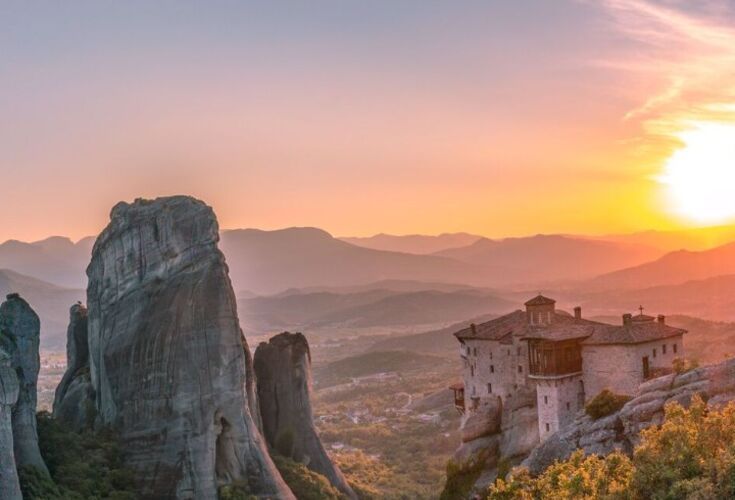
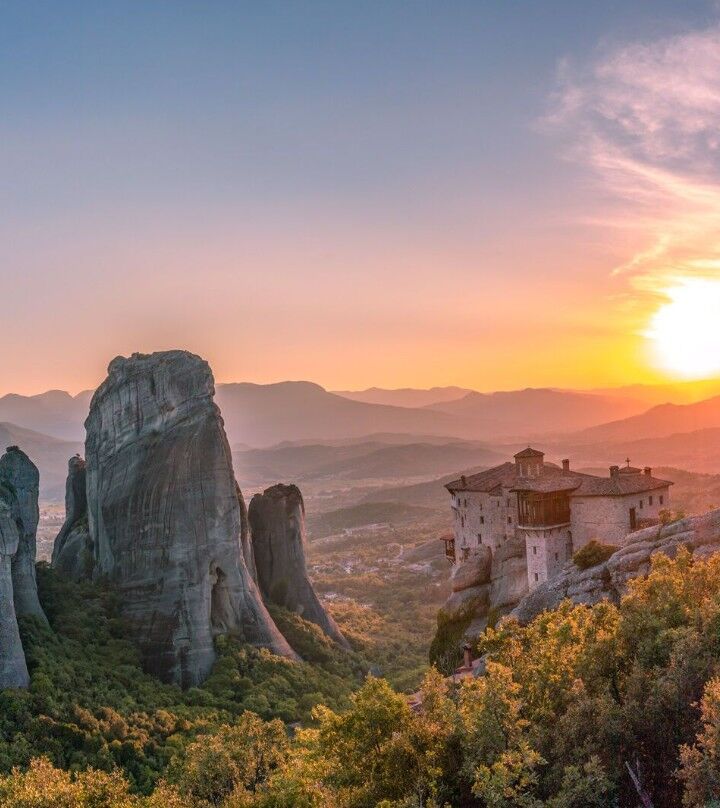
Meteora's needle-like rock formations are among the most memorable landscapes in Greece – and perched at their very peaks are some of the most extraordinary monasteries in the world. Of the 24 built here, six remain active today – Great Meteoron, Varlaam, Roussanou, Agios Stefanos, Agios Nikolaos and the Holy Trinity Monastery – each with its own history dating back to around the 14th century. One of the best experiences is reaching them on foot. Well-marked paths wind past caves used by monks 15 centuries ago up to the monasteries themselves. A guided walk is the best way to make the most of it.
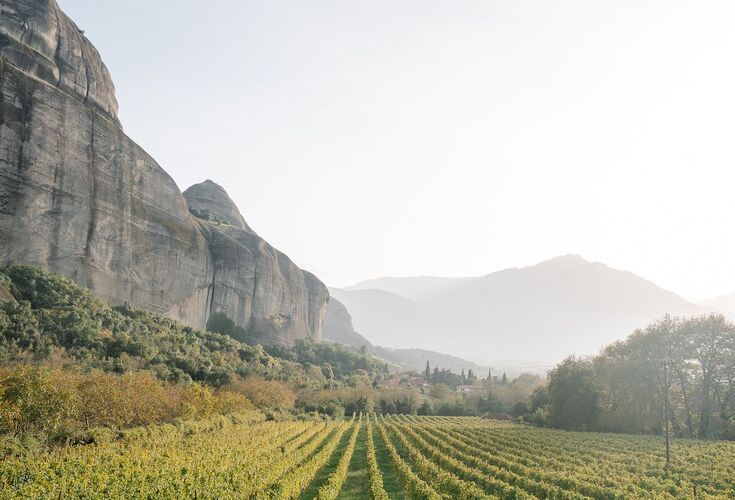
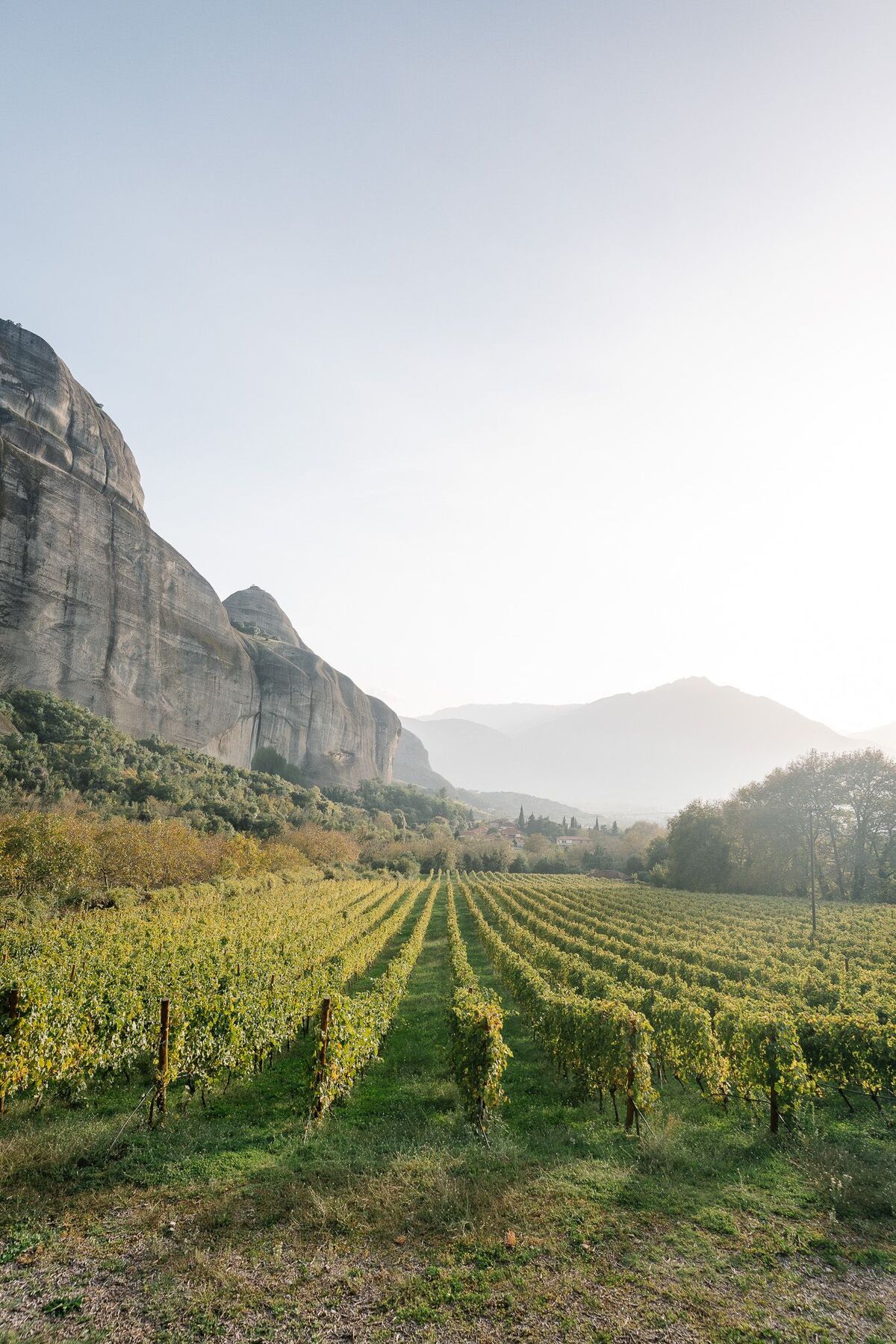
An unexpected joy of visiting Meteora is adding a foodie experience to your day. There are local vineyards that offer wine tastings paired with local delicacies. If the season allows, you can book a mushroom foraging or truffle hunting experience in the forests around Meteora. Truffle hunting walks include trained dogs and end in an on-site meal cooked with the day's treasures. There is also information on the fungi of the region in the Meteora Natural History and Mushroom Museum in Kalambaka.
Local tip: There are plenty of places to eat in Kalambaka, but a great option for dinner beneath the rocks is the village of Kastraki.
Day 5 is devoted to Delphi, for centuries the most important religious site of antiquity, set dramatically on the slopes of Mount Parnassos overlooking the Pleistos Valley. After exploring the sanctuary and its museum, the evening offers a choice: cosmopolitan Arachova in the mountains or Galaxidi down by the coast.
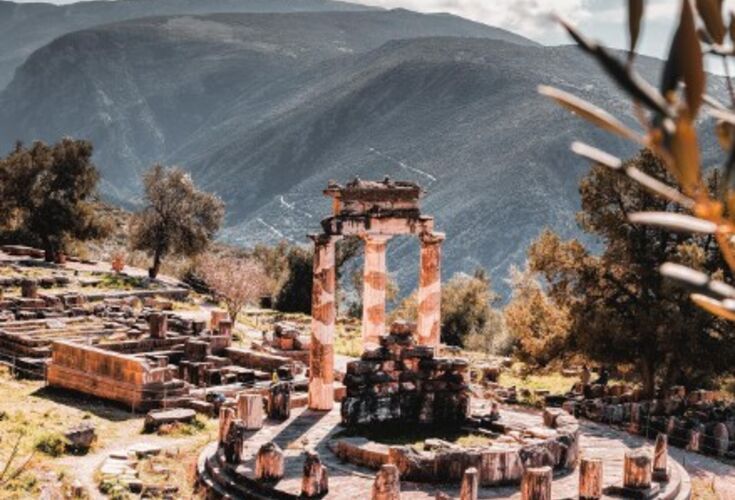
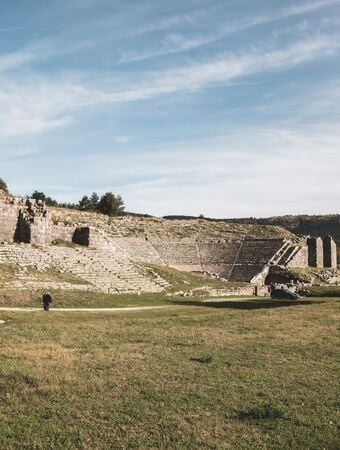
According to legend, Delphi is the Navel of the Earth – the point where Zeus' two eagles met – and standing among today’s ruins, it's not hard to see why the ancient world believed so. A UNESCO World Heritage Site set on the slopes of Mount Parnassos, the Sanctuary of Apollo drew leaders and commoners alike to consult the sacred Oracle through the words of the priestess Pythia. Among the highlights of the remains are the partially reconstructed Athenian Treasury, the Temple of Apollo and stadium that once hosted the Pythian Games. The ancient theatre still stages performances. Allow time for the Archaeological Museum of Delphi, home to the magnificent bronze Statue of the Charioteer.
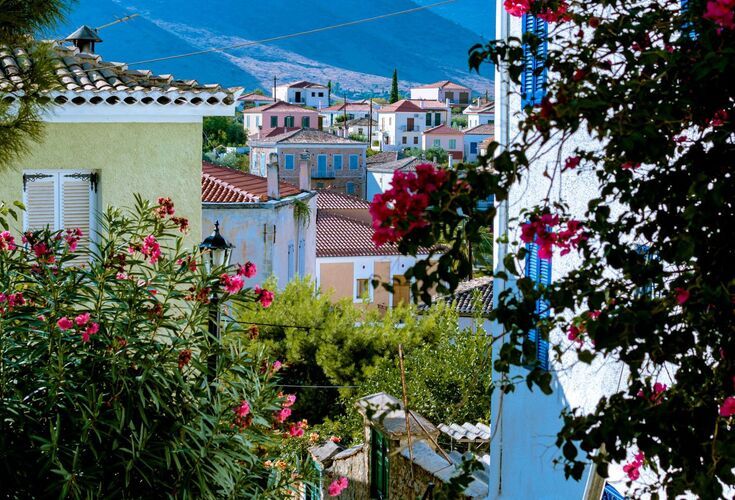
If you're in a mountain-setting mood, Arachova (just 12 km from Delphi) is a stone-built village tucked into the slopes of Mount Parnassos but with a cosmopolitan edge. It has excellent tavernas and renowned local produce, such as spicy formaella cheese and handmade pasta. In winter, it's the base for the largest ski resort in Greece. Alternatively, Galaxidi lies 33 km away on the shores of the Corinthian Gulf – a former seafaring town of neoclassical captains' houses and an unhurried pace.
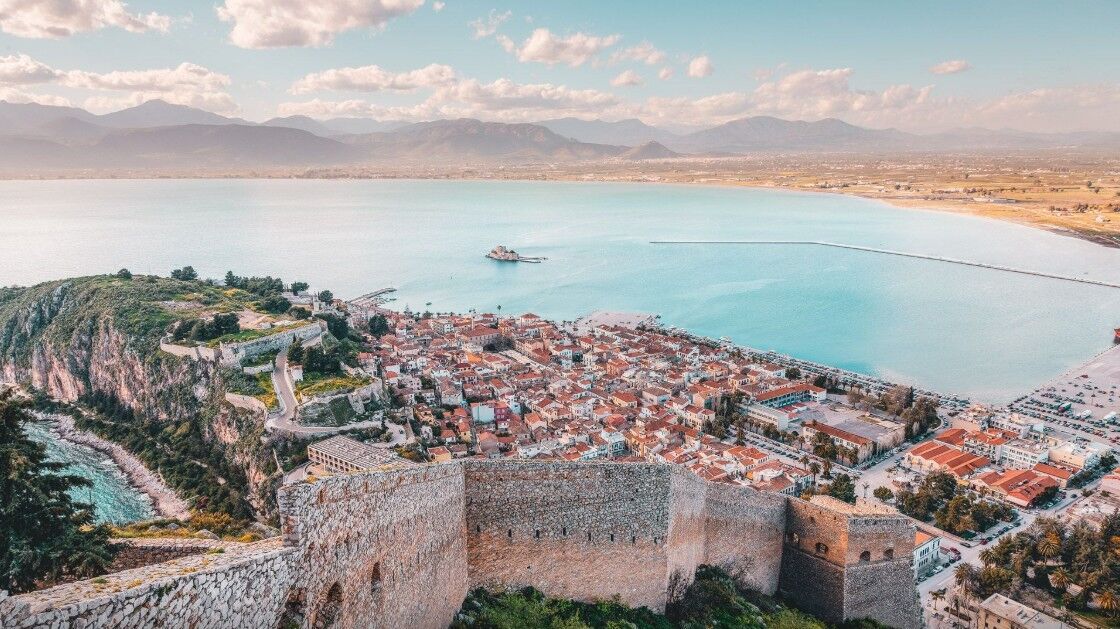
The landscape changes as you enter the Peloponnese and head to Nafplio, one of Greece's most romantic destinations. The day takes you through the picturesque lanes of the Old Town, into museums that reveal the rich history of modern Greece’s first capital, and up to Palamidi Castle for views over the city and the Argolic Gulf.
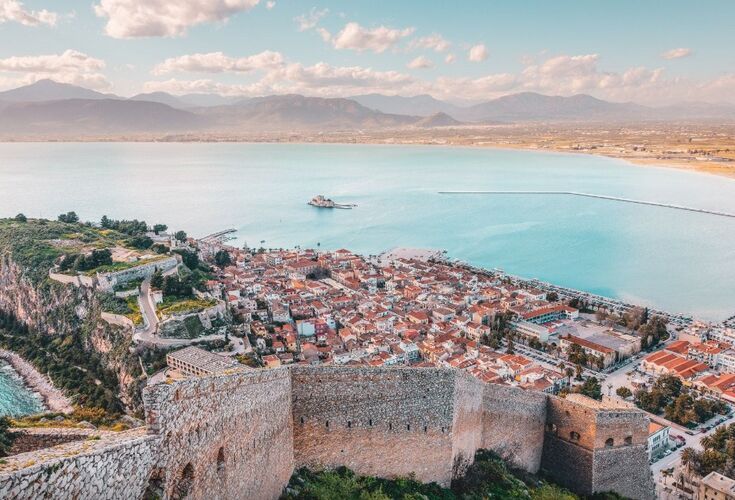
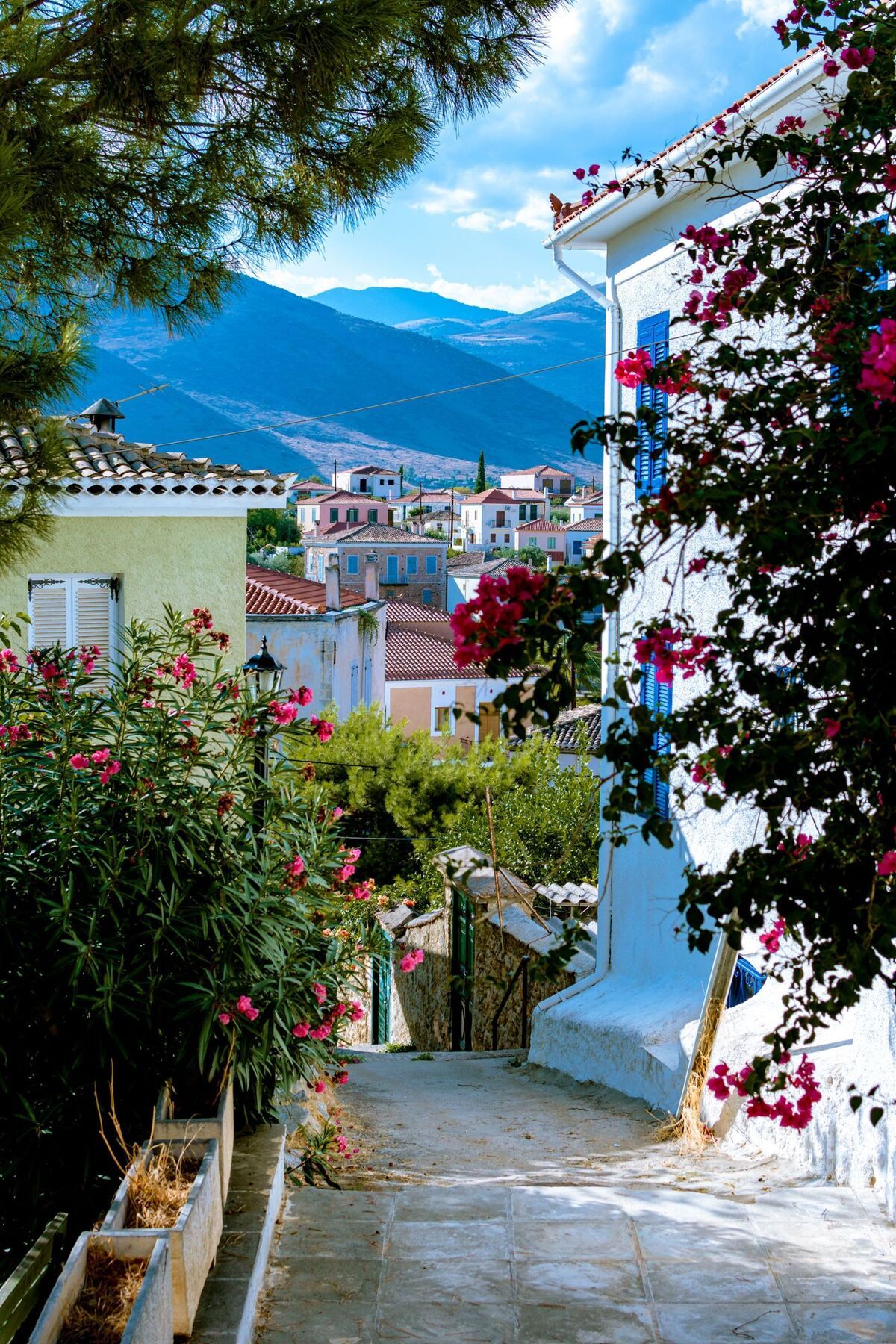
Built on a small peninsula on the Peloponnese's Argolic Gulf, Greece's first post-independence capital is a captivating mix of Venetian elegance and modern Greek history. From the cobbled alleyways and neoclassical mansions to the views of the lofty fortifications of Palamidi Castle, a walking tour of the Old Town traces that story. You walk through the Land Gate, past the Church of Agios Spyridon (where Greece's first head of state was assassinated in 1831), into Syntagma Square and on to the Vouleftiko, Greece's first parliament building. At the waterfront, the five Venetian cannons known as the Five Brothers stand guard over the sea, with views across to the island castle of Bourtzi and up to Akronafplia castle, crowning the peninsula.
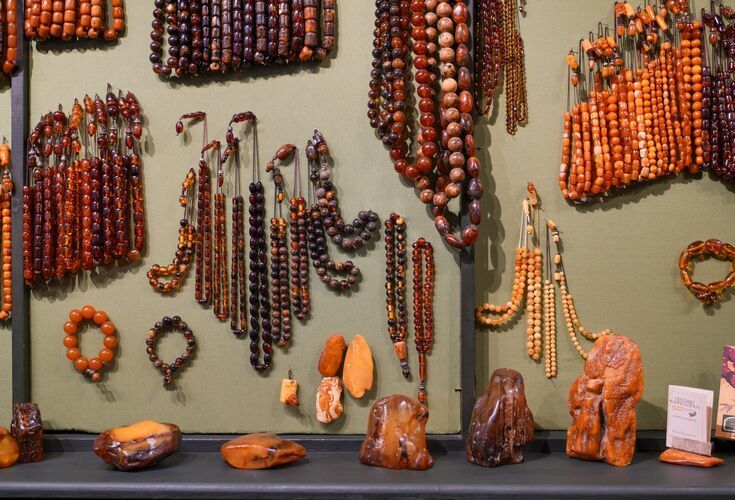
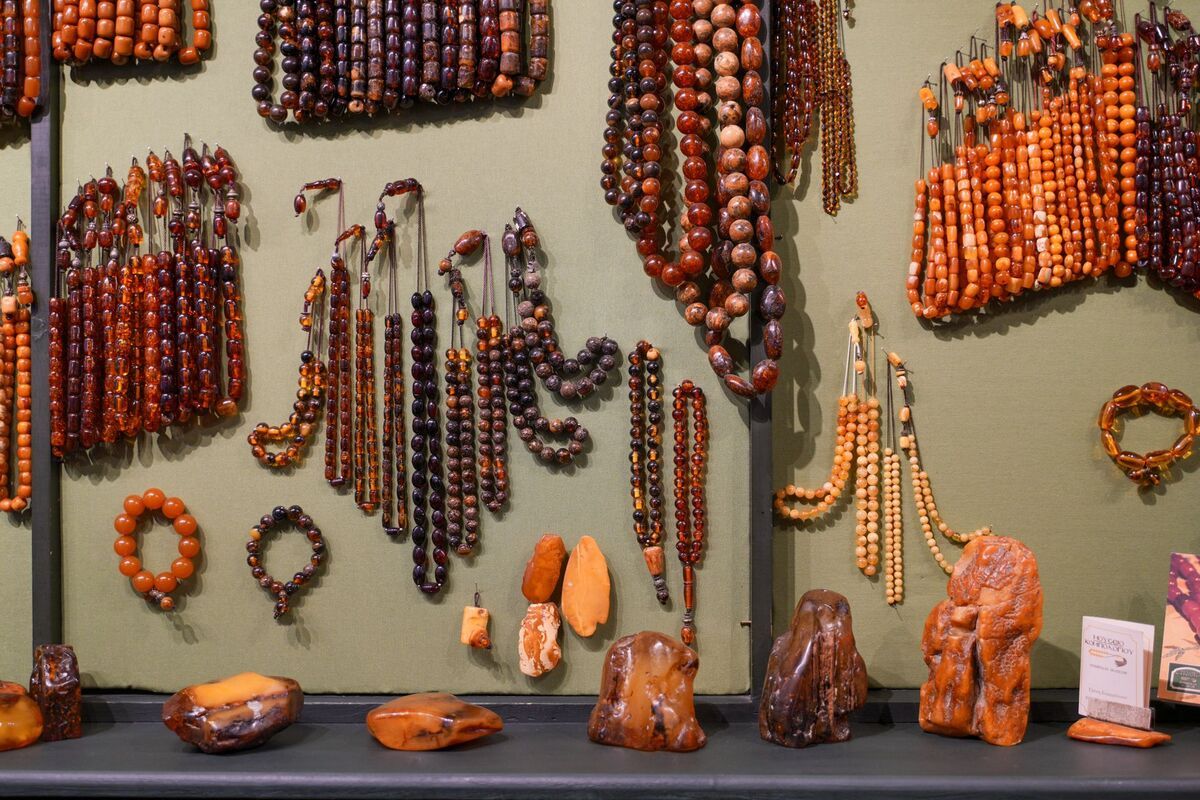
To really get to know Nafplio, set aside time for some of the city's museums, all within easy walking distance of each other. The Archaeological Museum, housed in a Venetian building on Syntagma Square, traces the history of the Argolid from prehistoric times. The Komboloi Museum is an unexpected find – a charming collection dedicated to the Greek worry bead, with examples spanning centuries and cultures. The National Gallery Annexe brings fine art to the Peloponnese. And the Museum of Cultural Heritage – Vassilis Papantoniou Foundation – offers one of Greece's finest collections of regional costumes and folk art.
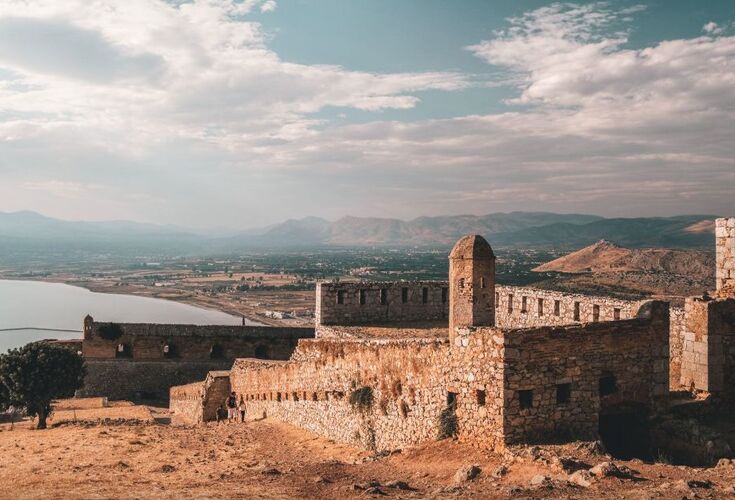
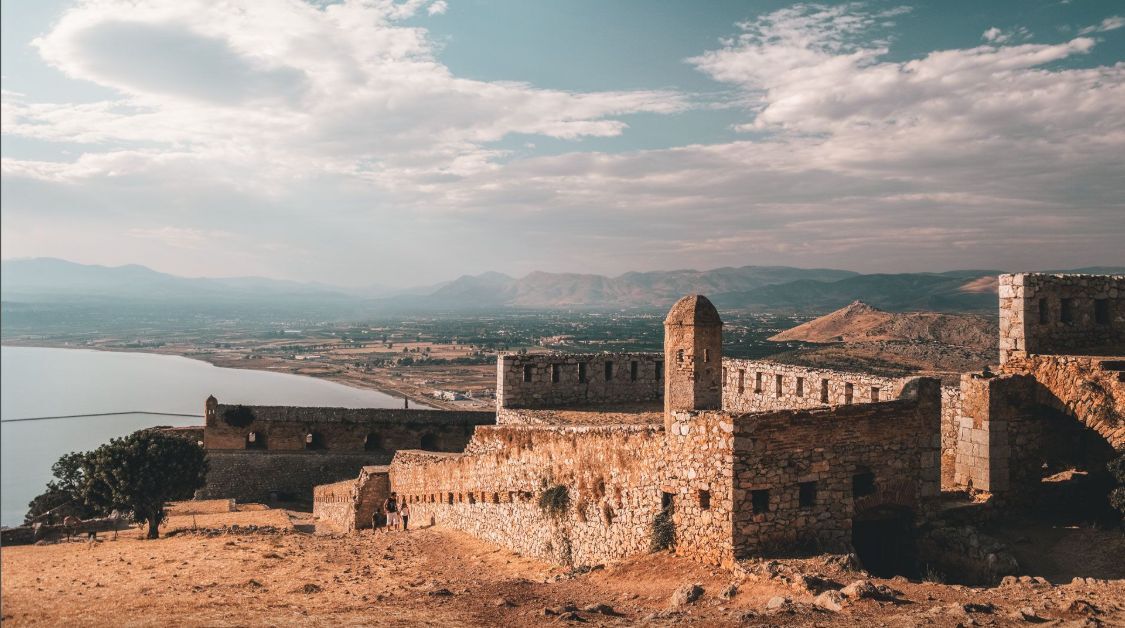
The last excursion of the day is perhaps the most rewarding. Built by the Venetians in just three years at the start of the 18th century, Palamidi Castle sits 216 metres above Nafplio and is an engineering feat as impressive as the eight interconnecting bastions that make up the fortress. The Greeks stormed it in a single night in November 1822, marking Nafplio's return to Greek hands. You can drive up or tackle the 857 steps on foot. A couple of the bastions stand out: Miltiadis, where revolutionary hero Kolokotronis was imprisoned, and Agios Andreas, with its barrel-vaulted church. The sunset views over Nafplio and the Argolic Gulf are among the finest in the Peloponnese.
Two of the ancient world's most compelling sites in one day: Homer's "gold-rich Mycenae" and the Sanctuary of Asclepius at Ancient Epidaurus, home to a theatre that still stages ancient dramas each summer. The day ends among the vineyards of Nemea before returning to Nafplio for the night.
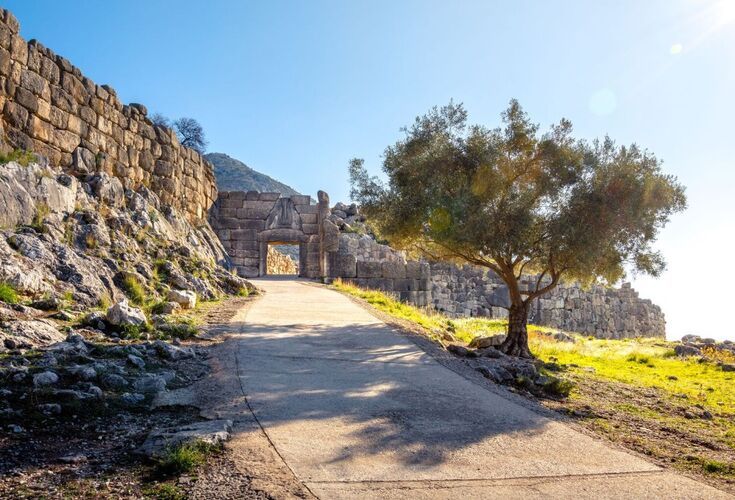
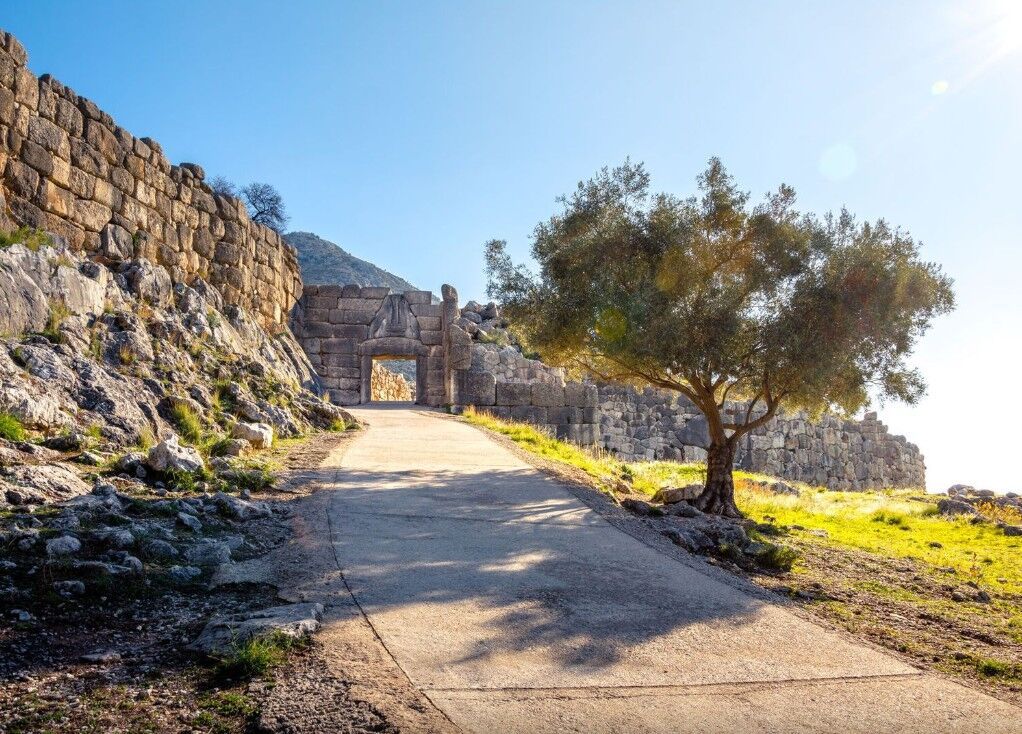
Home to a civilisation that shaped the myths and legends of Greece for millennia, Mycenae was one of the great palatial centres of the ancient world. Its main entrance, the Lion Gate, dates from around 1250 BC and sets the tone: a perfectly symmetrical monument whose two lions have stood guard for more than 3,000 years. Beyond it lie the Cyclopean Walls (said to have been built by one-eyed giant Cyclopes), the royal grave circles and the vast beehive tomb known as the Treasury of Atreus. The five gold masks unearthed here by Heinrich Schliemann – including the celebrated Mask of Agamemnon – are now in the National Archaeological Museum in Athens, which you visited on day 3.
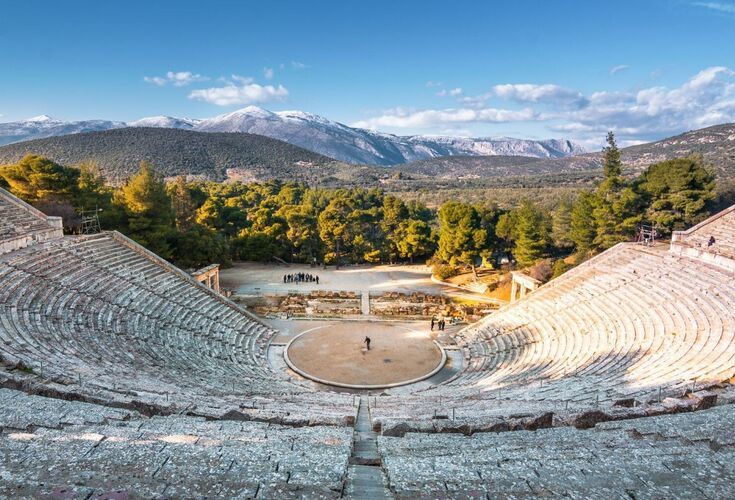
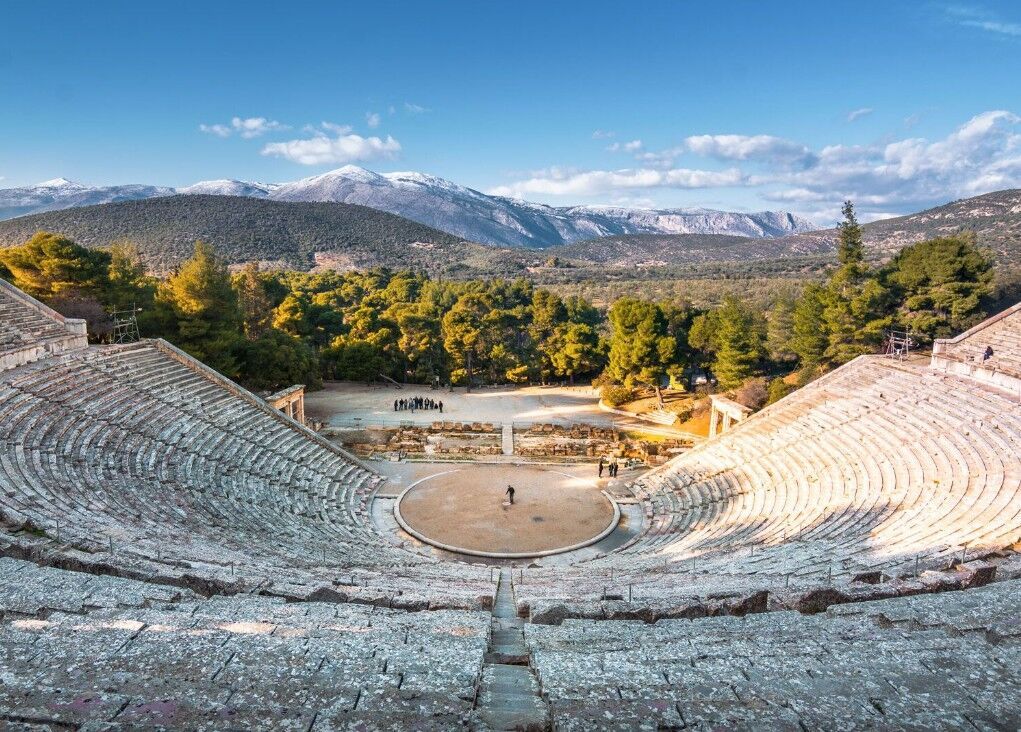
From Mycenae, it’s a short drive to one of the most complete sanctuaries of the ancient world. Ancient Epidaurus is famous today for its theatre – and rightly so. Built in the 4th century BC, its acoustics are legendary. Productions of ancient tragedies and comedies still take place here each summer. But Epidaurus was always far more than a theatre. The Sanctuary of Asclepius – today a UNESCO World Heritage Site – was one of antiquity's most celebrated healing centres, drawing the sick and wounded from across the Greek world. Treatment combined the spiritual with the physical, with patients sleeping in the enkoimeteria, where priests interpreted their dreams and prescribed therapies. They exercised in the palaestra and watched athletes compete in the stadium. The enigmatic circular Tholos, the grand guest house and the temples of Asclepius and Artemis complete a site that rewards every extra hour you give it.
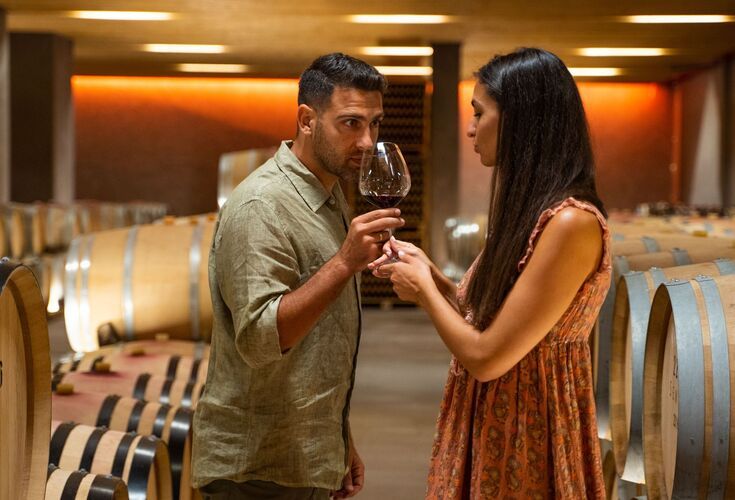
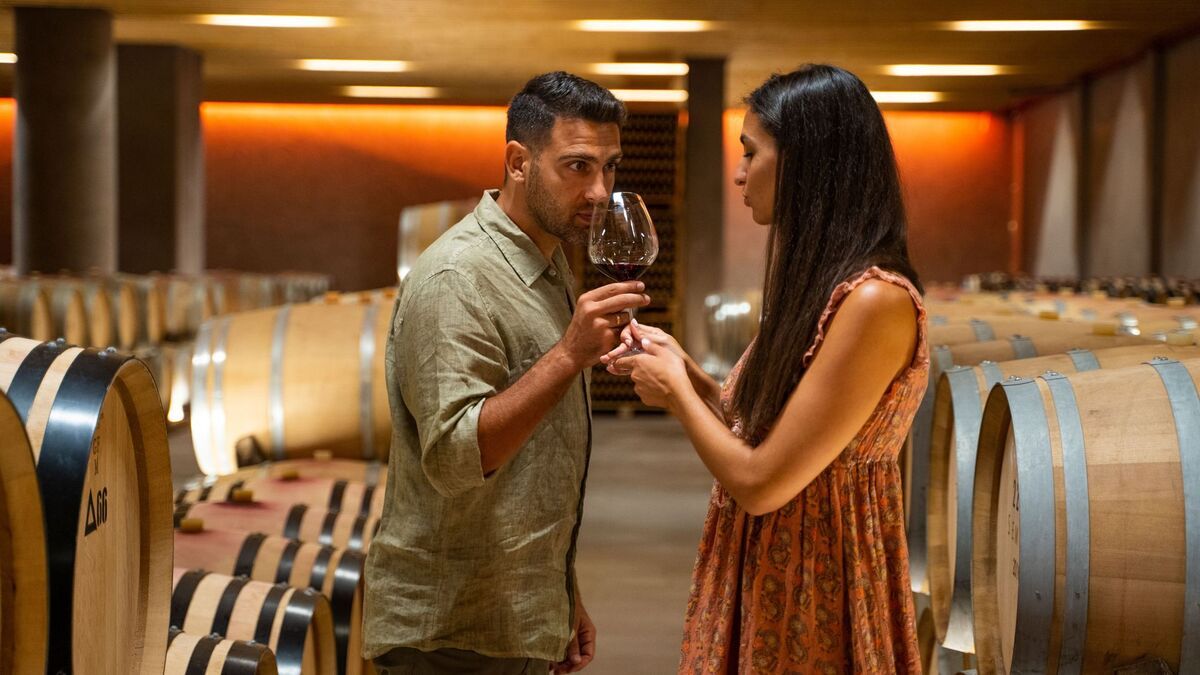
Where there’s culture, there’s wine and the Valley of Nemea, in the northwest Peloponnese, is home to Greece’s largest Protected Designation of Origin zone. The gently undulating terrain, framed by olive groves and cypress trees, produces wines from the spicy, full-bodied Agiorgitiko grape that has earned Nemea its international reputation. Several wineries offer tours of their vineyards and cellars, with tastings accompanied by local products.
Your first taste of island life brings you to Crete and the city of Chania, which you can reach by plane or overnight ferry from Athens. First impressions are of Chania’s Venetian harbour and Old Town, reminders of Chania’s multicultural past. The day is spent on foot, taking it all in.
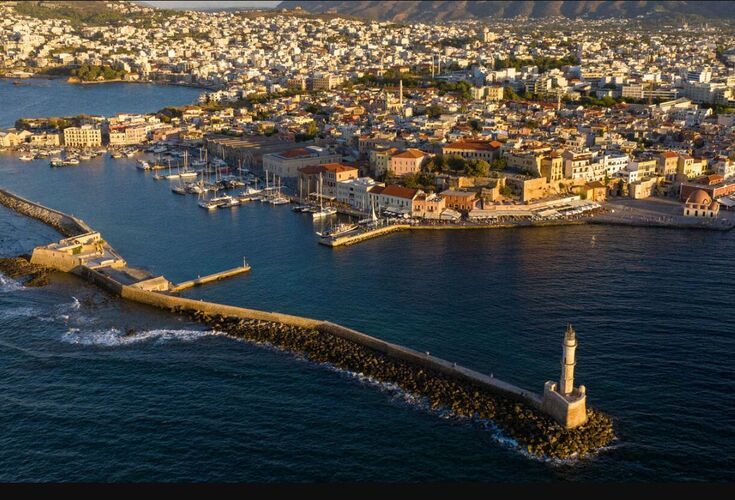
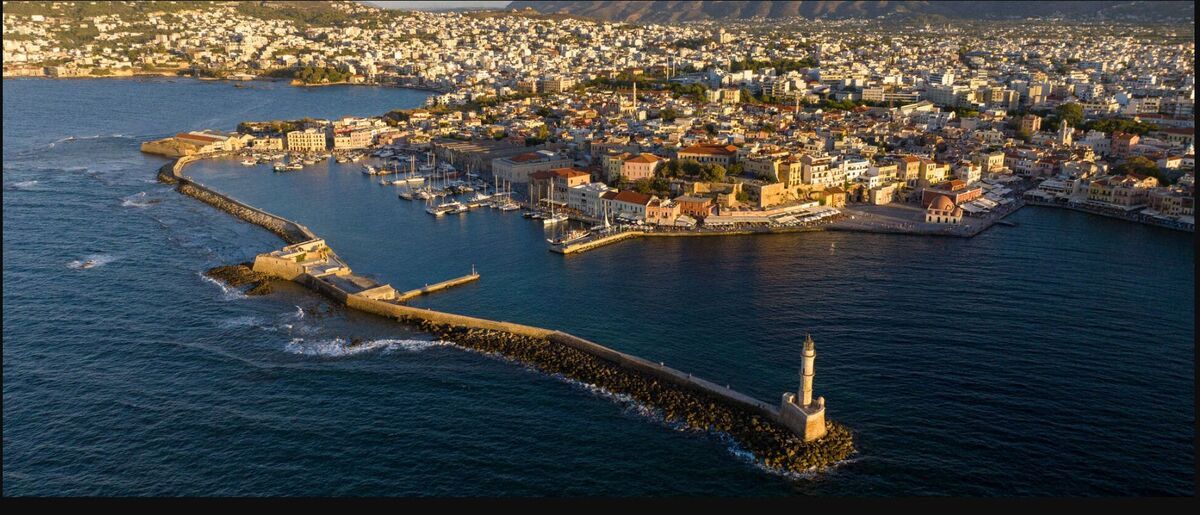
The natural centrepiece of Chania Old Town is the Venetian Harbour, built in the 14th century when Chania was one of the most important commercial and naval hubs in the eastern Mediterranean. The Neoria – narrow stone shipyards where the Venetian fleet was repaired and maintained – still line the waterfront, and the iconic lighthouse at the harbour entrance has stood since the late 16th century, built by the Venetians and later reconstructed by the Egyptians in the 1830s. On the western edge of the harbour, the Firka Fortress was where the Greek flag was raised for the first time after Crete's liberation in 1913. Today it houses the Maritime Museum of Crete. And along the waterfront, tavernas, cafes and bars give the harbour its local character at any time of day.
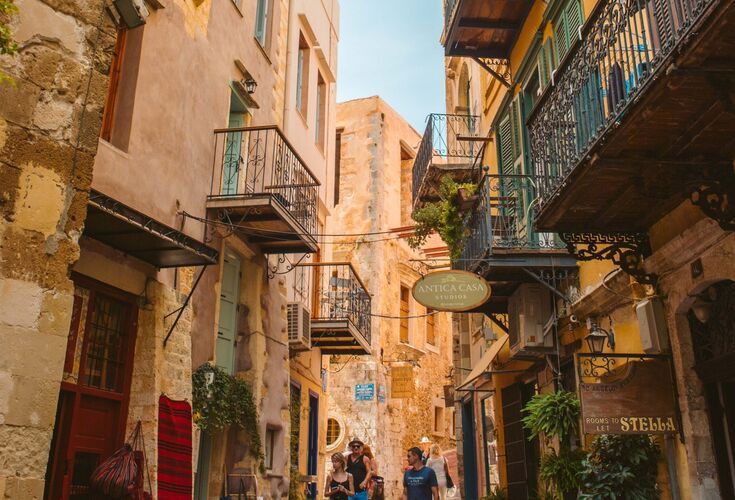
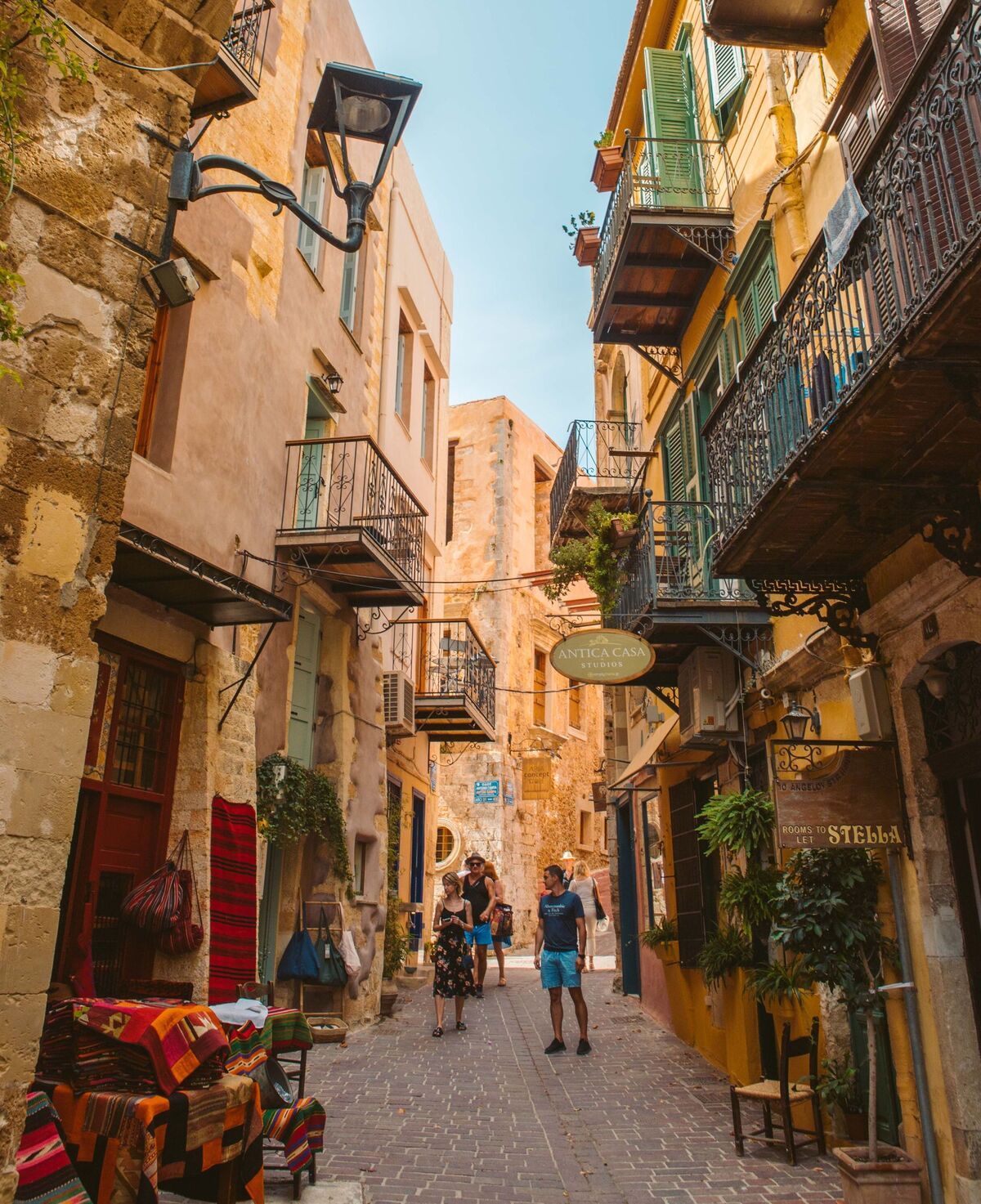
Beyond the waterfront, the streets and alleyways of Chania Old Town reveal the city’s rich. Venetians, Ottomans and Greeks have all left their mark in its residential buildings, churches and mosques. Each district has its own character: Topanas was Chania's Greek quarter during Ottoman times and the Jewish quarter behind the harbour contains the only surviving synagogue in Greece. Another focal point is Splantzia Square, once the heart of the Turkish quarter and now dominated by the Church of Agios Nikolaos.
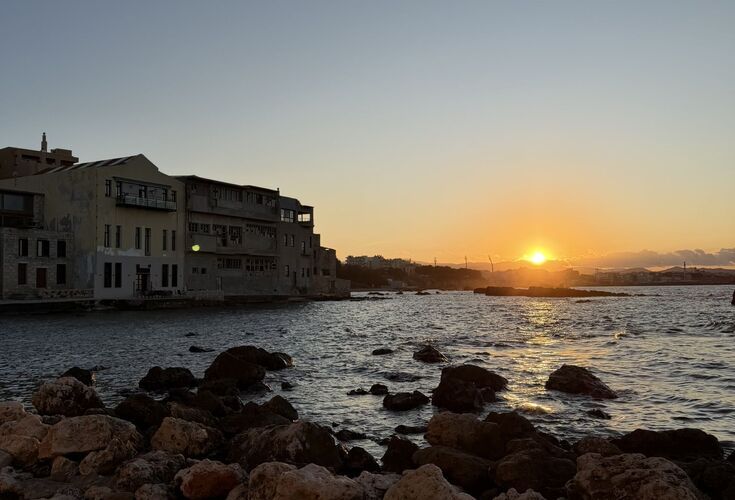
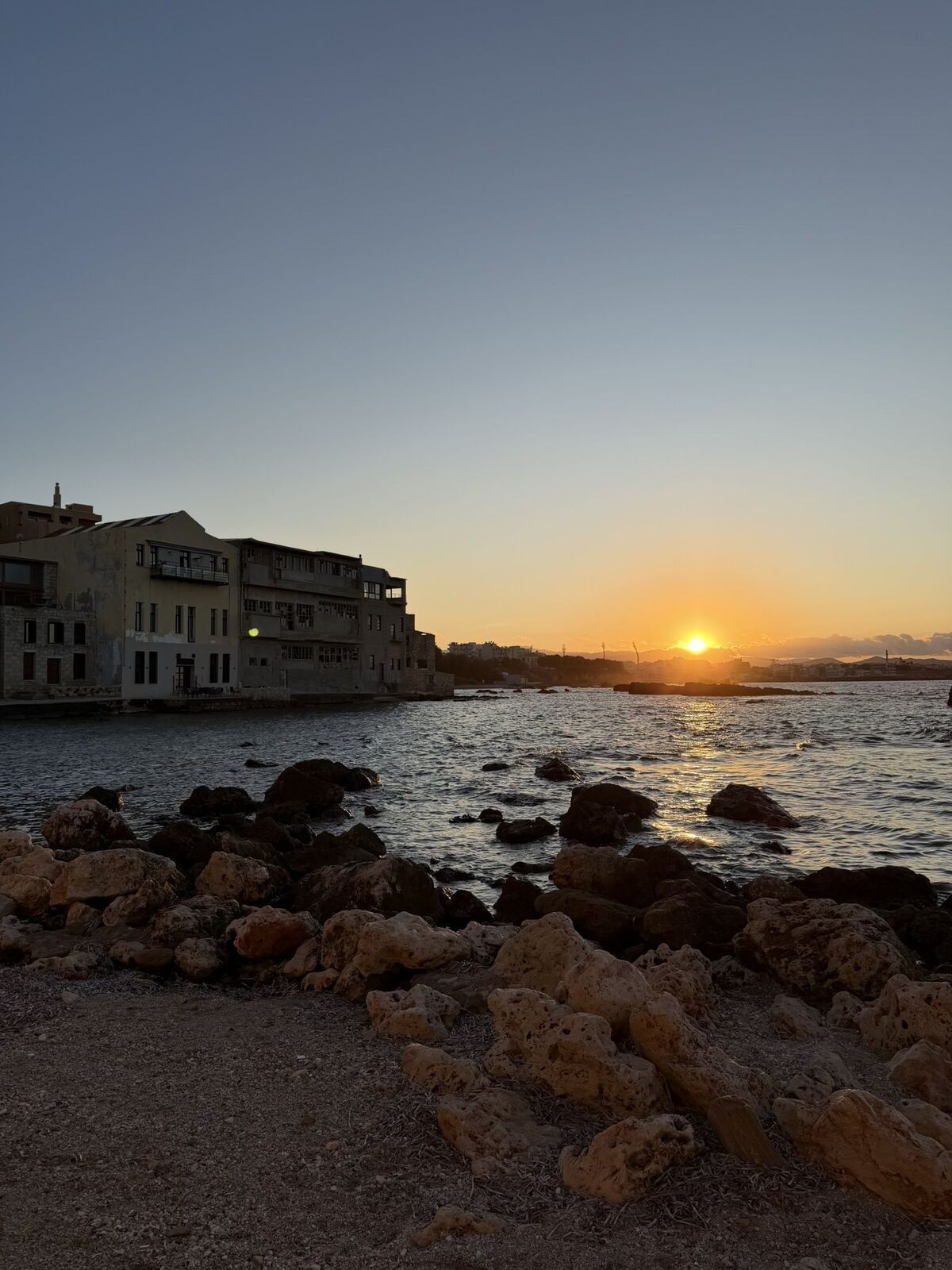
A short walk east along the waterfront from the Old Town brings you to Tabakaria – a district that takes its name from the tanneries (tabak is Turkish for tannery) that once defined it. More than 80 operated here by the mid-20th century and the area has since been quietly reinvented, with tannery buildings converted into hotels, villas and some of the most atmospheric dining spots in Chania. Some alleyways down to the sea lead to restaurants with tables right on the rocks and views back across to the Old Town – the ideal setting for your first meal in Crete.
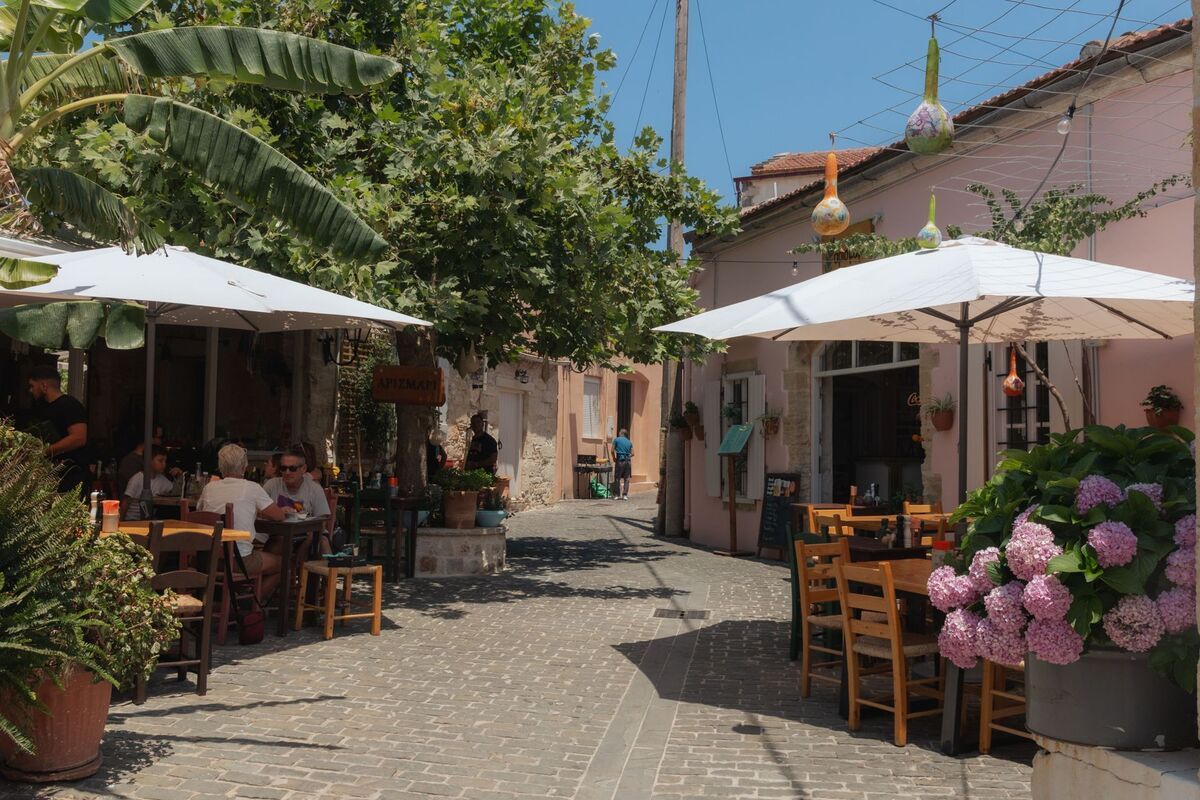
A day of village-hopping through some of the most interesting traditional settlements in the region awaits. There are more than 30 Apokoronas villages built in the shade of the White Mountains, each with its own character. The chosen route takes you from Vamos, with its stone lanes and neoclassical mansions, to Gavalochori and its rich folkloric traditions, and ends in Vryses, famous for its bridges and waterside tavernas.
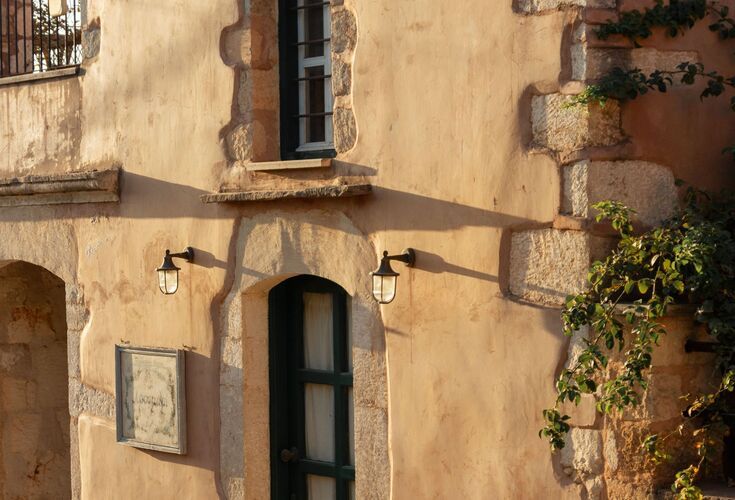
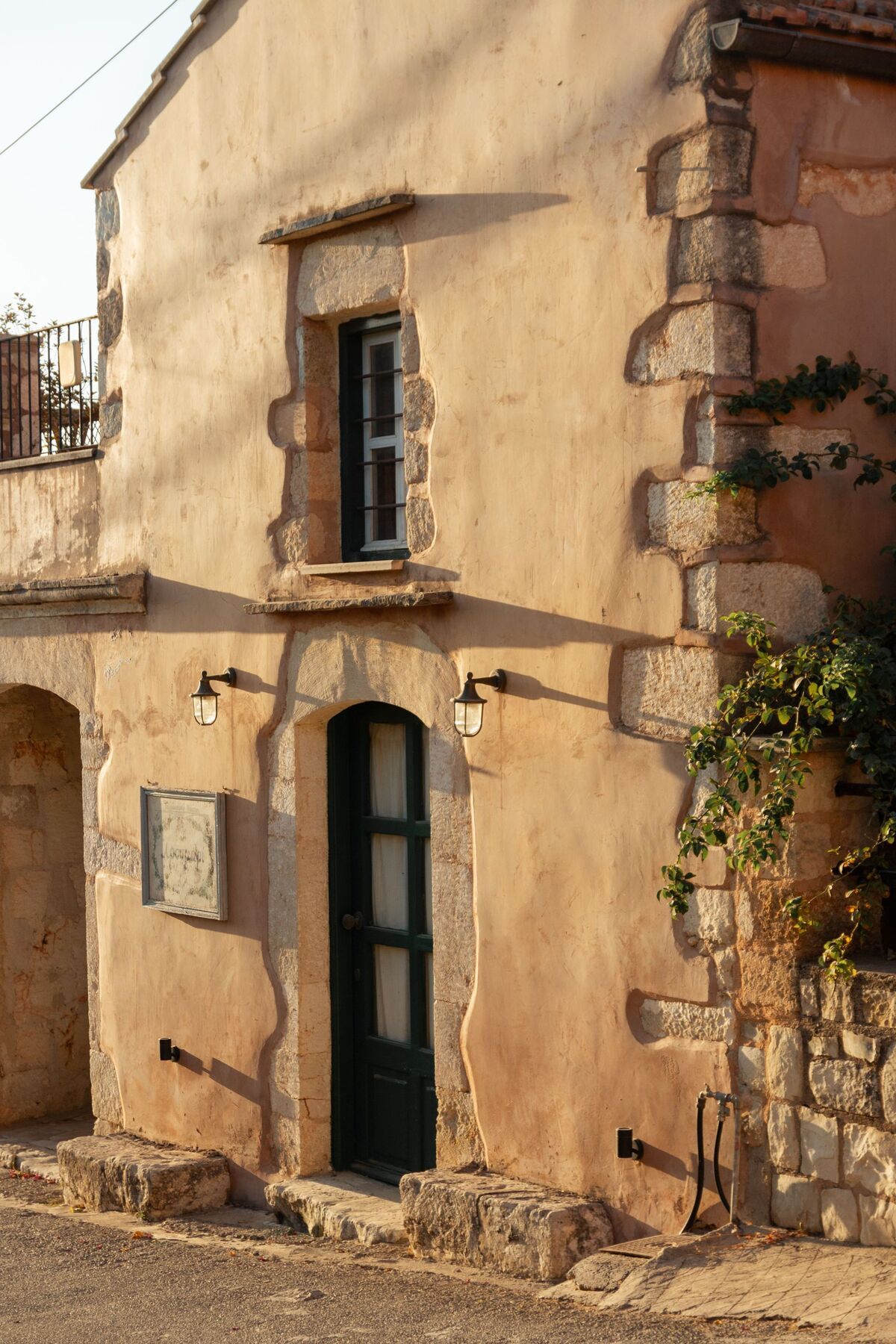
The main village of the Apokoronas region sits 300 metres above sea level, 25km from Chania. Built around a lively central square lined with traditional kafeneions and tavernas, it is the perfect stop for a late breakfast. The old neighbourhood, with its cobbled streets and well-preserved architecture, reflects the village's history as the capital of the Sfakia province during Ottoman rule, with grand neoclassical mansions sitting alongside the more modest single-room kamarospita of ordinary residents. There is a winery and a cheese factory to visit as well as the 13th-century chapel of the Virgin Mary and the Karydi Monastery, with its impressive 12-arched olive press. Every July, Vamos hosts the largest jazz festival in Crete.
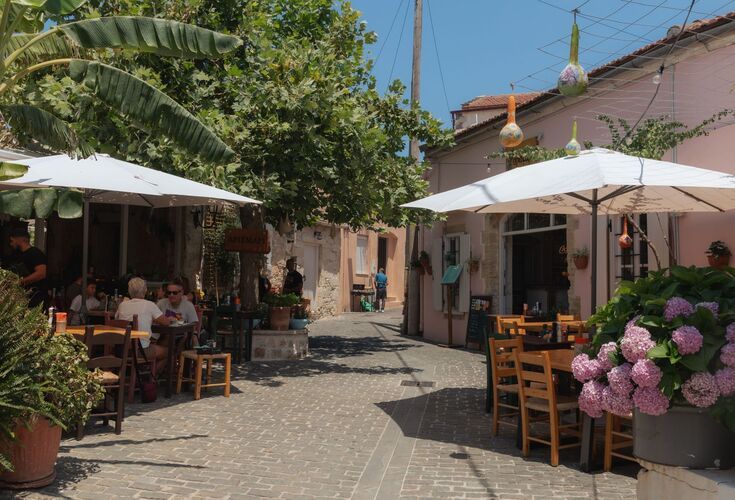
A short drive from Vamos, Gavalochori is another settlement of stone houses, paved streets and traditional village life. The Folklore Museum houses local costumes, old coins, weapons and everyday objects that bring the village's past to life. But the most distinctive feature of Gavalochori is kopaneli – a form of lacemaking with Byzantine roots, kept alive by a local Women's Cooperative whose shop sells handmade pieces. The local kafeneions serve traditional Cretan dishes.
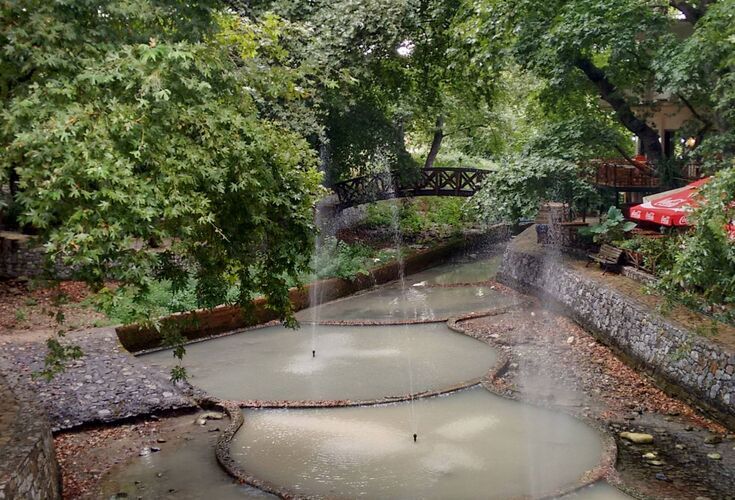
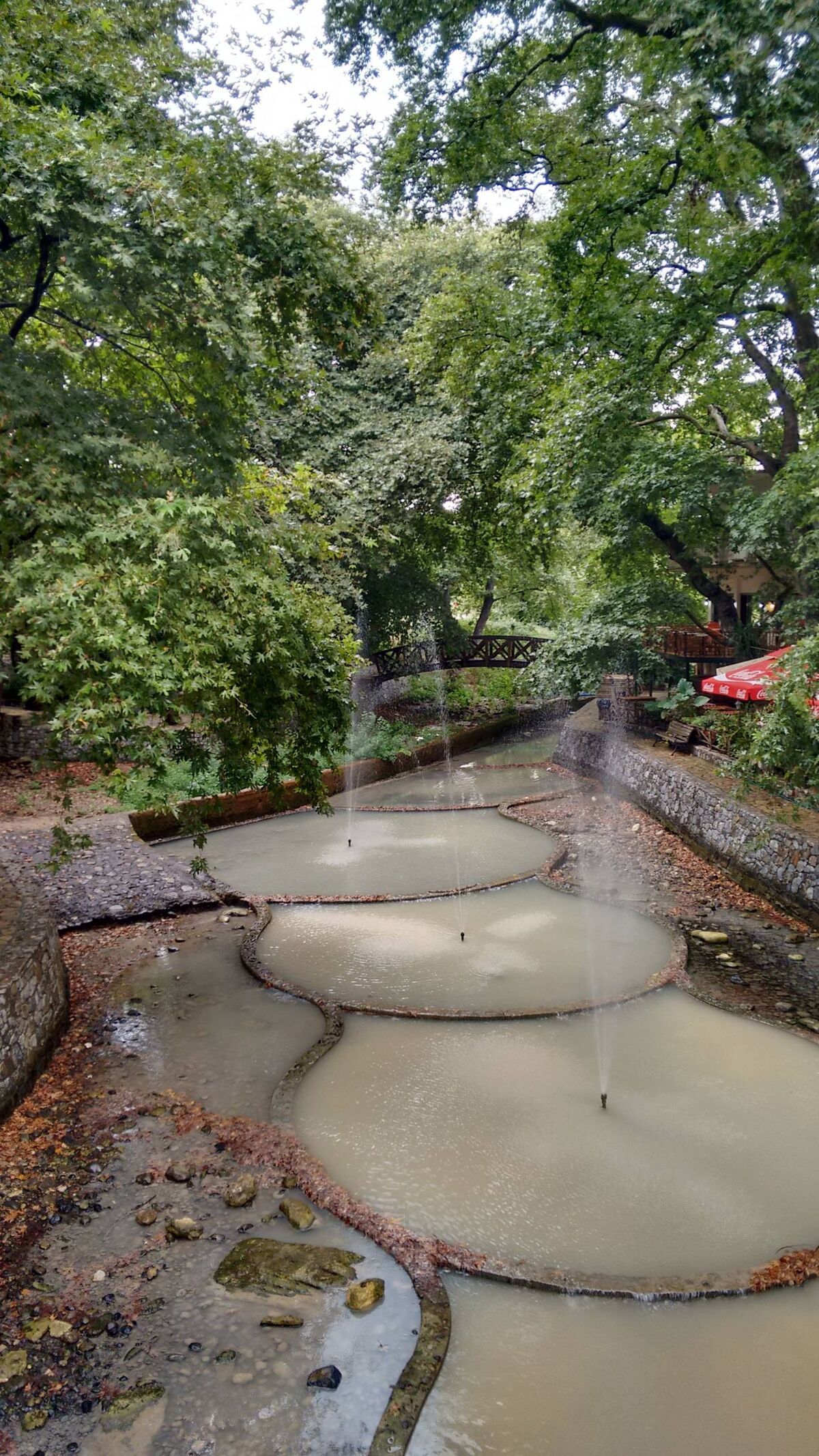
The name says it all – vryses means springs in Greek and the settlement is defined by running water, shaded plane trees and waterside tavernas that make it a natural stop for a late lunch or early dinner. The village has long been known for its thick, creamy yoghurt – a local speciality that has made Vryses a favourite pit stop on the road between Chania and Rethymno. The setting is unhurried and green, quite different in feel from the stone villages earlier in the day. Just outside the village, on the road towards Rethymno, a bridge dating to Greco-Roman times – the so-called Greek Kamara – is worth a detour.
Local tip: Close by is Lake Kournas, the only natural freshwater lake in Crete, where you can hire a pedalo, go horse riding or enjoy a picnic by the water.
Start early to give yourself a full day to explore Rethymno, which sits between the regions of Chania and Heraklion in Crete. The route takes in the Arkadi Monastery, one of Greece's most powerful symbols of resistance, the ancient city of Eleutherna and the village of Margarites, before you return to Rethymno in time for sunset on the waterfront.
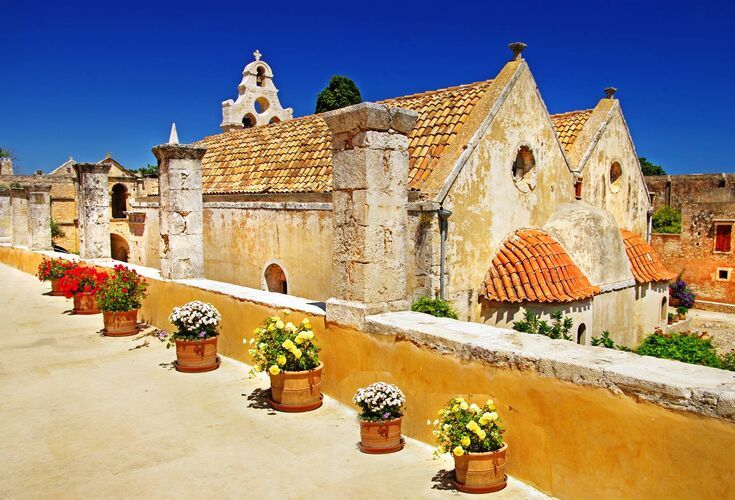
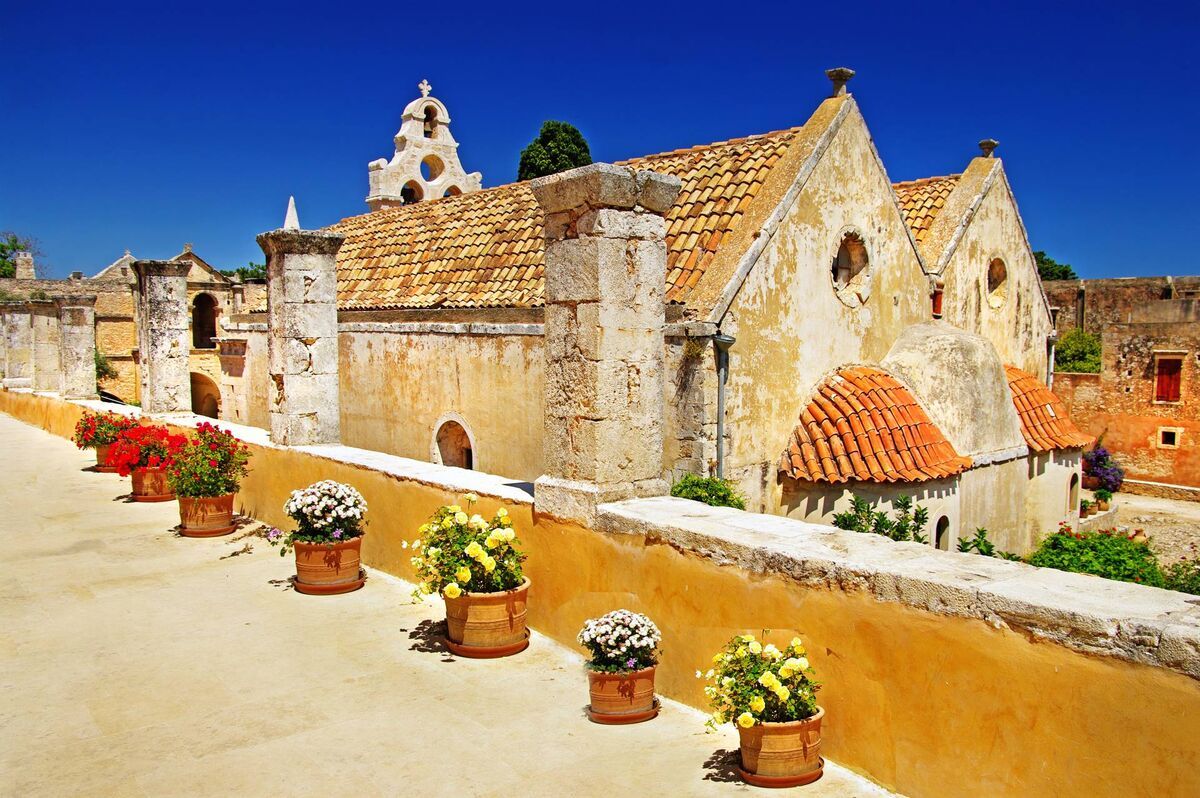
Just 23km east of Rethymno, the Arkadi Monastery sits on a fertile plateau on the slopes of Mount Psiloritis – a fortress-like complex whose Renaissance architecture gives little hint of the full history within its walls. Founded in the 11th century, it served for centuries as a centre of learning and manuscript-copying. But Arkadi is above all a symbol of resistance. In 1866, some 964 rebel fighters, women and children barricaded themselves inside rather than surrender to the besieging Ottomans, ultimately setting the gunpowder depot alight. The event galvanised the Cretan independence movement and UNESCO has since designated the monastery a European Monument of Freedom. Today, visitors can explore the Katholikon, the Dining Hall (look for the bullet marks) – and a museum of manuscripts, icons and revolution-era weapons.
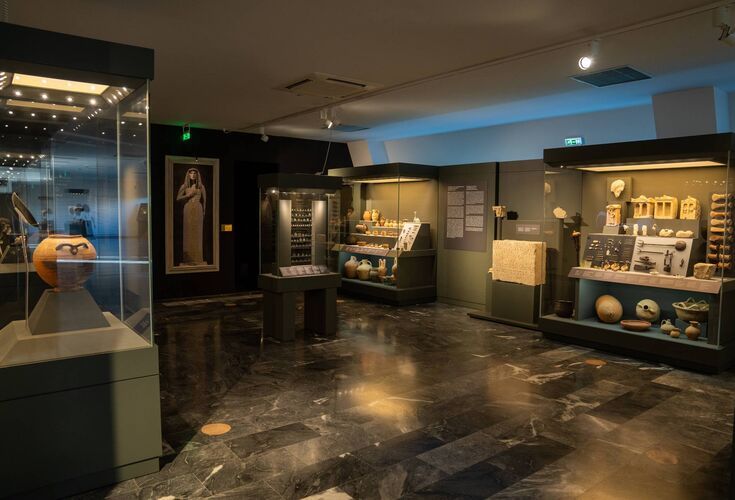
A short drive from Arkadi, Ancient Eleutherna is one of Crete's most significant archaeological sites, with an unbroken history stretching from the early Minoanperiod to the Byzantine era. The city flourished after the arrival of the Dorians, functioning as a crossroads between the great centres of ancient Crete – Kydonia, Knossos and Psiloritis. The site spreads across two hills, Nisi and Pyrgi, where remains from different periods survive: Hellenistic houses and public buildings, Roman baths, an early Christian basilica and fortification works. The cemetery at Orthi Petra, dating from the late geometric and archaic periods, is among the most significant finds. The nearby Archaeological Museum of Eleutherna brings it all together, displaying the most important discoveries from the excavations in a well-considered setting.
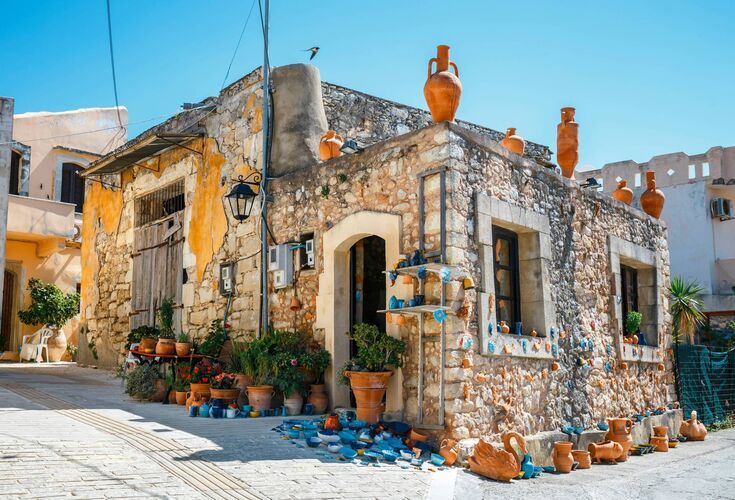
Very close to Ancient Eleutherna, the village of Margarites is built amphitheatrically at around 300 metres, with views over lush gorges and towards the sea of northern Crete. It is known as the village of the pitharades– the jar-makers – and is an important centre of pottery in western Crete. More than a dozen traditional workshops, known as tsikalaria, operate in its cobbled lanes, where craftsmen work using traditional methods, often with a foot-powered wheel. Ceramics of every kind adorn courtyards, walls and shop fronts, giving the village the feel of an open-air folk-art museum. The stone-built houses and picturesque churches add to the appeal – and there are plenty of small shops and cafes for a coffee or a bite to eat.
Local tip: Around 20 minutes away by car, the Melidoni Cave – known as Gerontospilios – is a site of mythological and historical significance. It was a place of worship in Minoan times and is linked to one of the most tragic episodes of the Ottoman occupation, when hundreds of sheltering women, children and fighters lost their lives here during a siege in 1823. Inside, impressive stalactites and stalagmites form natural chambers.
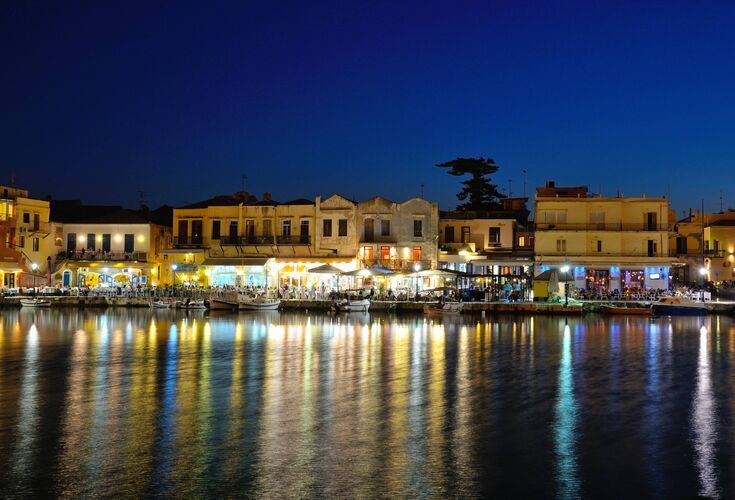
The drive back to Rethymno takes around 40 minutes. If you time it right, you’ll catch the sunset as you walk along Kefalogianni Street, beneath the fortified walls enclosing the Town Square and through the old neighbourhood of Toube. With the sea on one side and the warm glow of the old town on the other, the waterfront tavernas and bars of Rethymno Old Town are the natural place to end the day.
After soaking up the sights and sounds of Rethymno Old Town, you turn your attention to culinary Crete – from olive oil tasting and raki distilleries to vineyard tours and cooking classes. The afternoon brings you to Heraklion.
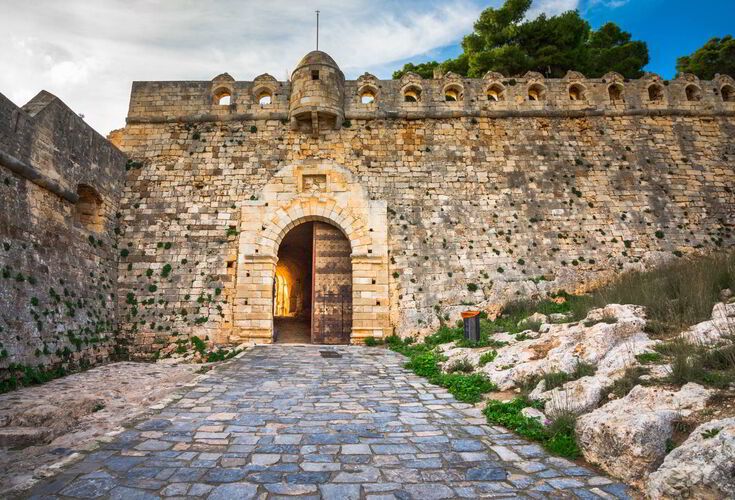
Passing through the Porta Guora – the only surviving gate of the original city walls – you enter an Old Town that is sometimes Venetian, sometimes Ottoman but always unmistakably Cretan. Ornate doorways, the Neratzes Mosque with its towering minaret, the still-flowing Rimondi Fountain and the Venetian Loggia stand out along the way – before the route leads you up to the Fortezza, Rethymno's defining landmark. Built in the late 16th century on the Paleokastro hill as both a defensive stronghold and the city's administrative and religious centre, it offers panoramic views over the city and sea. The pentagonal Ottoman ravelin opposite the Fortezza's main gate houses the Archaeological Museum of Rethymno.

The food and drink culture of Crete is inseparable from its identity, so we're adding a culinary experience or two to your day. Olive oil tasting in an ancient olive grove by Pigi village introduces you to the green gold at the heart of Cretan cuisine – plus an opportunity to visit Pigi itself. A visit to a local raki distillery reveals the art behind Crete's most iconic spirit, followed by time at Sfakaki village and its beach. The wineriesof Rethymno – including organic Zoumberakis Vineyards in Kali Sikia on the slopes of Mount Krioneritis, Kourkoulou Winery in the Psiloritis mountains and the Klados Winery in the Geropotamos region east of Rethymno – offer vineyard tours and tastings of local varieties. Or how about a cooking class with a chef who shares local secrets – possibly the most rewarding souvenir you'll take home with you?
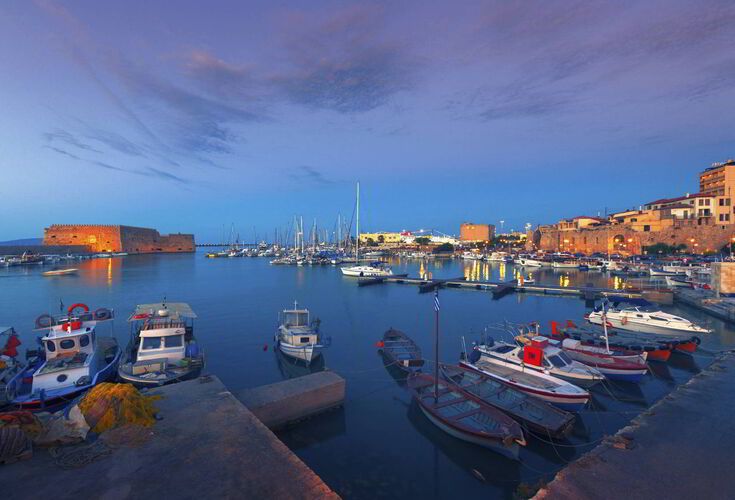
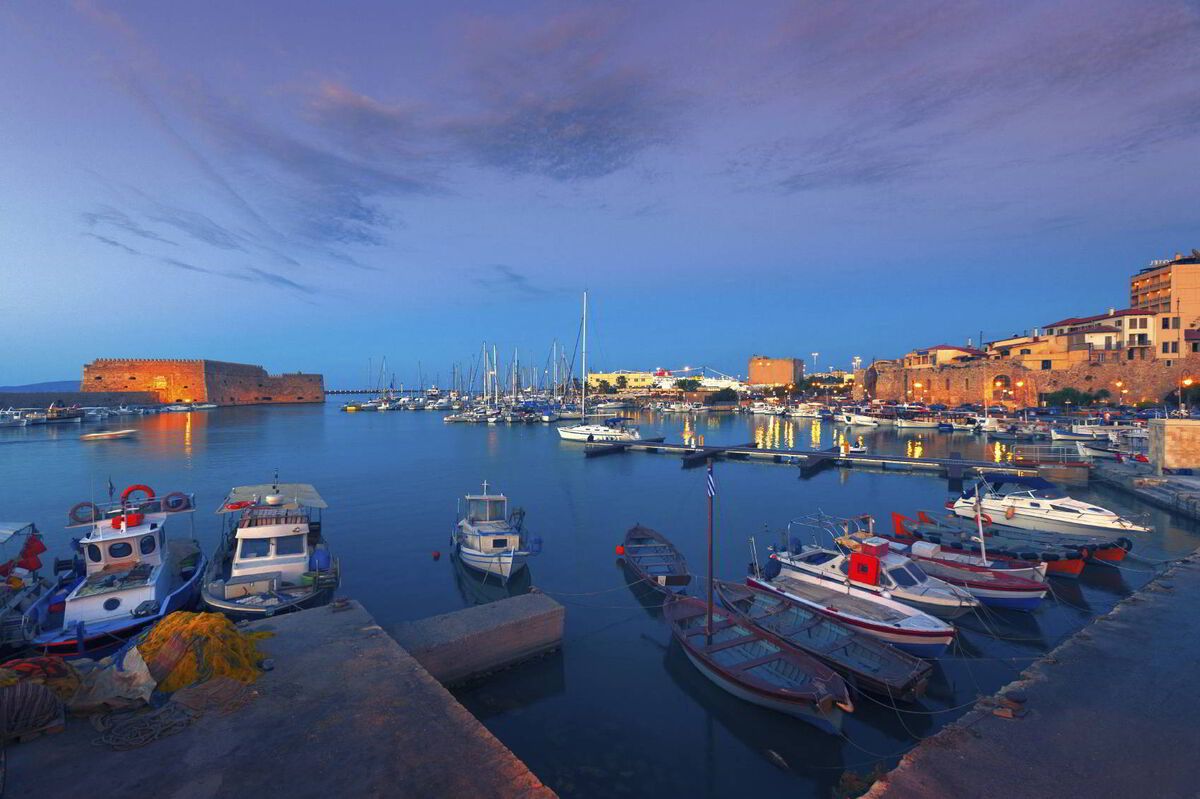
The drive east from Rethymno takes around an hour and a half. Heraklion is Crete's capital and largest city – a multifaceted port city where Minoan heritage, Venetian architecture and a lively contemporary food scene all coexist. Arrive in the early evening, find a table near the old harbour and let the city introduce itself at its own pace. The monuments and museums of Heraklion come tomorrow.
The Palace of Knossos and the Archaeological Museum bring the world of the Minoans to life, from the site of the legendary labyrinth to the extraordinary finds of Crete’s UNESCO-listed palatial centres. The afternoon is spent on foot, among the Venetian, Byzantine and Ottoman monuments of Heraklion's historic centre.
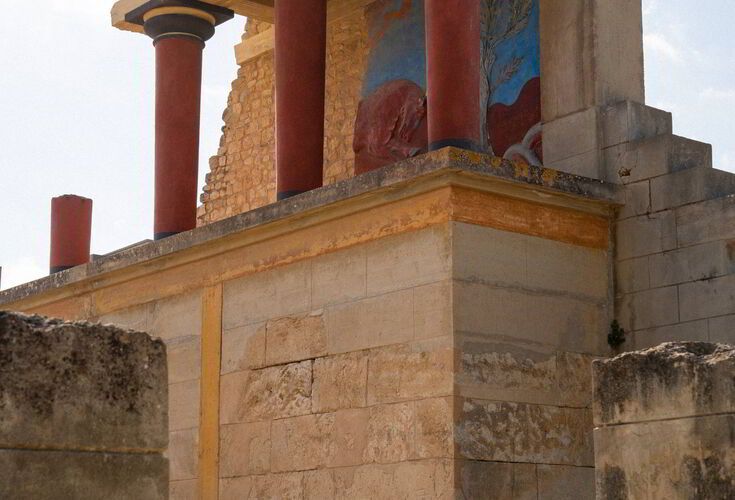
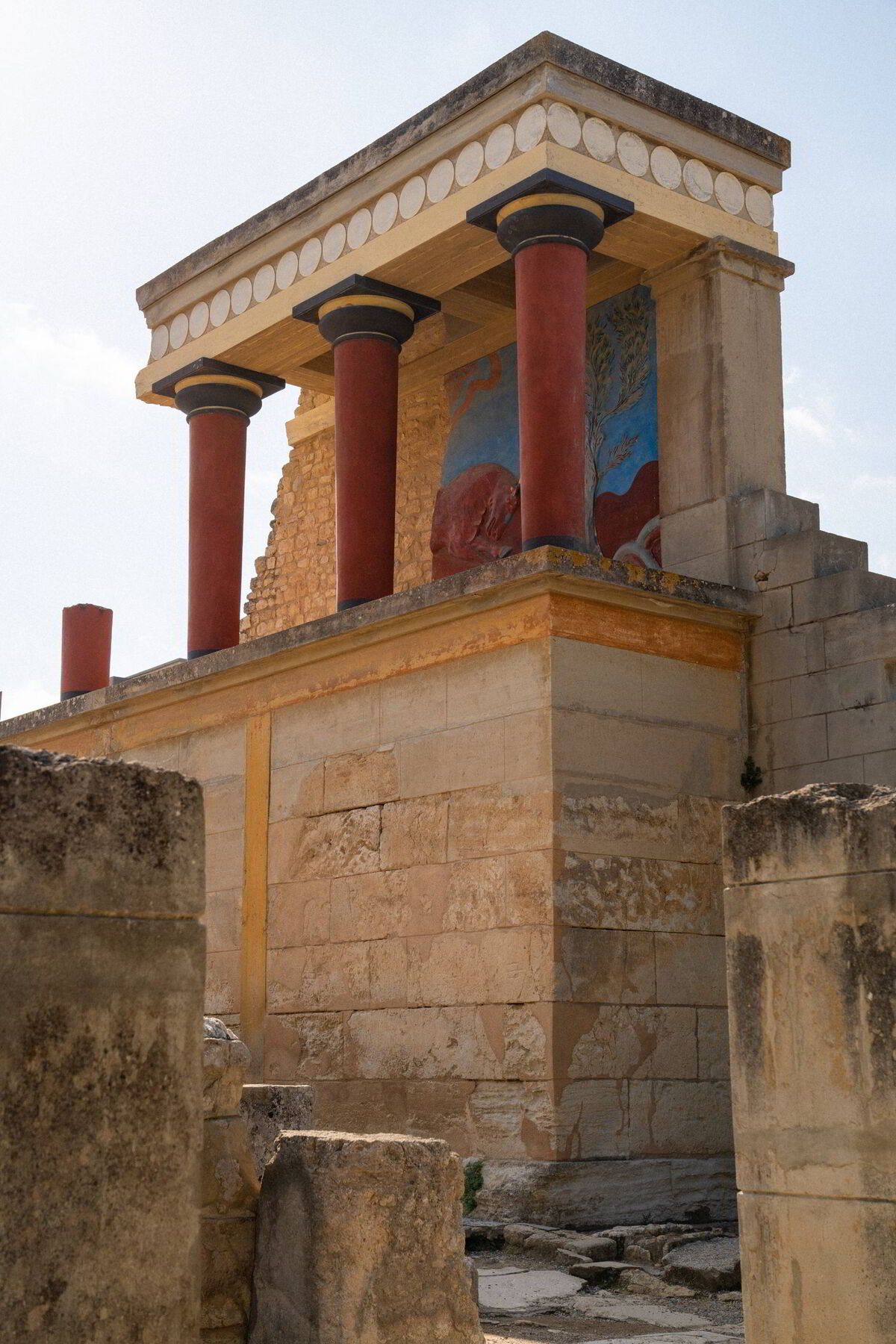
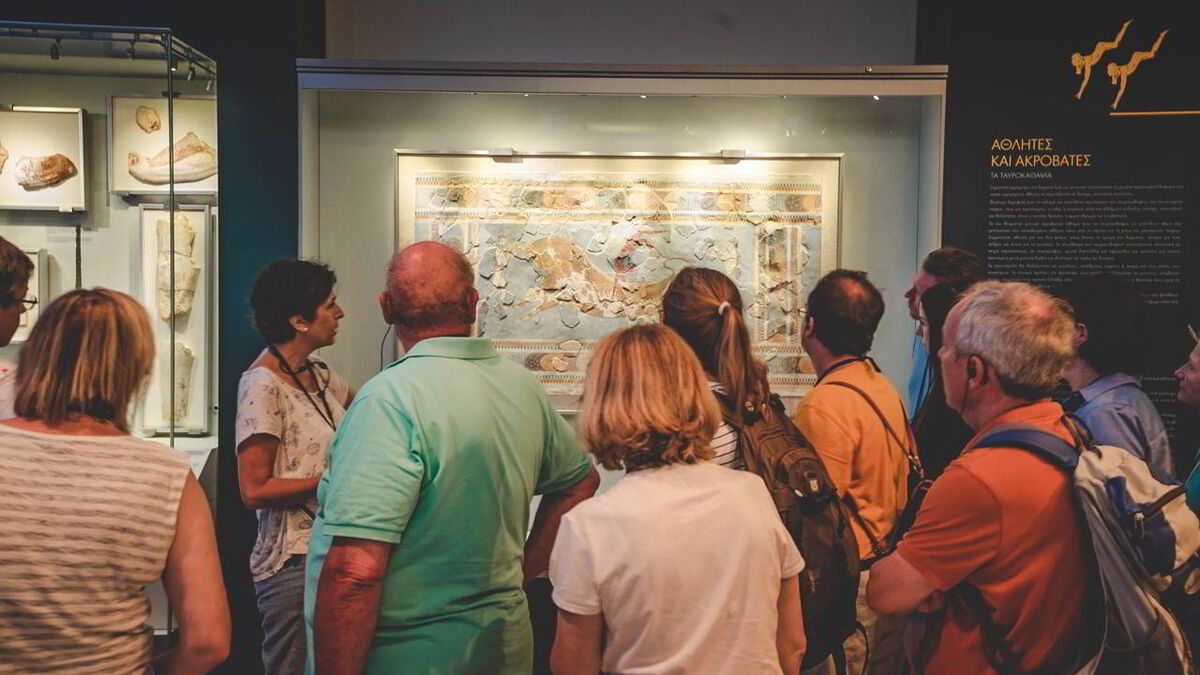
Just outside Heraklion, Knossos Palace takes you to the heart of Europe's earliest advanced civilisation. This was the grandest palace of Minoan Crete – a sprawling 43,000 square metre complex of 1,300 rooms that reached its peak around 4,000 years ago and is said to have inspired the myth of the labyrinth built by King Minos to contain the Minotaur. Walking through the site, the sophistication of Minoan life is evident at every turn: intricate drainage systems, multi-storey residences, ornate frescoes and the oldest throne room in Europe. The Bull-leaping Fresco and the Leaping Dolphins of the Queen's Megaron are among the most iconic images of the Bronze Age. A guide is recommended.
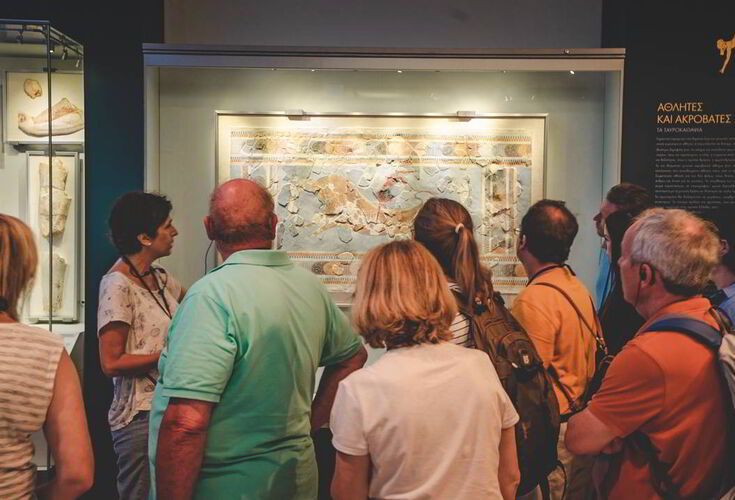
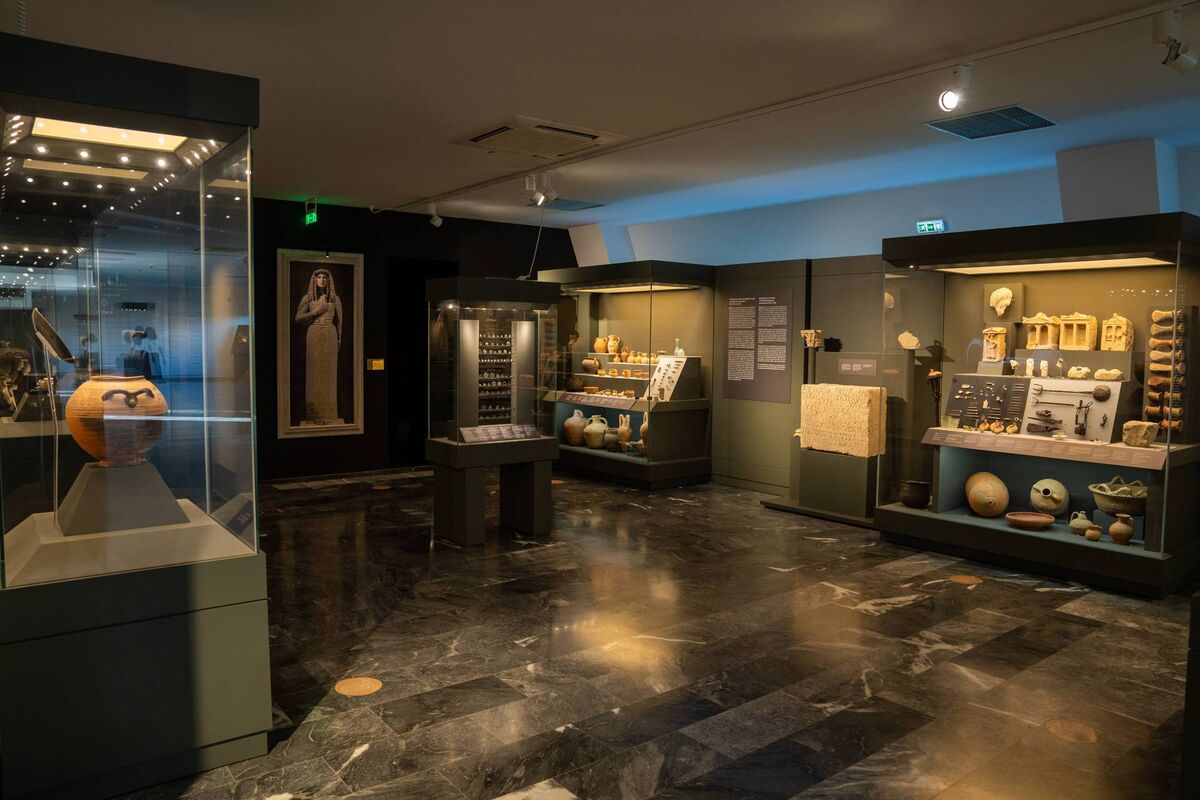
Back in Heraklion, the Archaeological Museum is the perfect companion to Knossos – and one of the most important museums in Greece. Housing antiquities spanning 5,500 years, from Neolithic times to the Roman era, it catalogues the full history of Minoan civilisation. Set over two floors and 27 galleries, its collection draws from all four of Crete's Minoan palatial centres – Knossos, Phaistos, Malia and Zakros, inscribed as Greece’s most recent UNESCO World Heritage Site – as well as sites from across the island. The highlights are extraordinary: the still-undeciphered Phaistos Disc, the Snake Goddess figurines, the Bull's Head rhyton carved from black steatite with rock-crystal eyes, the iconic Bull-Leaper's fresco and the Linear B tablets – a syllabic script predating the Greek alphabet by several centuries. If Knossos raises the questions, the Archaeological Museum answers them.
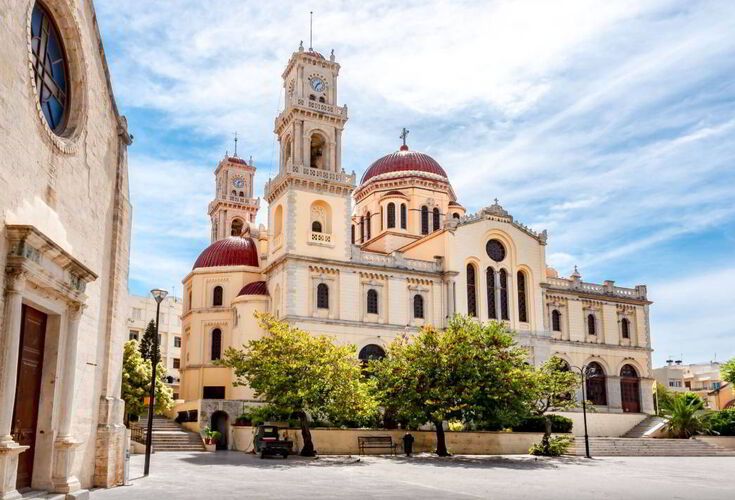
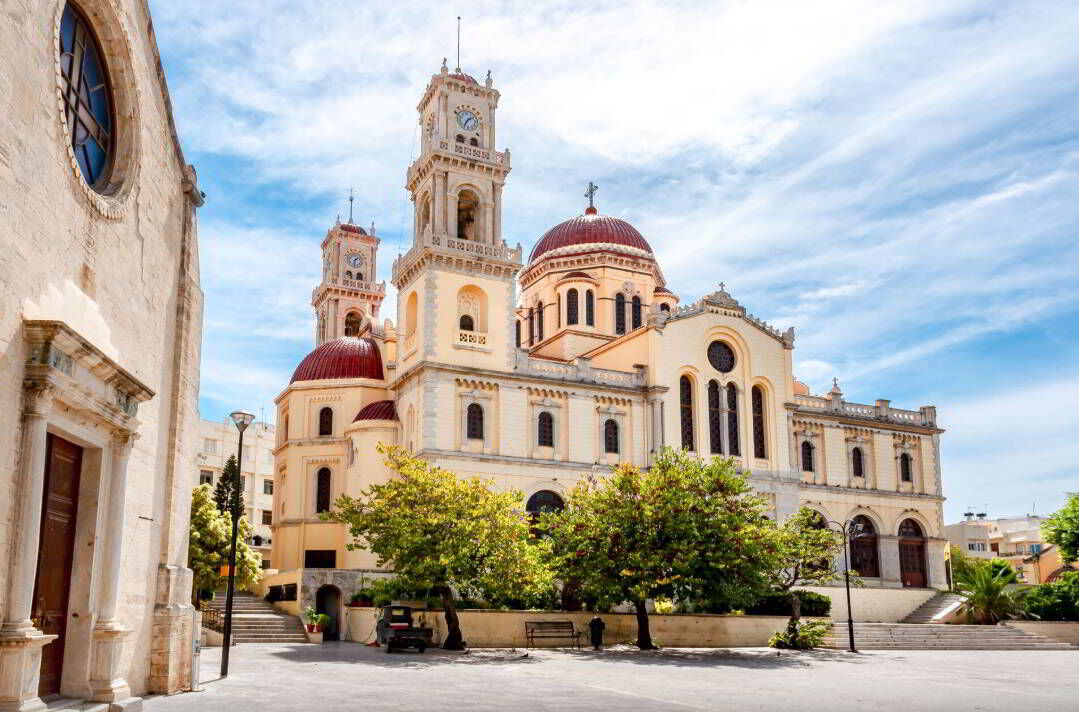
The afternoon belongs to Heraklion itself. A walking tour of the Old Town reveals the full range of its multicultural past: the Koules Fortress guarding the Venetian harbour, the elegant Venetian Loggia on August 25th Street, the Morosini Fountain – still flowing since 1628 – and the imposing Cathedral of Agios Minas on Agia Aikaterini Square. The Church of St Titus, rebuilt in 1872 on the site of an early Byzantine church, adds another layer to a city shaped by Greeks, Arabs, Venetians and Ottomans over many centuries.
Local tip: For one of the finest views in Heraklion, time your walk to catch the sunset from the Venetian walls.
Reaching Santorini by plane or ferry, you can look forward to a day that mixes the iconic and unhurried: Oia in the morning, a boat trip to Thirassia island in the afternoon and – as the afternoon light fades – a sunset wine tasting at one of the caldera wineries.
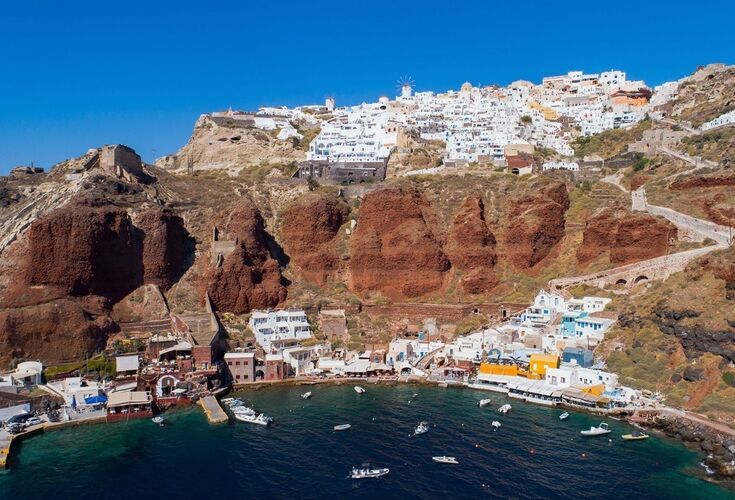
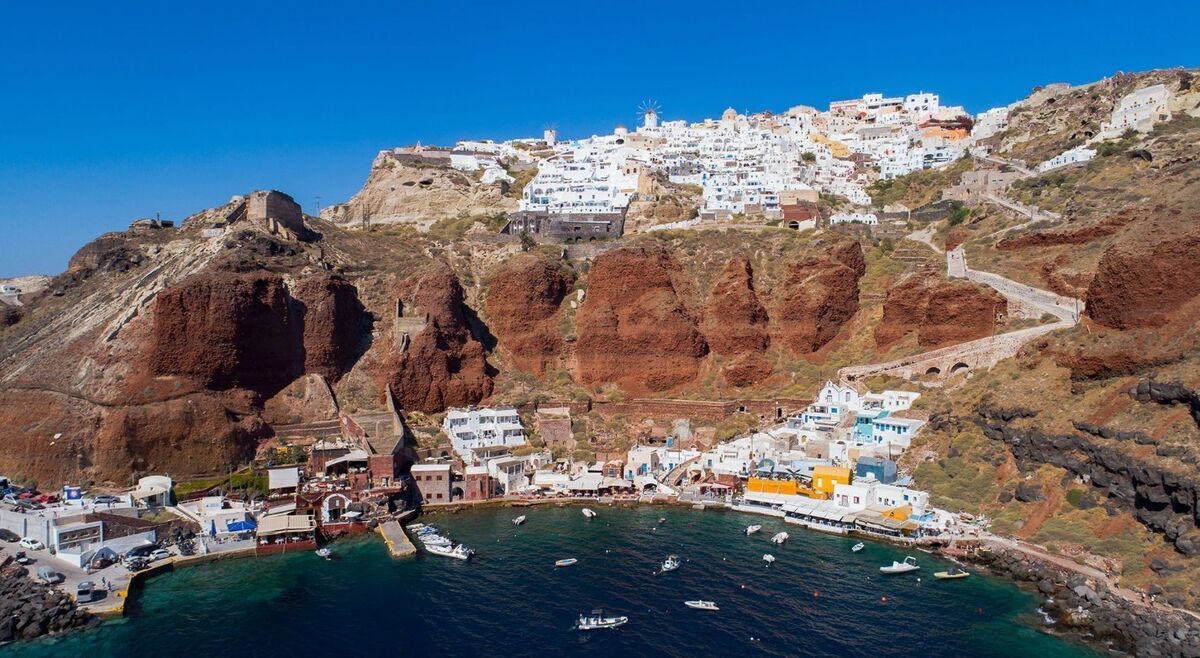
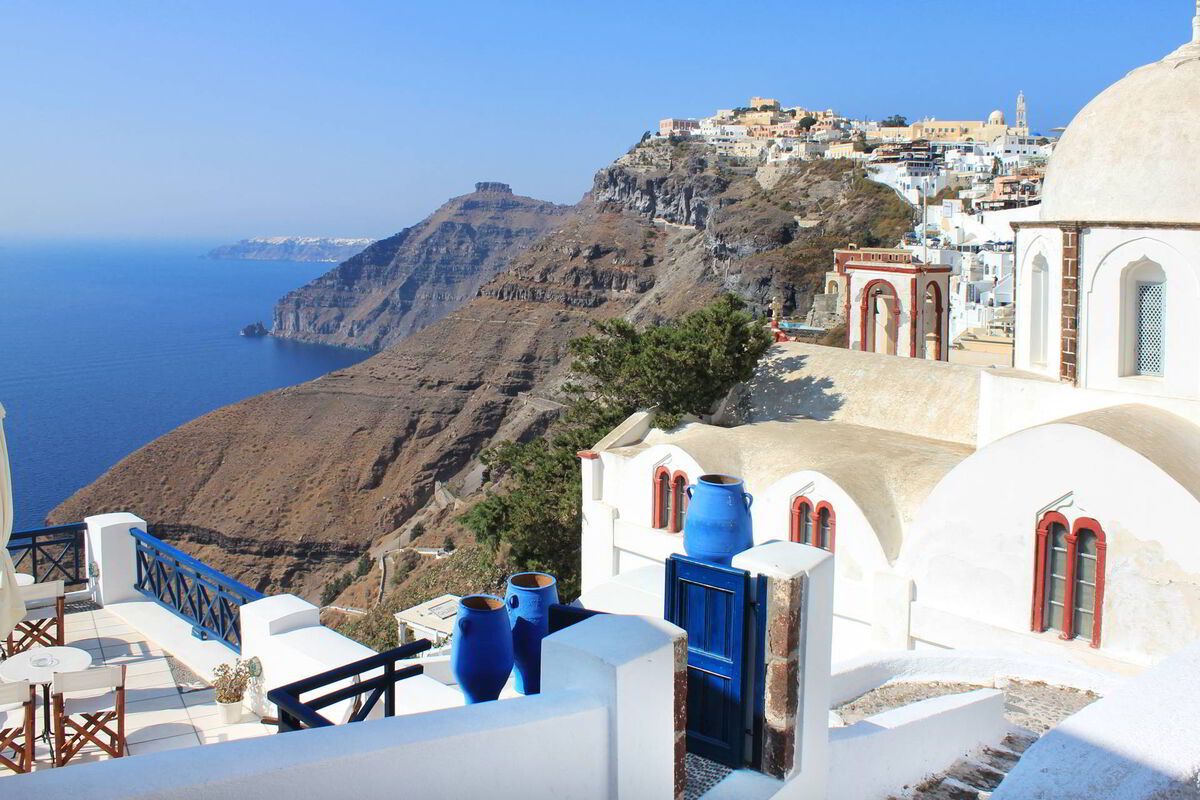
Perched on the northern tip of the caldera, Oia is the picture-postcard image of Santorini – sugar-cube houses in blinding white, blue-domed churches, windmills and narrow alleyways that open suddenly onto views of the caldera. It is also rightly celebrated for its food, with restaurants and tavernas ranging from simple fish plates to high-end Aegean cuisine. Around 300 steps below the village, the tiny fishing harbour of Ammoudi offers some of the best seafood on the island, with tables right on the water. Oia is a must-see destination, so arriving as early as possible gives you the best experience.
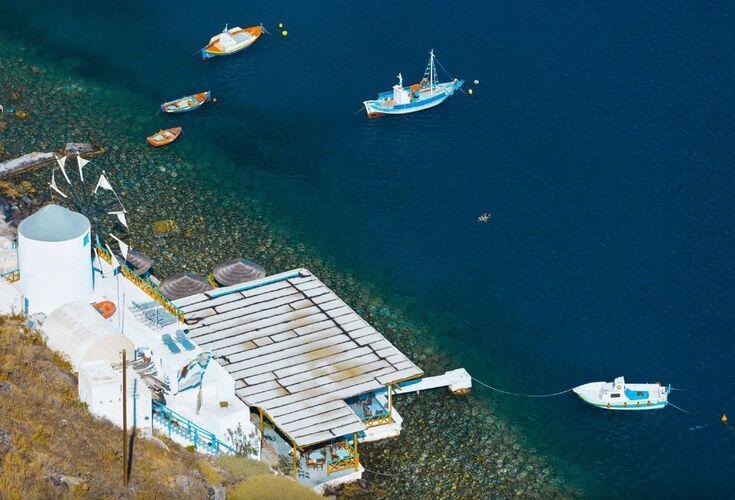
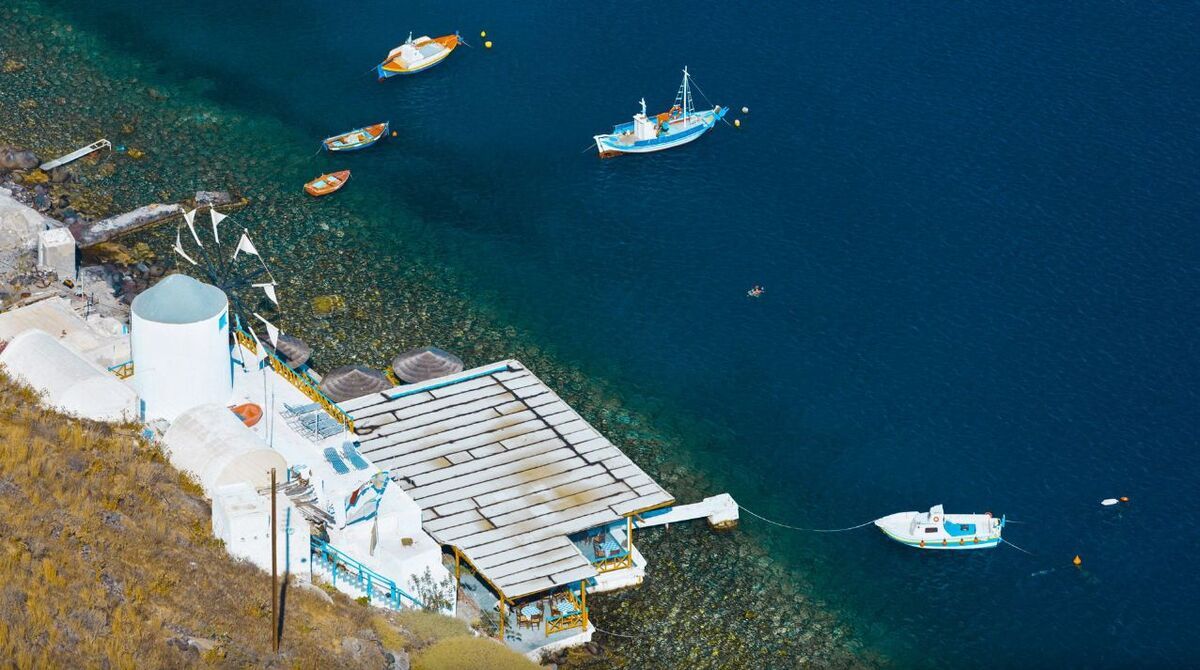
From Ammoudi port in Oia, a short boat ride brings you to Thirasia – the quieter counterpart to Santorini sitting just across the caldera. Part of the same landmass before the Minoan eruption, it shares the same volcanic geology as Santorini but none of its tourist infrastructure, with just over 300 residents and a way of life that feels decades removed from that of its famous neighbour. The cliff-top village of Manolas has the same dramatic setting as Santorini's settlements but with a more down-to-earth character, and the church of Prophet Elias offers fine views across the caldera. Below, the port of Korfos and Agia Eirini are both good spots for a seafood lunch and a swim on volcanic black pebbles.
Local tip: Boat excursions from Ammoudi can be combined with a visit to Nea and Palea Kameni – the volcanic islands at the centre of the caldera – and their thermal springs, though this will require more time.
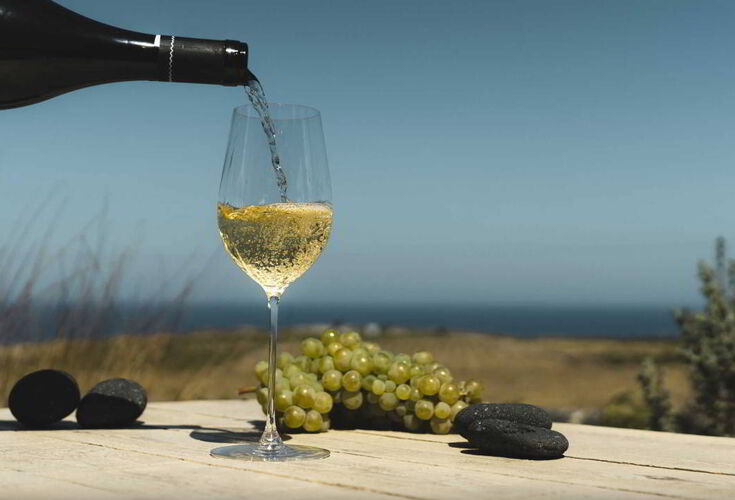
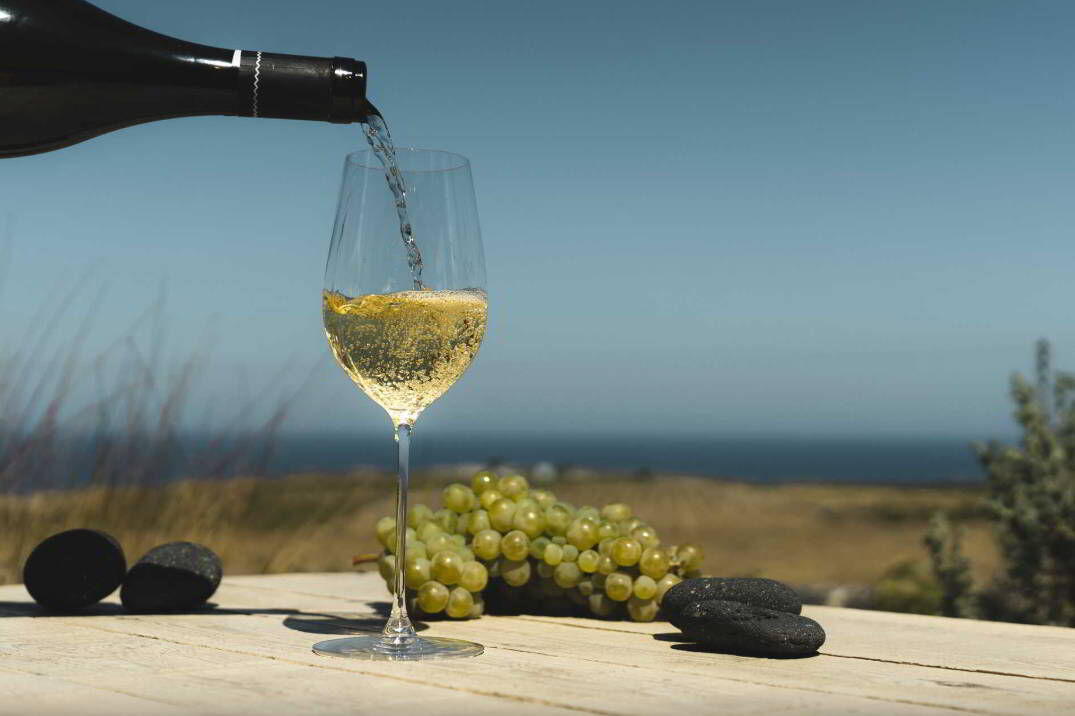
Santorini's wine story predates the legendary eruption that created the caldera. Today, the island is famous for producing crisp Assyrtikowhites and the sun-dried PDO Vinsanto dessert wine, and for the tradition of training vines into low basket shapes known as kouloures to protect them from wind and water loss. There are wineries in various parts of the island, but the wineries around Megalochori and Pyrgos Kallistis – terraced into the hillside with views over the caldera – are the natural focus at this time of day. Megalochori catches the Santorini sunset perfectly – an especially rewarding end to the day.
A day that moves from Santorini's busy capital to its prehistoric heart. Fira and the Museum of Prehistoric Thera set the scene before the route heads southwest to Akrotiri – one of the most significant Bronze Age settlements in Europe. The afternoon unwinds at Vlychada beach and in the quieter inland villages, where traditional tavernas and unhurried streets bring the day to a close.
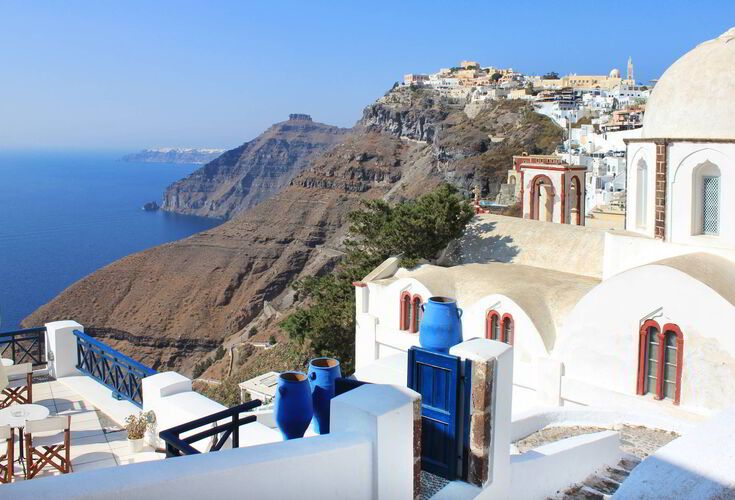
Start early in Fira – Santorini's capital and busiest hub. The cobbled lanes, caldera-edge cafes and clusters of boutiques and souvenir shops make it an easy place to linger over breakfast with one of the most dramatic views in the Aegean. In the afternoon it fills quickly, so the morning is the time to be here. From Fira, the Museum of Prehistoric Thera is an essential stop ahead of visiting Akrotiri. It houses remarkably well-preserved wall paintings, gold jewellery, ceramics and everyday objects that reveal the sophistication of a Bronze Age civilisation brought to an abrupt end by the volcanic eruption of around 1600 BC. The celebrated golden ibex figurine is among the highlights.
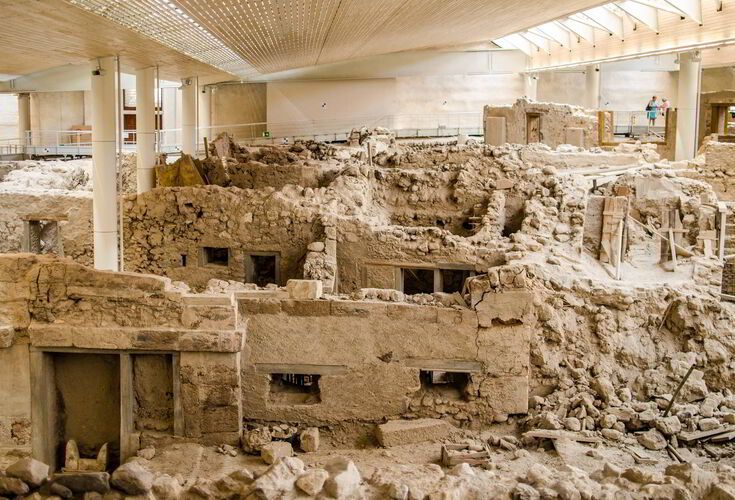
Referred to as Greece's Pompeii, the archaeological site of Akrotiri in southwest Santorini is one of the most significant prehistoric settlements in Europe. Inhabited from at least the 4th millennium BC, it reached its peak around 1500 BC as one of the main urban centres of the Aegean – before being preserved under volcanic ash in a manner that has kept its secrets remarkably intact. The 50-acre excavation reveals multi-storey buildings, sophisticated drainage systems and evidence of a society of engineers, architects and artists that traded widely across the region. A bioclimatic roof maintains natural light and a comfortable temperature year-round, making it one of the best-designed archaeological sites in Greece.
Local tip: The Akrotiri Lighthouse, on the island's southwestern tip, offers one of the most personal sunset spots on Santorini – and at 4.7km from the site, it is within hiking distance.
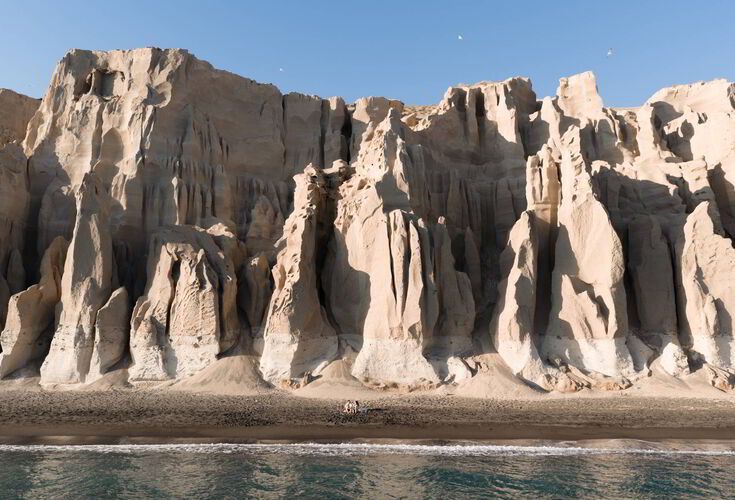
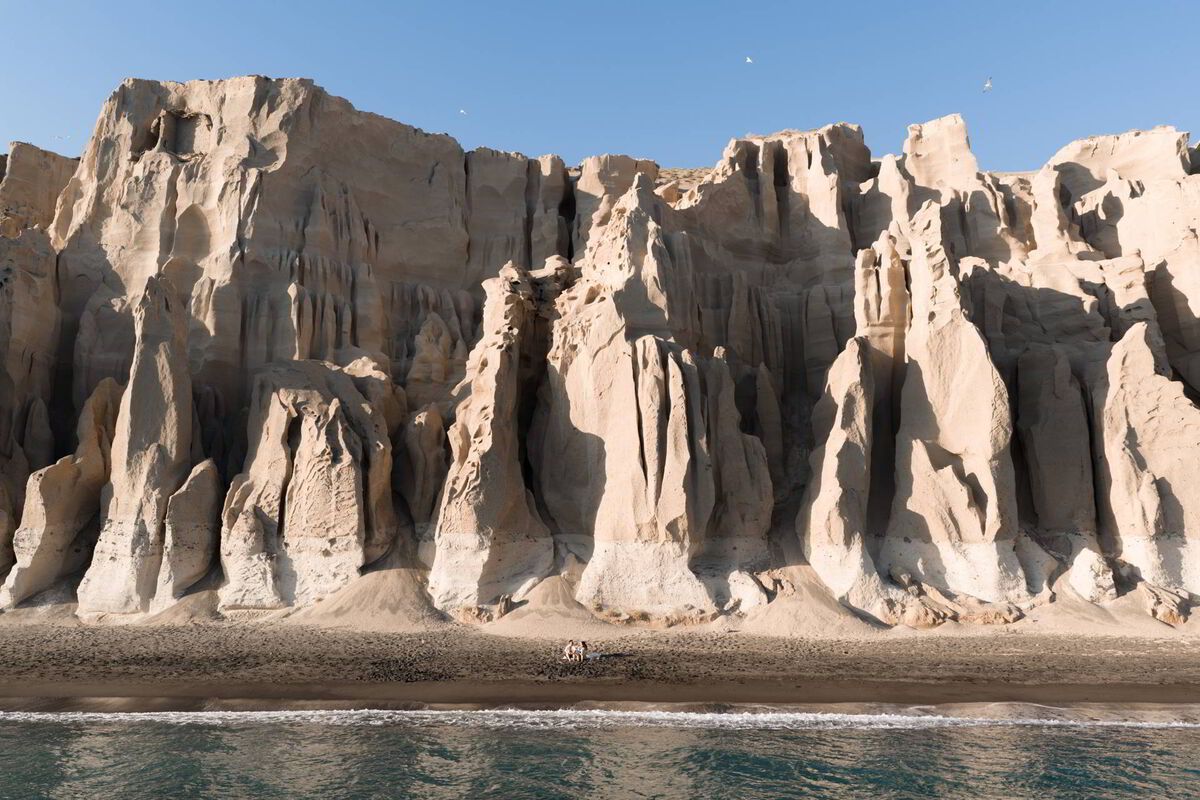
A 15-minute drive from Akrotiri, Vlychada is a distinctive beach of fine black sandand pebbles backed by an extraordinary white volcanic rock face, wind-carved into shapes that give it the feel of a lunar landscape. It is quieter and more isolated than the island's better-known beaches. Just above the shore, the Tomato Industrial Museum – housed in a restored tomato factory – makes for an unexpected detour. Inside, you will learn how the tomato was once central to Santorini's economy, with the island's volcanic soil producing an unusually sweet, concentrated variety.
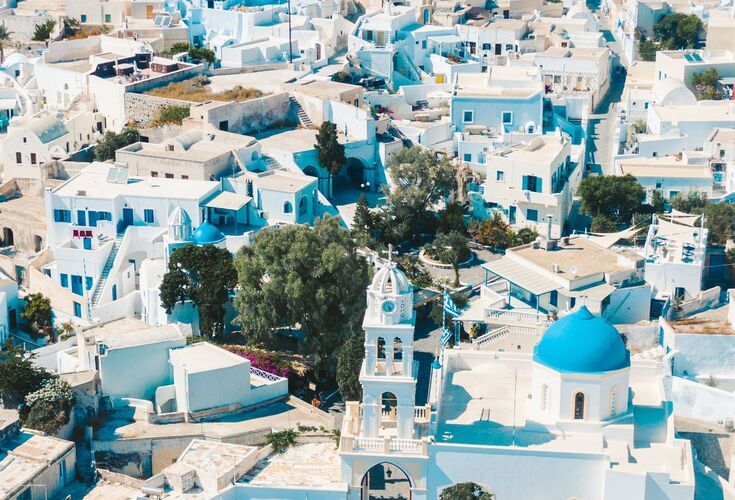
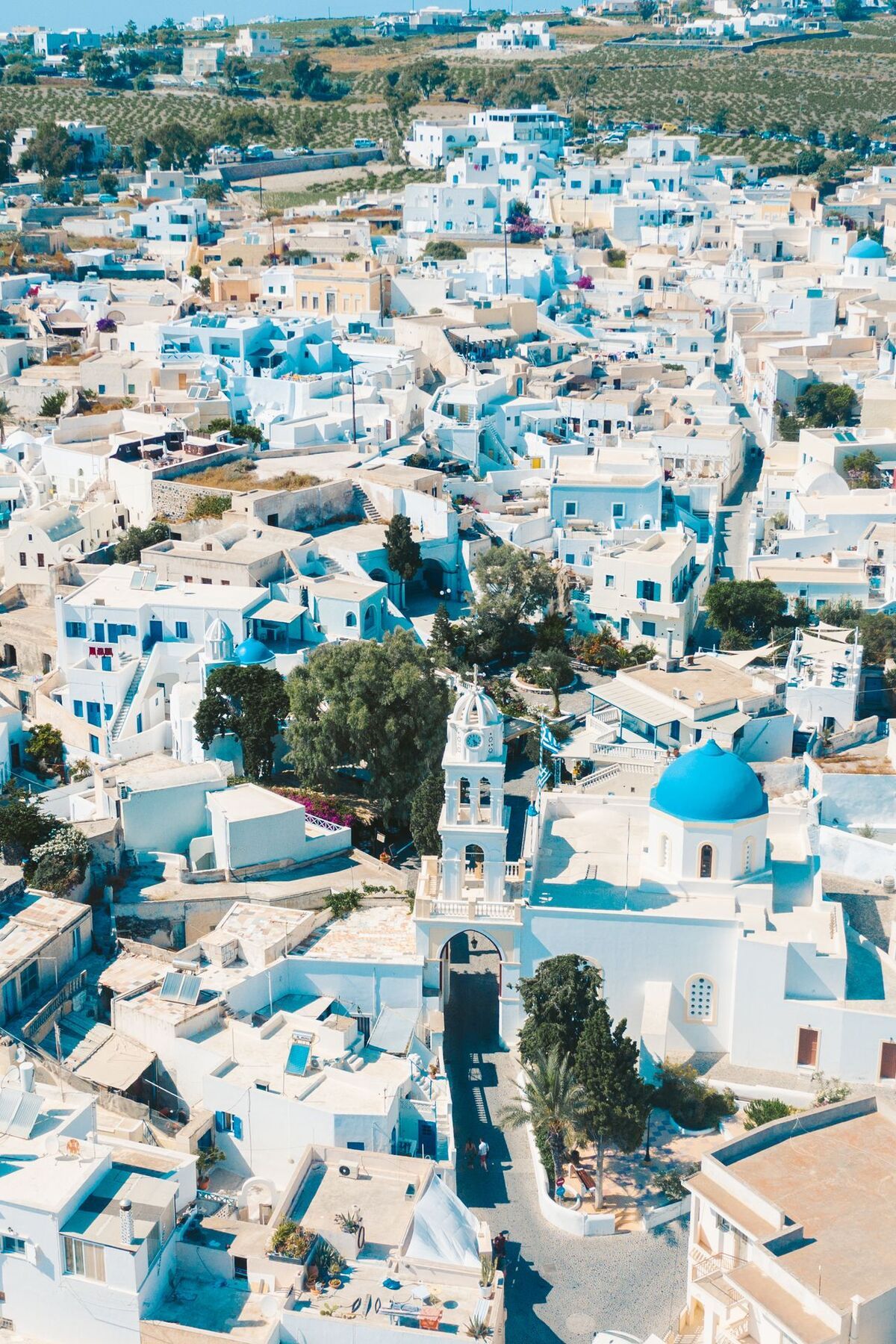
The afternoon ends in one or more of Santorini's inland villages – away from the more popular caldera edge. Messaria, at the centre of the island, is surrounded by vineyards and preserves its Cycladic character in narrow alleyways and picturesque churches. Pyrgos Kallistis, at the island's highest point, offers panoramic views across to Oia and a Venetian castle at its summit, with cafes and restaurants nearby for a sunset dinner. Megalochori has a quieter, unhurried feel, with a labyrinth of cobblestone lanes, bougainvillea-draped squares and a solitary windmill on its outskirts with caldera views at sunset. Emporio, the largest of the inland villages, is one of Santorini's finest examples of Venetian town planning, its houses packed tightly around a hilltop castle. Whichever you choose, traditional tavernas are never far away.
Your time in Greece is almost at an end, but there’s always time for one more adventure in Greece. If you’re looking for something to do near Athens Airport during a layover or before your flight home, there are a surprising number of excursions in the Mesogaia region around the airport. Nearby experiences include one of the most important sanctuaries of antiquity, a vineyard visit or perhaps one last swim and seafood meal before you head home.
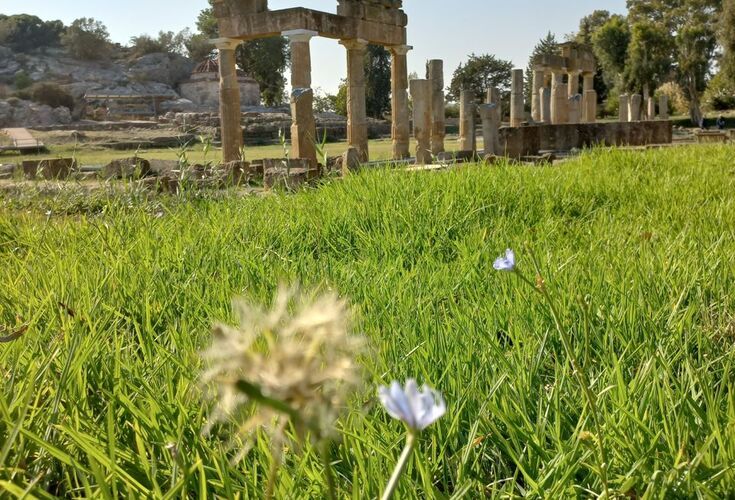
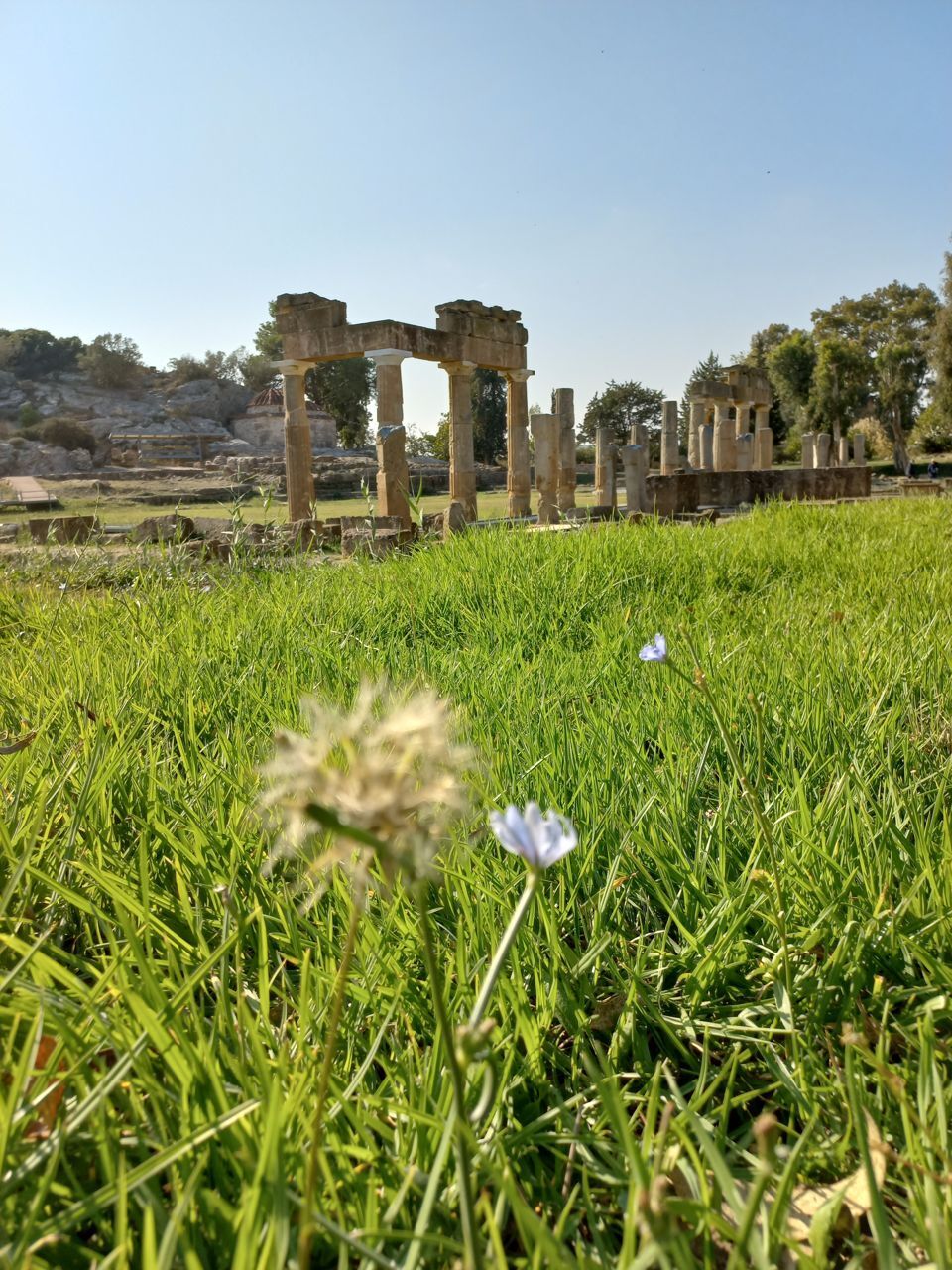
Just 12km from Athens Airport, the Archaeological Site of Vravrona was one of the most revered ancient sanctuaries in Attica – dedicated to Artemis, goddess of hunting, protector of animals and, perhaps less expectedly, goddess of childbirth. According to myth, the statue of Artemis that once stood here was brought by Iphigenia, daughter of Agamemnon, from Tauris after Artemis herself saved her from being sacrificed before the Trojan War. The partially restored stoa framing the courtyard of the Temple of Artemis is the highlight of the site, while the museum houses artefacts spanning the Neolithic period to the 4th century BC – among them the statues of young girls known as arktoi, connected to a fertility ritual in which girls performed a bear dance in honour of the goddess before reaching puberty.
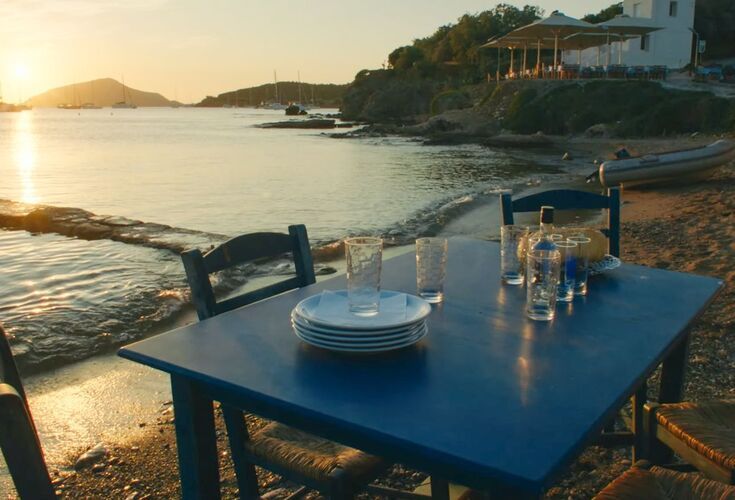
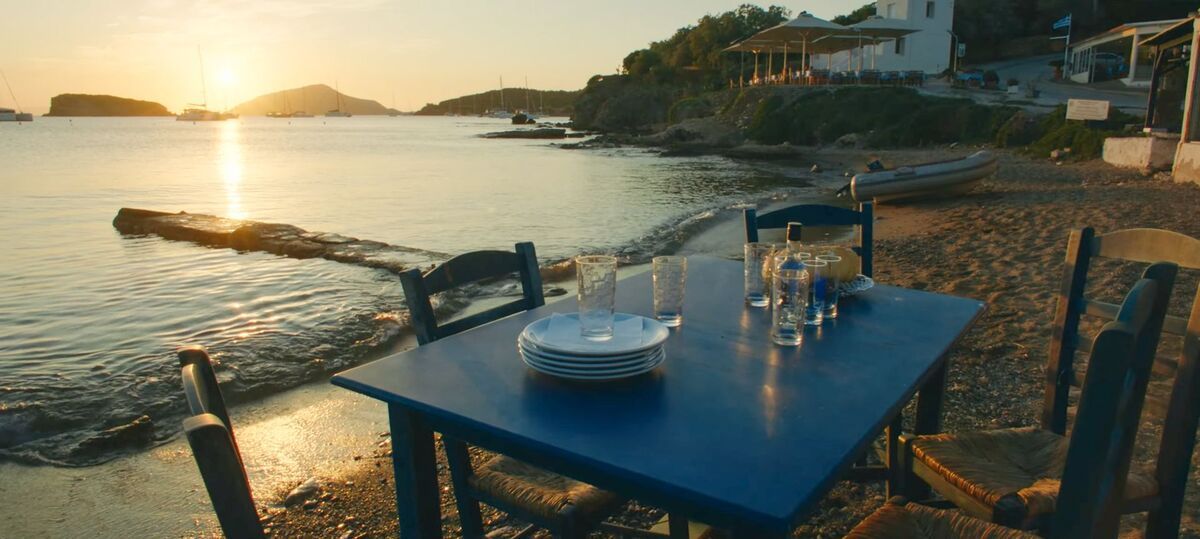
Athens Airport sits just a couple of kilometres from the eastern Attica coastline and the stretch around Porto Rafti, Artemida and Anavyssos is well served with tavernas and swimming spots. Near Porto Rafti, Avlaki is one of the most popular options, with facilities, cafes and restaurants. Further south, Chamolia has more of an island feel, while the coastline from Lagonissi and Saronida down to Anavyssos, Palaia Fokaia and Thymari (all beaches you passed on day one on the drive from Sounio) offers both organised and quieter beaches alongside local fish restaurants.
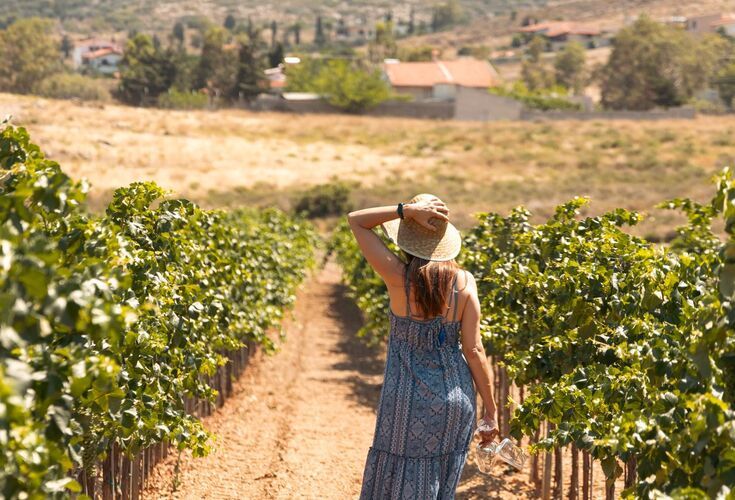
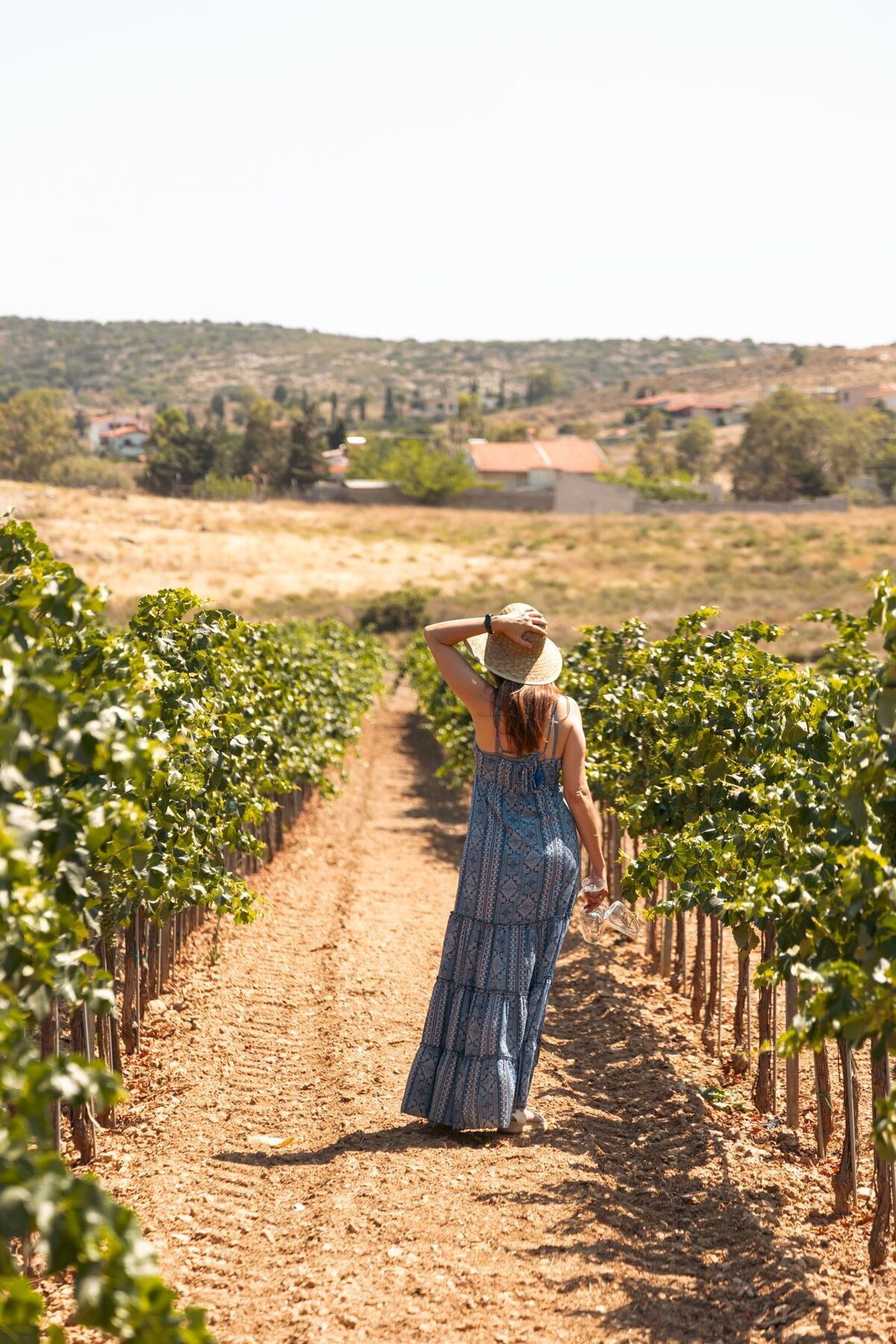
The Mesogaia region is one of the oldest wine-producing areas in Greece, with more than 25 wineries still operating near the airport in towns like Koropi, Peania, Spata and Markopoulo. Several of them offer vineyard tours and wine tasting. The predominant local grape is Savatiano, the grape behind retsina, whose modern versions are a world apart from the resin-heavy versions of the past.
Share a few details about the trip you have in mind. We’ll connect you with a vetted Travel Specialist who’ll typically reply within 24 hours (Monday-Friday).
You’ll work one-to-one with the specialist to refine the route, pace, accommodation and experiences, and add any local tips or activities you’re interested in.
Once you’re happy with the schedule and inclusions, your Travel Specialist prepares the final trip plan and takes care of the booking for you.