The very best of North Evia
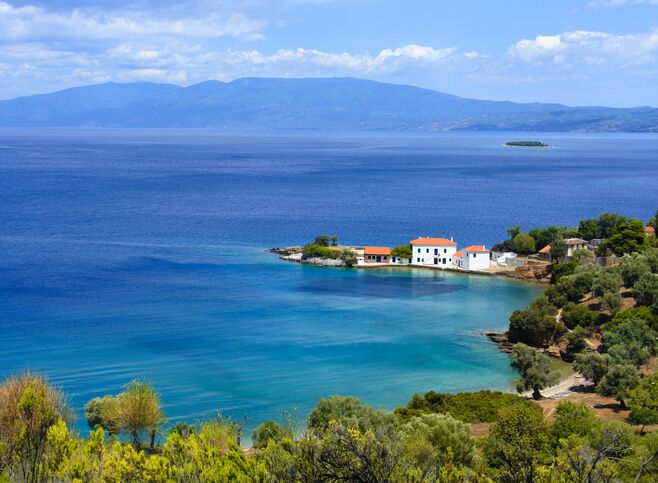
There are so many reasons to choose North Evia for your holidays. The beaches are amongst the most varied in Greece and there are thermal springs that have been enjoyed since antiquity. Excursions here effortlessly mix culture, nature and amazing local produce, all within easy reach of each other… and let’s not even get started on the Lichadonisia isles. You’d never believe that you’re just 2-4 hours from Athens (directly by road or including a short ferry crossing to what is essentially Greece’s second-largest island).
10 reasons to visit North Evia this year
 Powered By AI
- Visit the original spa town of Edipsos
- Enjoy the lakeside atmosphere in Limni
- Give a little love to Agia Anna
- Explore more coastal settlements
- Take a day trip to the Lichadonisia isles
- Taste the difference everywhere you go
- Delve into the religious heritage of North Evia
- Help put the petrified forest of Kerasia on the map
- Put some outdoors adventure on your wish list
- Make the most of that amazing coastline
Visit the original spa town of Edipsos
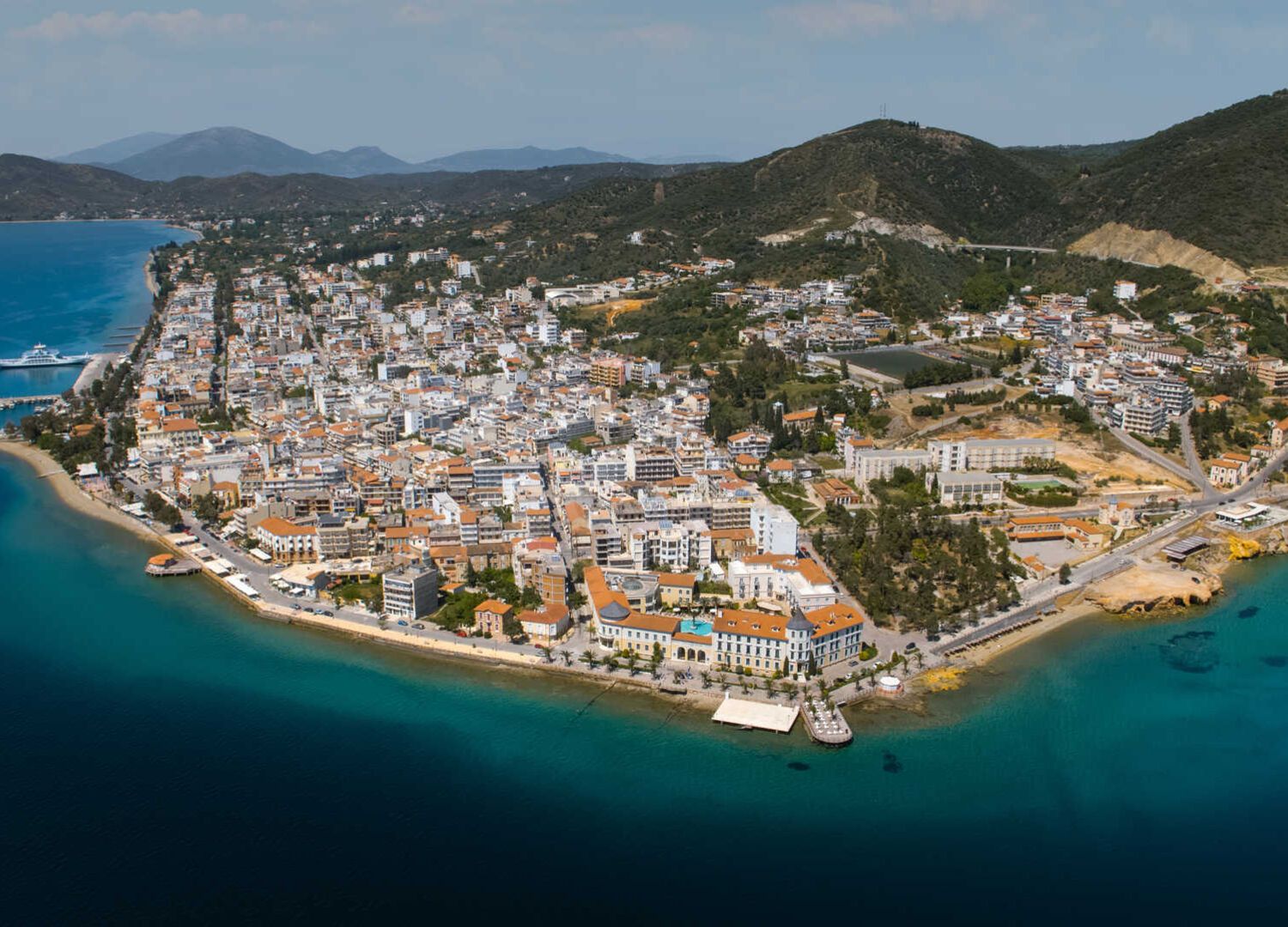
Edipsos is where Hercules came to recharge between each of his 12 labours. And who could blame him? There are more than 80 thermal springs here, with steamy, mineral-rich waters renowned for their healing properties. The early 1900s architecture of the grand buildings on the waterfront (as well as the tavernas and cafes) are testament to Edipsos being Greece’s original spa town (Maria Callas and Greta Garbo were fans). Natural springs warm the sea – making it a favourite of winter swimmers – and there is a choice of hotels incorporating thermal springs into their facilities, as well as a municipal bath complex with a large communal pool and personalised baths (and a small archaeological collection in its main building).
You can hire a bike and explore at your leisure. And there are nearby attractions, like the Cave of Sylla (named after a Roman general who apparently visited the springs to cure his arthritis) and the beaches of Agios Nikolaos (long, with a mix of sand and fine pebbles) and Porto Pefko (a little further away but worth the drive). But you’re probably here for some ‘me time’. So don’t rush.
Enjoy the lakeside atmosphere in Limni
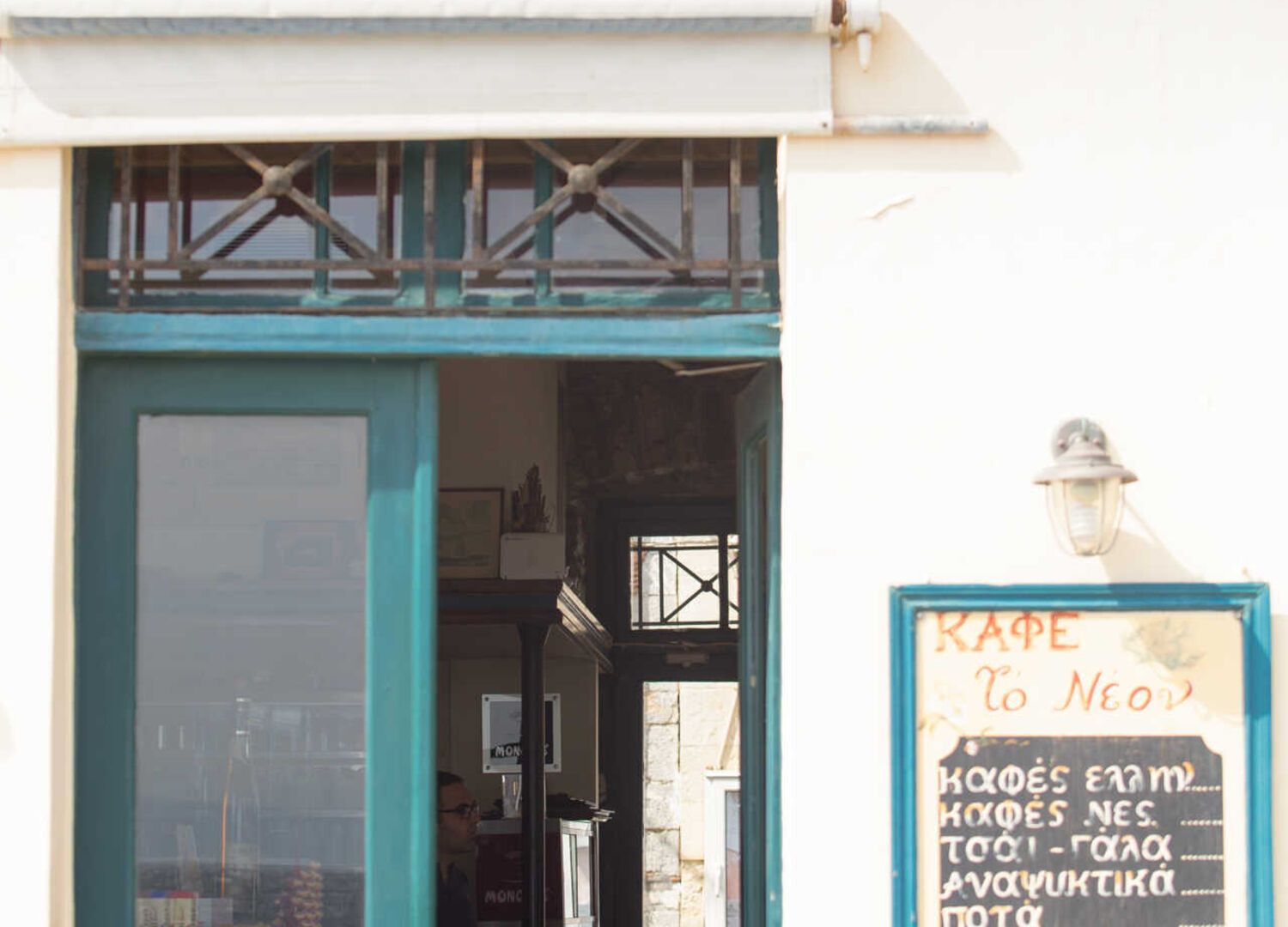
One of the draws of the Euboean Gulf (separating Evia from mainland Greece) is that the sea on this side of the island is mostly flat, which explains the name of our next holiday destination in North Evia. Limni (just south of Edipsos) means lake in Greek and, unsurprisingly, has a long naval tradition that you can learn all about at the Folklore and Historical Museum (also housing local archaeological finds) in the Angelis Flokos mansion in town.
Strolling along the waterfront, you’ll enjoy flower-filled courtyards and a noble air as well as fish tavernas, squares with plane trees and tavernas specialising in meze and tsipouro / ouzo and filled with welcoming locals that give it an island feel.
Traditions run deep in and around Limni, with fabrics still woven on foot-powered looms and the summer Elymnia Festival hosting cultural events between 1-15 August. At the festival, you’ll learn how the legendary Argonauts passed through these parts and there are no fewer than 32 chapels in and around Limni. Meanwhile, the best beaches in the vicinity are Kochyli (next door) and the nearby settlement of Rovies (see below).


Give a little love to Agia Anna
Referring both to an inland settlement (with an interesting folk museum containing the chariot of King Otto and Queen Amalia when they visited in the 19th century) and a coastline over on the Aegean side of Evia, Agia Anna boasts one of the region’s longest beaches, fully organised with tavernas, bars, a beach volleyball court and sunbeds & umbrellas.
Agia Anna beach has more than done its part to put North Evia on the holiday map, and there are experience providers in the area offering activities as varied as horseback riding for all ages through the forest and along the coast to river trekking through the Bolovinainas Gorge which (at the right time of the year) runs with the Nileas River.
Alternatively, Krya Vrysi beach is essentially a sandy extension to Agia Anna beach (with tavernas and snack bars) and there are beach options in either direction along the coast. To the north, Vasilika beach (below Psaropouli) is an almost 4km stretch of sand and fine pebbles (with ouzeries and tavernas and hidden coves known for their exotic beauty) and sandy Ellinika beach (just past Agios Nikolaos) has a view of an islet with the little church that is amongst the most atmospheric amongst the beaches in North Evia. If you’re feeling up to it, you can swim to the island. Meanwhile, to the south is a trilogy of beaches – Pili, Vlachia and Sarakiniko, each more special than the other.
Explore more coastal settlements
The beauty of North Evia is that each coastline offers something different. You’ve already seen the magic of Edipsos, Limni and Agia Anna and there are other seaside settlements to explore on the west-facing Euboean Gulf. In Rovies, the waterfront tavernas, cafes and ouzeries beckon you with local products sourced from farms on the doorstep. And there is the curiosity of a medieval tower from the Frankish occupation that served as a pirate lookout. Meanwhile, just next door, Ilia has a long, pebbly beach, with sunbeds, tavernas and year-round warm waters due to thermal springs.
To the northwest, the Lichada region has perhaps the most beautiful and pristine beaches in North Evia. Gregolimano and Chrissi Akti beach (generously covered in sand and with shallow water and pine trees) are out of this world but also offer facilities. Meanwhile, Kavos beach creates a unique swimming experience around the tip of northwest Evia and is free of facilities (other than some beachside tavernas with sunbeds) and the picturesque little villages of Loutra Gialtron and Agios Georgios Lichados have authentic fish tavernas and boats that take you to the Lichadonisia isles (see below).
Further along the north coast, atmospheric Orei (Oreoi) is 5km west of Istiea (Istiaia), with fish tavernas that offer a relaxing scene whatever the season and the Bull of Oreos, an exquisite 6-tonne marble sculpture from the Hellenistic era, on display near the port. Nearby, Nisiotissa beach boasts plenty of sand, deep blue water, palm trees and views of an islet with the ruins of an ancient tower. And just along the north coast is Pefki, popular with families and friends because of its 4-5km organised beach and numerous tavernas and nightlife options. With the Pagasetic Gulf (and the treasures of Pelion) just opposite and the Sporades islands of Skiathos, Skopelos and Alonissos within easy reach from here, yachts are moored in Pefki’s little harbour ready to set sail.



Take a day trip to the Lichadonisia isles
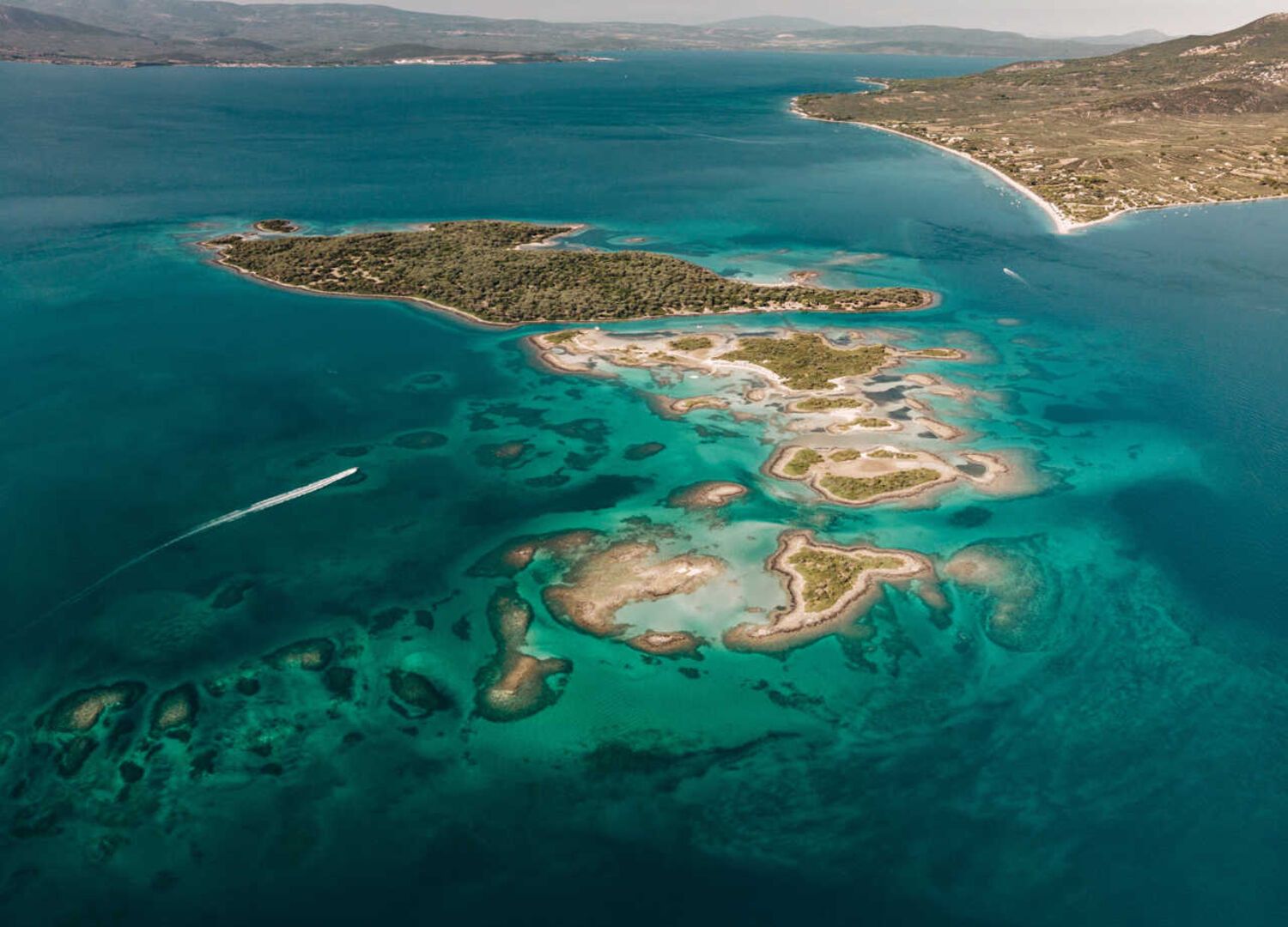
Just when you thought you’d seen it all in Greece, along come the Lichadonisia isles to shake things up. The islets off the northwest coast of North Evia offer a feeling of pure escape, with turquoise waters and exotic bays. They can be reached by boat from Agios Georgios (close to Gregolimano) and Kammena Vourla on the mainland, from where day trips include visiting a selection of wonderful beaches and let you enjoy the underwater magic in a glass-bottomed boat. Amongst the attractions is a shallow WW2 wreck, which is also due to become a scuba diving spot.
Taste the difference everywhere you go
You’re in for a treat when it comes to the food in North Evia. Everywhere you visit seems to have a culinary story to tell. Honey scented with thyme, pine and even the rare combination of fennel and aniseed can be picked up in villages and roadside stalls, as well as in speciality stores selling beehive products such as royal jelly and wax-based cosmetics. There is also a great initiative called Beegin helping to support the beekeeping ecosystem.
There are wineries you can visit in Gialtra (Vriniotis Winery) and Istiea, where you’ll learn about local varieties such as the red Vradianos and Kartsiotis grapes being revived and white Asproudes. And there are producers in the likes of Strofilia taking humble ingredients such as red peppers, olives and sardines and turning them into gourmet fare distributed throughout Greece.
Olive presses come alive during the autumn harvest period, with the cooperative in Rovies being particularly active (an olive press is opening near the town that will offer olive oil-tasting tours). And figs are picked and dried in many locations, especially in Taxiarhis whose local cooperative has secured Protected Designation of Origin status for their product. Pomegranates (especially in Limni and Kirinthos) are picked and pressed and cheeses like feta are barrelled (Istiea and Kechries stand out) until they mature to somehow perfectly match the local wine and tsipouro.
Look out for walnuts in Pefki and produce picked straight from family-owned vegetable patches (you have to try the red peppers from Limni), as well as wild fennel that adds a special aroma to so many local dishes. You’ll enjoy it all (as well, of course, as the locally sourced meat and seafood) in traditional tavernas throughout North Evia.


Delve into the religious heritage of North Evia
Visiting the monasteries of North Evia, you delve even deeper into the culture and history of the region. The Monastery of St John the Russian, in a beautiful plane by the Kireas River near Prokopi, is an important pilgrimage site for Orthodox Christians, containing the remains of the saint brought by Greek refugees from Cappadocia after the 1923 population exchange with Turkey. The Asia Minor Civilisation Museum in Prokopi tells the story of the Greeks who settled here and elsewhere in the region.
The Monastery of St David the Elder, near Drymona, is built on the site of a church founded by St David of Euboea in the 16th century when it operated as a hidden school for the non-Muslim population before being destroyed by the ruling Ottomans. The current monastery dates from the 1870s and contains the remains of its founder. And just south of Limni, the Monastery of St Nicholas Galataki (built on the site of an ancient temple dedicated to the sea god Poseidon) features rare icons, manuscripts and other relics, as well as a defence tower and beautiful views of the sea. (Nearby Galataki beach is a bonus.) Other religious highlights include the Monastery of Agios Georgios in Ilia, the Monastery of St Irinis Xrisovalantou in Rovies and the chapel of the Virgin Mary Dinious near Istiea.
Help put the petrified forest of Kerasia on the map
While the Petrified Forest of Lesvos has rightly gained international attention, North Evia’s petrified forest around Kerasia remains a hidden gem. Efforts are now being made to demarcate it between the villages of Kerasia, Agia Anna and Papades. The fossilised remains of trees and wildlife from 10-15 million years ago are believed to be amongst the richest in Europe, as you’ll learn by visiting the recently refurbished Museum of Petrified Mammals in Kerasia. It displays paleontological finds that include the remains of prehistoric elephants, horses and rhinoceroses as well as finds from the petrified forest and other wildlife.
Put some outdoors adventure on your wish list
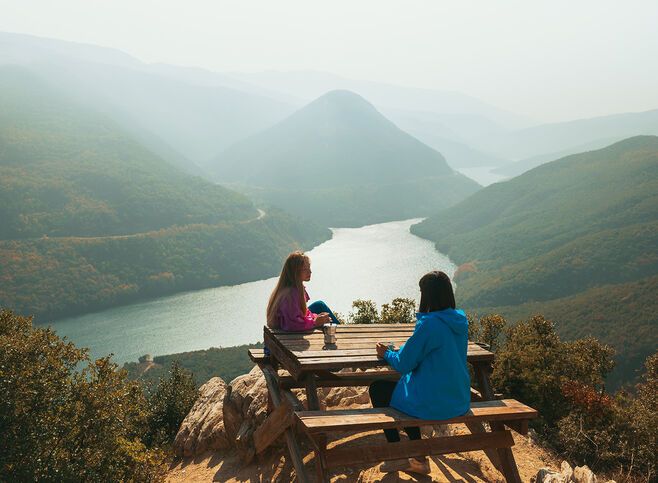
If you love outdoor activities, here’s one for your list of things to do on your holidays in North Evia. Mt Telethrio and Mt Licha (near Edipsos) offer numerous signposted hiking trails (with more continually being marked out). The best experience is to join an organised excursion where your guide can tell you about the local flora and fauna.
And when it comes to waterfalls, where do we start? The Dafnokouki Waterfalls near Ilia (for hiking and canyoning), Gerakiou Waterfalls near Pefki (reachable by foot or car) and Kremasi Waterfalls in Agdines (in a hard-to-reach part of the forest) are all highlights. The most popular are the Drymona Waterfalls on a hiking route that passes the Monastery of St David the Elder. And who said it was only hiking? Horse riding can be enjoyed in Kamatriades, on the slopes of Mt Telethrio (as well as in Agia Anna, as mentioned above).
Nature continues to play a leading role in the experience of visiting Evia, even after the fires. The places that were unaffected continue to offer the same feeling of escape and wellbeing. And the areas that suffered damage, whilst not as beautiful as before, now provide an opportunity for reflection and even hope. Visiting allows you to observe the natural regeneration for yourself and be a witness to the process where, from nothing, a forest is being reborn. It’s as if nature is giving us all a life lesson in the power of recovery through a determination to overcome adversity. It’s another reason behind the mass outpouring of support for North Evia.
Make the most of that amazing coastline
One look at the still waters and coastline of the Euboean Gulf in the likes of Limni and you’ll need no second invitation to hire a kayak or Stand up Paddleboard (SUP) and there is a diving centre in Rovies that offers a selection of underwater excursions and diving courses. For something more active, the Aegean offers windsurfing (or even kitesurfing) in Pefki on the north coast or Vasilika on the east. Elsewhere, waterfront activities are the main event, such as beach volleyball or yoga by the sea. And if fishing is your thing, you’ll be interested in an initiative to work with local fishermen to take you out for the morning. Even if the activity isn’t available where you are, you can always ask around. North Evia is that kind of place.
Holidays with a difference in North Evia
Exploring Greece’s second-largest island will reward you on so many levels. Evia has long been a favourite holiday destination for Greeks – and international visitors in the know. So now it’s your turn to discover why.


FAQs about North Evia
You reach North Evia from Athens by following the E75 National Highway to Chalkida and then the E77 to Istiea and Edipsos (187km, 3hr10min). The section from Psachna to Prokopi has many turns. A more comfortable route is to continue on the National Road to Arkitsa (153km, 1hr45min) and take a ferry to Edipsos. There are 12 ferries a day from June to September and 5 a day during the rest of the year (crossing time 45mins).
The shortest route from Thessaloniki to North Evia is to take the E75 National Highway to Glifa (265km, 3hrs) and cross by ferry to Agiokambos (8km from Edipsos). There are 12 ferries a day from June to September and 5 per day during the rest of the year (crossing time 30mins).
Ferries to the Sporades islands (Skiathos, Skopelos and Alonissos) leave from Mantoudi port, in northern Evia. Ferries from Mantoudi leave regularly throughout the day to Skopelos (1hr30mins) and Skiathos (2hr to 2hr30mins) from June to September and there are 7 ferries a week to all three islands during the rest of the year. Ferries for Skiathos, Skopelos and Alonissos also leave regularly from Volos and Agios Konstantinos on the mainland throughout the year.
Discover Greece Your Way
Discover authentic local experiences and secure your bookings for activities and tours with our official online rates.
From Athens: Private Tour in the Chestnu...
Full Day Private Hiking Tour at the Drag...
Evia: Private Tour in Alpine Lakes Panor...
Evia: Cooking Class in an Art Residency ...
Hiking Geraneia Mountains & Pintiza Peak
Amandola Villas
Limni Boutique Experience Hotel
Bill & John Evoia
Palmariva Beach Hotel by Anayia All Incl...
Xenia Residences & Suites
Thalatta Seaside Hotel
Ferries to & from Evia
Find routes, ports & schedules - search below