

What is Naxos best known for?
Naxos is greener and more varied than its Cycladic neighbours, with a fertile and mountainous interior that matches its main town (Hora), long sandy beaches and hillside villages for generosity – making it a popular destination for summer holidays in Greece.
That fertility has shaped its identity since antiquity. The plains around Sangri – still among the most productive in the Aegean – were considered sacred to Demeter, goddess of the harvest, and her 6th-century BC temple still stands there. Today, those same fields supply Greece with some of its most distinctive tastes: potatoes prized across the country, cheeses from free-roaming sheep and goats, and the citron liqueur that has been distilled on the island for centuries. Naxos is virtually self-sufficient in local produce and its tavernas – whether in Hora, in a mountain village or along the coast – reflect that abundance.
The image most associated with Naxos is the Portara – the great marble gateway of an unfinished 6th-century BC temple to Apollo. But Naxos is the kind of island where the more you search, the more you discover – from the kouri (enormous unfinished Archaic marble figures depicting young men, still lying where they were originally carved) to the remains of the Venetian castle above Hora and the towers and medieval settlements across the interior.
What to do in Naxos
Arriving by boat, the first thing you encounter in Naxos is the Portara – the great marble gateway standing alone on its promontory at the harbour entrance. It sets the tone for Hora, the main town, which rises behind it to a Venetian castle enclosing a medieval settlement that is still very much alive: mansion houses with coats of arms, a Catholic cathedral, small cafes, and shops with views down to the port. Within the castle, the Glezos Tower houses the Byzantine Museum and, just beyond the castle walls, the Archaeological Museum traces local history from the Early Cycladic period through to the Hellenistic era. Below the castle, the alleyways open into a town full of shops selling local produce, tavernas and bars.
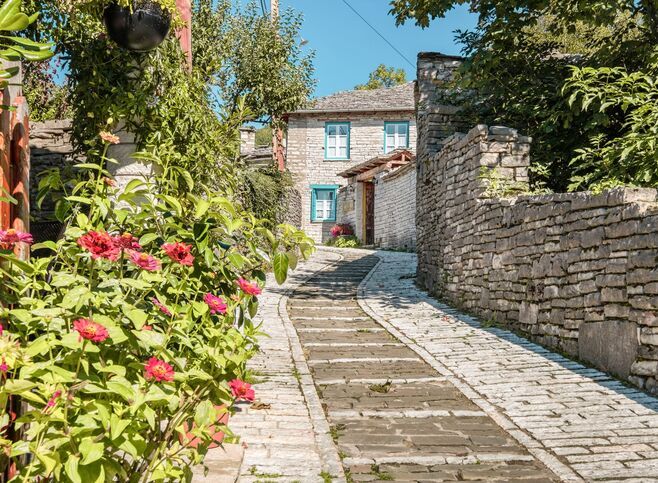
Beyond Hora, the interior features hills and mountains hiding more than 30 traditional villages. Halki retains the feel of a former island capital, with neoclassical streets and a century-old citron liqueur distillery, while Apiranthos – the “Marble Village” – offers Venetian arches, towers and a handful of small museums. They are a wonder to explore individually or during a village-hopping day out.
Near Sangri, the Temple of Demeter is the archaeological highlight of Naxos – a partially restored 6th-century BC sanctuary dedicated to the goddess of harvest and fertility, with an on-site museum built into the hillside below it.
The Naxian countryside also hides dozens of marked hiking trails, crossing oak-covered hills and mountain valleys. Routes pass the kouri of Apollonas and Flerio – enormous Archaic marble figures left unfinished in their quarries – and lead to the summit of Mount Zas, the highest peak in the Cyclades.
Food experiences in Naxos go well beyond meals in a taverna, with visits to dairy farms where the island's PDO cheeses are made, cookery classes using locally grown ingredients, distillery tours in Halki and vineyard tastings in the countryside.
Best Beaches in Naxos
Most of Naxos’ best-known beaches run down the west coast in an almost unbroken line, starting just outside Hora and continuing south for more than 20 km. The sequence begins with Agios Prokopios – sheltered, family-friendly and well organised – and Agia Anna, smaller and livelier, and with beach bars, water sports and a cosmopolitan feel. Next comes the vast sweep of Maragas and Plaka, essentially one long continuous beach of fine white sand and turquoise water, stretching for kilometres and wide enough to absorb everyone who comes. Plaka is wilder, attracting kitesurfers and windsurfers alongside those simply looking for space.
Further south, Mikri Vigla is a popular beach for wind- and kitesurfing and a little further down the west coast, the character changes altogether. Aliko is backed by a cedar forest and sand dunes, with no sunbeds or umbrellas – just shade from the trees and the small chapel of Agios Georgios beyond. Nearby Pyrgaki is quieter still, favoured by families, while Agiassos is large and unhurried, with small coves on either side worth exploring.
The east and south coasts are more remote. Psili Ammos, on the eastern shore, is a cedar-fringed beach with fine sand and views across to the Koufonisia isles. At the island's southeastern tip, the palm trees of Panermos beach offer an exotic touch in the Aegean.
Island hopping from Naxos
Sitting at the heart of the Cyclades, Naxos is ideally located for island hopping in the Aegean. There are regular connections to many of the best-known Greek islands, including Paros, Mykonos, Santorini, Ios and Syros, as well as other islands such as Tinos and Amorgos. There are also connections to the neighbouring and little-visited Small Cyclades islands (Koufonisia, Iraklia and Schinousa).
Further afield, there are regular seasonal connections to Dodecanese islands (such as Rhodes and Kos) and to Crete (Heraklion).
Best time to visit Naxos
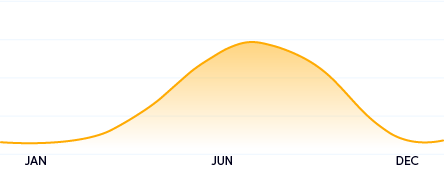
Naxos is at its liveliest in July and August, when the island is in full summer mode, so booking well in advance is essential. May-June and September-October are often the most rewarding months for a visit when the weather is still warm, the sea is swimmable and the island is quieter and more relaxed. These months are also well-suited for hiking and village-hopping, when the interior is greener and the heat is often more manageable.
Naxos is one of the more rewarding Cycladic islands to visit outside the summer season. Spring brings wildflowers to the valleys and cooler temperatures ideal for exploring on foot and autumn holds its warmth well into October, when the harvest season adds another reason to explore the interior.
How to get to Naxos
By air: Naxos has an airport, located around 3km from Hora, with domestic flights connecting the island to Athens in under an hour and with services operating year-round. Naxos airport does not currently handle international flights, so air arrivals from abroad will typically connect through Athens.
By ferry: The most popular way to reach Naxos is by sea. Fast ferries from Piraeus (the port of Athens) take around three and a half hours and conventional ferries take around five to six hours. There are also seasonal fast ferry services from Rafina (eastern Attica). In summer, frequent connections run between Naxos and other Greek islands, including Paros, Mykonos and Santorini.


Plan Your Naxos Itinerary
Get AI-powered suggestions or work with expert travel specialists
Tours & Activities in Naxos
Discover authentic local experiences and secure your bookings for activities and tours with our official online rates.
Naxos: Olive Oil tasting & Farm-to-Table...
Countryside hike among villages & Byzant...
Naxos: Small-Group Cheese & Wine Trails
Fire, Sea and Stone: The very best of th...
Naxos: Sea Kayaking Tour in Rhina Cave
Naxos: Kids First Small-Group food tour
Where to stay in Naxos
The Naxian Collection
Aegean Palace
Golden Sand Naxos
Axopetra Naxos
Avgoustos Suites
Book your transfers now
Discover the highest-rated ground transportation services for travelers, based on reviews across Google, Tripadvisor, and Trustpilot.
Welcome Pickups offers a seamless, safe, and enjoyable experience for travelers
Trained Drivers
Hand picked & trained drivers
Low prices
Same price as a regular taxi from the line
Arrival monitoring
Drivers are always on time
Quality support
24/7 email & phone support

Book your Ferry Now
Ferries to & from Naxos
Find routes, ports & schedules - search below
Naxos has options to suit many budgets and travel styles. There are small hotels and guesthouses tucked away in the alleyways of the old town of Hora or within or just below the castle walls. The waterfront and port area have a wider range of family-friendly hotels with sea views.
The west coast beach resorts – Agios Prokopios, Agia Anna and Plaka in particular – are where most resort-style accommodation is concentrated, with hotels, apartments and villas catering to families and couples looking to be close to the sea. This stretch is the most developed part of the island outside Hora and well situated for beaches.
For a quieter stay, the interior villages offer a small number of guesthouses and restored traditional properties – particularly in Halki and Apiranthos – where the pace of life is slower and the surroundings greener. Booking well in advance is advisable for all accommodation in Naxos, particularly in the peak summer months.
Naxos has earned its reputation as one of the best islands in the Aegean for food and tavernas – whether in Hora, along the coast or in the mountain villages – cook with locally sourced ingredients. Among the PDO products are Naxian graviera and arseniko cheese and the island's potatoes – grown in potassium-rich soil. Citron liqueur, distilled on the island for centuries, is the traditional way to end a meal. Classic dishes to look out for include rosto (pork leg slow-cooked with wine and garlic), kokoras krasatos (cockerel in red wine sauce) and melahrino, a walnut pie scented with citrus.
In Hora, the port road and Papavasiliou Street have delicatessens and shops selling local products – a good option for stocking up before heading to the beach or taking something home.
The climate in Naxos is typically Mediterranean, with hot, dry summers and mild winters. July and August are the hottest months, with temperatures regularly reaching 30°C. The island is exposed to the northerly Meltemi winds that blow across the Cyclades in summer – which keep temperatures bearable but can make conditions choppy at sea and ideal for windsurfing. Spring and autumn are warm and pleasant, with quieter beaches and cooler evenings. Winter is mild but quiet, with some services reduced outside the main season.
Naxos is a safe destination and visitors of all kinds, including solo travellers, can explore the island with confidence. As with any holiday destination, it is advisable to take basic precautions. Keep an eye on your belongings in busy areas, including the beach, and follow local guidance when swimming or hiking. Sun protection and plenty of water are essential if you are spending time outdoors or on the water. Bottled water is widely available across the island. Always follow local advice on drinking tap water. There is a general hospital in Hora and pharmacies in the main town and larger villages. The emergency number for all services in Greece – medical, police and fire – is 112.
Naxos is the largest island in the Cyclades, located in the central Aegean Sea. It sits at the heart of the Cyclades island group, surrounded by Mykonos to the north, Paros to the west, Ios to the south and Amorgos to the east. The closest islands are the so-called Small Cyclades (Iraklia, Schinousa and the Koufonisia isles to the south and Donousa to the east). Naxos is around 300 km from Athens by sea, with fast ferry connections from Piraeus taking around 3.5 hours. The island also has its own airport, with domestic flights connecting it to Athens in under an hour.
Hiring a car or scooter is the most practical way to explore Naxos, particularly if you want to reach the mountain villages and more remote beaches at your own pace. The island has a reliable bus network (KTEL) that connects Hora with the main beach resorts and several villages. Taxis are also available in Hora. For the beaches closest to town – Agios Prokopios, Agia Anna and Plaka – the bus service is frequent enough for a day trip without a vehicle.
No, Naxos is not known as a party island. It has a lively bar and restaurant scene in Hora and along the beach resorts of the west coast, but the atmosphere is relaxed rather than driven by nightlife. Families, couples and independent travellers make up the majority of visitors. If you are looking for a quieter stay, you’ll find it easily – particularly in the inland villages, where the pace of life is slower than on the coast.
A minimum of five to seven days allows you to enjoy everything Naxos has to offer – beaches, villages, cultural sites and food experiences. Shorter stays may feel rushed, particularly if you want to explore the interior as well as the coast. You can, of course, combine a visit to Naxos with island hopping in the Aegean. In that case, three to four days gives you enough to enjoy the island's highlights.
There is plenty of choice for accommodation, food and activities on Naxos to suit a wide range of budgets. Eating well is particularly good value. July and August are the most popular months in hotels and tavernas. May-June or September offer better value without sacrificing much in terms of weather or atmosphere.
Yes – both Santorini and Mykonos are well connected to Naxos by ferry. Fast ferry services run regularly throughout the summer, with the crossing to Mykonos taking around 45 minutes to an hour and the crossing to Santorini around two hours. Conventional ferries also operate on both routes and take longer. Services are most frequent between June and September. Booking in advance is advisable during peak summer.
Naxos is exposed to the dry northerly Meltemi wind that blows across the Cyclades during summer, typically from July through to early September, but the island's size and geography mean that conditions vary considerably from one coast to another. The west-facing beaches are the most exposed to the wind, making them popular with windsurfers and kitesurfers. The more sheltered beaches of the southwest – such as Aliko and Pyrgaki – and the southeast offer calmer conditions when the Meltemi winds are blowing.