Your guide to sustainable travel in Halkidiki
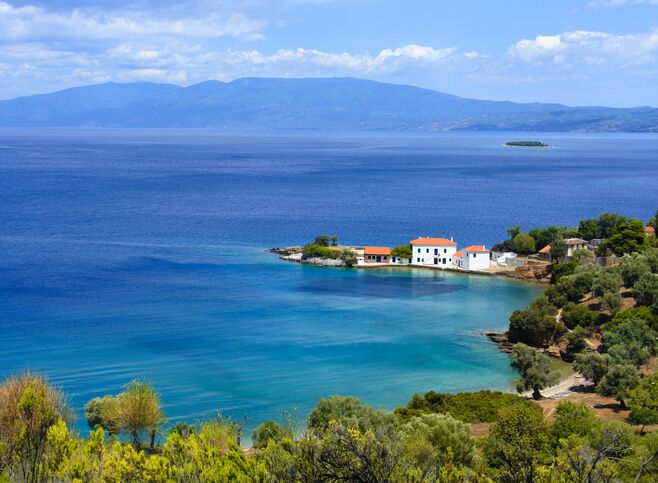
The long beaches and dreamy coastline of Halkidiki have made it one of northern Greece’s most popular holiday destinations. But with that popularity comes the need for thoughtful choices, especially in peak season, when even small decisions by visitors can make a real difference. So this sustainable travel guide to Halkidiki is for eco-friendly travellers who want to enjoy the region more sustainably – whether by choosing quieter times to visit, exploring beyond the busiest areas or supporting local communities through the experiences they choose. The reward is often a more authentic side of Halkidiki – shaped by nature, village life, local flavours and traditions.
 Powered By AI
HALKIDIKI SUSTAINABLE TRAVEL TIPS
When & how to visit Halkidiki
Embrace the shoulder months
Halkidiki suits every type of traveller – families, friends, couples and solo visitors – and remains full of life from mid-April until the end of October. So while peak summer sun in Halkidiki is special – there’s no arguing with that – choosing the “shoulder months” of May-June or September-October often delivers the best experience. Why? Fewer crowds, good weather, better prices and even more welcoming locals. And you won’t need to plan too far ahead for restaurants, beach bars and other bookings.
Spring & autumn holidays in Halkidiki
For the responsible traveller, spring and autumn are Halkidiki’s sweet spots, when the weather is milder, nature is at its most alive and you can enjoy the beaches without the crowds. There are also fantastic events and festivals centred around seasonal products and local traditions, offering an even better way to connect with local communities. A few to plan around include:
- Trade Fair of Agios Mamas (Saint Mamas): One of northern Greece’s oldest and largest festivals, held every September near Nea Moudania, where farmers, merchants and visitors gather for a week-long celebration of local products. Live music and events make it an annual favourite.
- Mushroom Festival in Taxiarchis: An autumn highlight in a mountain village with a strong connection to the forest, featuring traditional music, mushroom pie-making and free tastings of local dishes.
- Open Doors: Held every May, this celebration of wine brings together the network of Winemakers of North Greece, as more than 30 of the country’s most prominent wineries – including several in Halkidiki – open their doors for tours, tastings, cellar visits and the chance to meet the people behind the wines, marking the start of the new vinegrowing cycle.
- Cholomon Run & Sithonia Trail Run: Two trail running events – one on Mount Cholomontas in spring or autumn, connecting the villages of Polygyros and Arnaia, and the other in Sithonia in May, offering multiple distances (23 km, 11.5 km and a shorter kids’ race). Pine-covered landscapes and sea views make these one-of-a-kind sporting events.
- Fishermen’s Feast in Ammouliani: A September celebration on Halkidiki’s only inhabited island, honouring the local fishing tradition with freshly prepared seafood, live music and a festive atmosphere that brings together locals and visitors.
Stay longer and help reduce crowds
Fewer trips of longer duration are generally considered a more responsible travel choice because they help reduce travel emissions. So one way to make peak-summer holidays in Halkidiki more sustainable is simply to stay longer and explore more of the region. Beyond the famous beaches of the first two of Halkidiki’s finger-like peninsulas (Kassandra and Sithonia) lies the mountainous interior, where village life moves at a different pace and local experiences come more naturally. And if you are heading to the most popular beaches, try visiting early or around sunset, when they are quieter and easier to enjoy.
Choose to stay in less-explored parts of Halkidiki
There are so many areas of Halkidiki with peaceful surroundings, picturesque villages and mountain views. Seeking them out is one of the best ways to experience a more authentic rhythm of life while supporting local businesses such as traditional cafes, tavernas, bakeries and craft shops. Even better, consider changing base during your stay, combining the coast with mountain villages in a way that helps avoid long car journeys.
Give love to Halkidiki’s beach hotspots
The beauty of Halkidiki’s best-known beaches (Kallithea, Sani, Pefkochori, Possidi and more) is undeniable. But if you do visit during peak summer, try going in the morning or later in the afternoon, and use the busiest hours of the day (around midday) to explore nearby villages and discover a different side of Halkidiki. You can also choose beaches that can be reached on foot.


Embrace Halkidiki’s culture and traditions
Seek out small museums & cultural sites
Visiting places that preserve local memory, craftsmanship and identity – for instance archaeological sites, folklore museums and exhibitions – is a simple way to add depth to your sustainable vacation in Halkidiki. Often found in villages and smaller towns beyond the busiest coastal areas, they present aspects of traditional local life and, in some cases, include small art spaces.
Western Halkidiki
Western Halkidiki, Kassandra & Sithonia
Among the standout cultural stops in western Halkidiki is the Petralona Cave, one of Europe’s most important prehistoric sites, where the famous Petralona skull was discovered and you can visit the Anthropological Museum. And in Ancient Olynthos, the Interactive Museum of Ancient Olynthos offers visitors the opportunity to learn about the daily lives, architecture and culture of an ancient city that played a significant role in Greek history. The experience includes a virtual tour of the archaeological site, interactive 3D models and a digital guide app called “Colonies of Halkidiki in Space and Time”, through which visitors can discover what lies beneath the city using AR technology and hear the story of a 4th-century BC girl in her own words.
In Nea Flogita, the Byzantine Museum of Halkidiki showcases icons and ecclesiastical objects of Byzantine heritage, while just 10 km away in Nea Moudania, the Museum of Fishing Boats and Tools offers a distinctive look at Halkidiki’s fishing heritage.
Village museums add another layer of local identity. In Afitos, on the northeastern coast of Kassandra, the Folklore Museum introduces domestic life and old village architecture. And in Nikiti, as you enter Sithonia, the Historical and Folklore Museum explains the agricultural past of one of Sithonia’s oldest settlements, while the nearby Technochoros Apothiki Nikiti adds a contemporary cultural note through exhibitions and events.
Finally, on the southern tip of Kassandra, the Thermal Spa of Agia Paraskevi is built around natural hot springs whose restorative waters have been known since antiquity. Set on a cliff overlooking the Aegean, the spa’s modern facilities make it an ideal stop as part of a slower, more mindful way of exploring Halkidiki.


Mountainous & Eastern Halkidiki
Mountainous Halkidiki offers its own cultural variety, beginning in Polygyros, where the Archaeological Museum of Polygyros features exhibits from prehistory to Roman times. In Arnaia, the Folklore Museum of Arnaia recreates everyday village life inside a traditional mansion, while the Weaving Museum of Arnaia highlights one of the area’s strongest craft traditions.
Towards the Mount Athos peninsula, the Tower of Ouranoupoli Museum combines architecture and local history inside the landmark Byzantine tower, while the Folklore Museum of Ammouliani explains the refugee roots and traditions of Halkidiki’s only inhabited island. Finally, near Ancient Stageira on the eastern coast, Aristotle’s Park combines panoramic views and installations inspired by observations on natural phenomena of the great philosopher, who was born locally.
Best sustainable experiences in Halkidiki
Discover things to do in Halkidiki through sustainable activities that connect you with local nature, food, traditions and everyday life.
All about honey
Local beekeeping businesses offer tasting experiences throughout Halkidiki. Standout choices include Passion Honey / Bee Day in Taxiarchis, where you can learn about beehives and buy honey-based cosmetics. Meloida, in Nea Moudania, also offers honey-based cosmetics, as well as pure honey and beeswax products. And in Arnaia, Georgakas honey offers a variety of local honey products.
Birdwatching
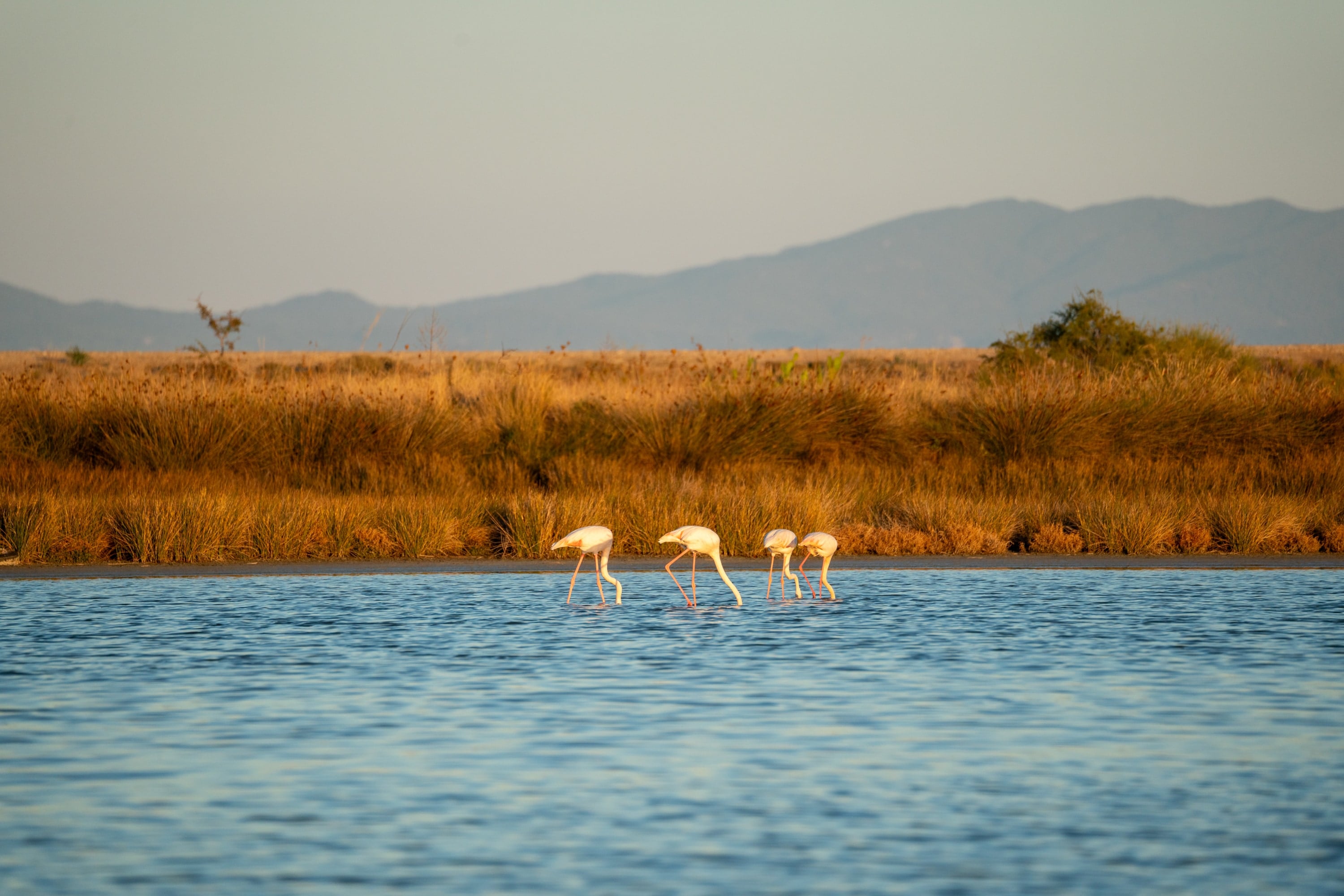
Each season in Halkidiki offers a different birdwatching experience. Spring is one of the most rewarding periods, when migratory species such as herons, bee-eaters and storks pass through the region’s wetlands on their way into Europe. In summer, many birds nest here, including little egrets and terns, while autumn brings a second major migration as species travel south towards Africa. In winter, the protected wetlands host waterbirds, with ducks, waders and large flocks of flamingos adding colour to the landscape. Some of the best places for birdwatching include Agios Mamas Lagoon near Nea Moudania, the wetlands around Sani towards the top of the Kassandra peninsula, and the forested slopes of Mount Cholomontas in central Halkidiki.
Hiking paths
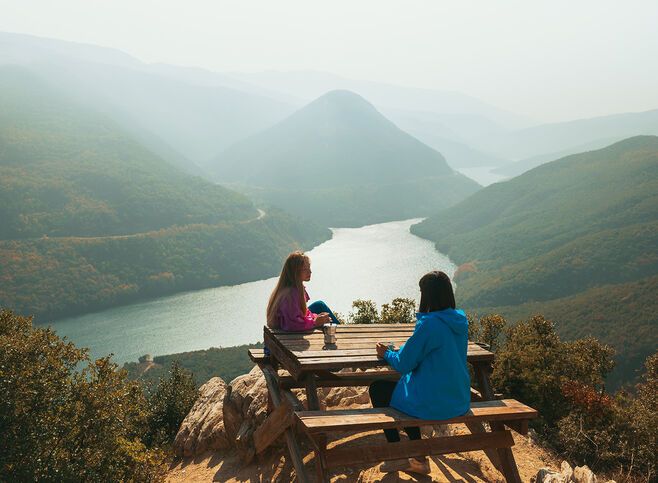
There’s no better way to connect with the landscape and enjoy Halkidiki’s mountain and coastal views than on foot, with routes available across the region for different levels of difficulty. From coastal paths and wetlands to forest trails and mountain villages, hiking reveals a slower, quieter side of Halkidiki – as long as you follow the basic rules for spending time in nature and stay on marked paths.
- Kassandra
- Sani – bird sanctuary – Sani: Easy circular forest and wetland walk near Sani.
- Sani – Siviri: A longer coastal trail to a seaside village, with views of cliffside coves, forested slopes and hidden beaches.
- Circular route from Polychrono (Mavrobara route): An easy 3 km circular walk that’s ideal for families and can include a stop at Mavrobara Lake, which shelters two rare species of freshwater turtles.
- Sithonia
One of the joys of hiking in Sithonia is discovering the Sithonia Trails, a local initiative that aims to revive historic paths and reconnect traditional settlements. It features 15 marked hiking routes in Drangountelis and around Neos Marmaras and Parthenonas, taking you through pine forests and by streams and unique rock formations with panoramic views of the Aegean.- Mylos Trail: A 4 km route through a forest landscape, combining watermills and shaded trails.
- Tourles – Paliometochoudi – Mylos – Zoodochou Pigi: An 11 km route of medium to high difficulty, following forest paths.
- Parthenonas – Kosta Peak – Kamini – Parthenonas: An 8.4 km circular route starting from Parthenonas village square, climbing to 733m before returning via Kamini through forest and rural landscapes.
- Mountainous & Eastern Halkidiki
- Aristotle’s Route (Ancient Stagira – Stagira – Aristotle’s Park): A 14 km non-circular route linking the archaeological site of Ancient Stagira with Aristotle’s Park.
- Ouranoupoli – Monastery of Zygou: An easy 3 km coastal route from the Byzantine Tower of Prosforios to the Monastery of Zygou, passing olive groves and vineyards as you approach the borders of Mount Athos.
- Taxiarchis – Vrastama: An easy downhill route between mountain villages.


Wine tasting
Visiting local wineries offers the chance to discover regional grape varieties, walk through vineyards and enjoy tastings that reflect the character of each area. It’s an experience that can be enjoyed in different seasons while supporting local production and the regional economy. From coastal vineyards in western Halkidiki to mountain estates around Arnaia and monastic vineyards linked to Mount Athos, wine tasting also reveals how closely Halkidiki’s landscape and winemaking traditions are connected.
Kassandra Peninsula
- Tzikas Family Winery: Small-scale winery that showcases both traditional and modern winemaking methods.
- Afyteon Gaia Winery: Boutique winery with local and international varieties, combining tastings with coastal views.
Sithonia peninsula
- Domaine Porto Carras (Neos Marmaras): Greece’s largest organic vineyard.
Central Halkidiki
- Livadiotis Estate (Marathousa): Organic wines produced with modern methods.
Eastern Halkidiki
- Akrathos Newlands Winery (Megali Panagia): Organic vineyard on slopes of Mount Cholomontas.
- Estate Tarazas (Megali Panagia): Third-generation, with excellent limited-quantity wines.
- Domain Agrovision (Ierissos): Small winery inspired by Bordeaux traditions.
Mount Athos
- Mylopotamos Winery (Mount Athos peninsula): Monastic winery with centuries-old wine tradition.
- Hilandar Wines (Mount Athos peninsula): Monastery vineyard producing wines at scale.


Olive oil experiences
An olive oil tour offers another way to connect with Halkidiki’s local production, through visits to olive groves and tasting sessions centred on one of the region’s most important products. Halkidiki is especially known for its table olives and high-quality extra virgin olive oil, including distinctive agoureleo (the early-harvest olive oil valued for its fresh, peppery flavour) with experiences that explain cultivation, harvesting and differences in flavour between varieties.
- Toleo Halkidiki Olive Oil: Guided tastings and olive-growing introduction in Metaggitsi (Sithonia).
- Yanni’s Olive Grove: Traditional family-run olive grove in Nea Tenedos (central Halkidiki), with tastings by arrangement.
- Periapton: Boutique olive oil linked to the olive-growing tradition of Olynthos region (central Halkidiki).
Cooking classes
Cooking classes are another way to experience Halkidiki through seasonal produce and everyday culinary traditions. In Nea Gonia, Marianna’s Vineleaves is a family estate dedicated not to wine production but to cultivating a key ingredient in one of Greece’s most recognisable recipes – dolmades (stuffed vine leaves). Experiences include cookery lessons where you prepare dolmades and other local dishes.


Village hopping in Halkidiki
Visiting villages in Halkidiki brings you into closer contact with locals, creates income for small businesses, offers a deeper connection with local culture away from the crowds and helps keep village life active. To make village visits even more sustainable, choose places beyond the main coastal hotspots and spend time in traditional cafes, bakeries, local shops and cooperatives that remain central to everyday life.
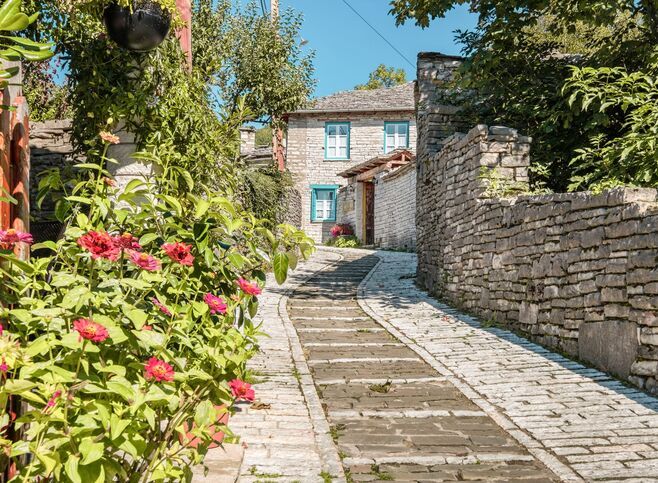
Village hopping also reveals Halkidiki’s variety beyond its beaches – from mountain villages such as Arnaia and Taxiarchis, known for Macedonian architecture, forest surroundings, local crafts and seasonal produce, to villages such as Afitos and Paliouri in Kassandra, where traditional character combines with sea views and local food. In Sithonia, the old quarter of Nikiti and the revived hillside village of Parthenonas offer another side of the region, where architecture, local products and slower rhythms become part of the experience.
Explore the timeless villages of Halkidiki
Sustainable beach holidays
The key to enjoying beach life in Halkidiki responsibly is to focus on sustainable sea experiences. Activities such as stand-up paddleboarding (SUP), canoeing, snorkelling and scuba diving offer a quieter alternative to motorised water sports.
For SUP and canoeing, some of the best options are found at Sani, Possidi and Pefkochori in Kassandra, as well as Vourvourou, Nikiti, Trani Ammouda and Kriaritsi in Sithonia, where calm waters make them especially enjoyable. Snorkelling is ideal in many of the same areas, particularly where clear waters and rocky seabeds allow easy observation of marine life close to shore.
For scuba diving, organised centres operate in Paliouri and Siviri in Kassandra, as well as Kalamitsi, Toroni and Sarti in Sithonia and Ouranoupoli in eastern Halkidiki, offering access to underwater landscapes and reefs when practised responsibly.
Halkidiki also stands out for its commitment to accessibility, with 17 organised beaches designed for people with reduced mobility. Facilities such as ramps, dedicated parking, accessible changing areas and systems that allow independent access to the sea (such as floating wheelchairs or automated sea-access mechanisms) make it possible for more visitors to enjoy the coastline comfortably and safely.
Another important sustainability indicator is the dozens of blue flag beaches on every coastline of Halkidiki, reflecting consistent efforts in water quality, safety, environmental management and services offered to visitors.
Enjoy local cuisine
Getting to know the gastronomy of Halkidiki before you travel is one of the easiest ways to connect more meaningfully with the destination, helping you recognise local ingredients and traditional dishes on menus and make choices that support local producers. It is also worth remembering that many tavernas and village cafes source ingredients locally, making everyday food choices part of the experience too.
Among the products most closely associated with Halkidiki are the PDO Hondrolia olive – the large green table olive that has become one of the region’s best-known exports – and early-harvest agoureleo. Honey is another defining product, especially in places such as Arnaia and Nikiti, with varieties reflecting where the bees feed – including pine, fir, thyme, flower, forest and oak honey. Vineyards across the region also produce wines from both international varieties and local grapes such as Limnio, the ancient variety associated with Aristotle.
Seasonal ingredients shape local cuisine throughout the region – wild mushrooms and truffles from the forests around Taxiarchis, orchard fruits from inland villages and shellfish such as mussels and clams from the eastern coast. Livestock farming in central and northern Halkidiki also supports a strong cheese tradition, with feta, kefalotyri and graviera widely produced, alongside rich local yoghurt and butter. Among the dishes worth recognising are dolmades (stuffed vine leaves), along with simple preparations built around olive oil, vegetables, seafood and local dairy products.
Sustainable Travel Guide to Halkidiki
Our sustainable Halkidiki travel guide shows how small choices – from when you visit to the places and people you support – can lead to a richer vacation experience, while helping preserve what makes Halkidiki special.
A responsible travel guide to Chalkidiki, Greece, featuring eco-friendly tips, including sustainable activities, advice on when and where to travel, and how to enjoy the local food, nature and culture whilst supporting local communities.
Discover Greece Your Way
Discover authentic local experiences and secure your bookings for activities and tours with our official online rates.