The museums of Chania reflect a region of Crete shaped over centuries at a crossroads of cultures. Roman, Arab, Venetian, Egyptian and Ottoman influences all left their traces, creating an unbroken narrative that runs from antiquity to today. Many are located within or close to the city’s Old Town, making them some of the most rewarding things to do in Chania for anyone interested in the history and artistic development of Crete. Others lie beyond the city, in villages and rural settlements of the region, where smaller museums focus on craft traditions and local memory.
 Powered By AI
The page showcases 12 standout Chania museums that trace the region’s story from antiquity to the present, shaped by layers of Roman, Venetian, Ottoman and modern influence. Highlights include the Archaeological Museum of Chania, the Eleftherios Venizelos Museum Residence, the Maritime Museum of Crete and the Municipal Art Gallery, alongside the Byzantine and Post-Byzantine Collection and the Folklore Museum of Chania. It also points beyond the city to places like the Museum of Typography, the Archaeological Museum of Kissamos and several village museums, with an official link at each stop for opening hours and admission.
The page showcases 12 standout Chania museums that trace the region’s story from antiquity to the present, shaped by layers of Roman, Venetian, Ottoman and modern influence. Highlights include the Archaeological Museum of Chania, the Eleftherios Venizelos Museum Residence, the Maritime Museum of Crete and the Municipal Art Gallery, alongside the Byzantine and Post-Byzantine Collection and the Folklore Museum of Chania. It also points beyond the city to places like the Museum of Typography, the Archaeological Museum of Kissamos and several village museums, with an official link at each stop for opening hours and admission.
- The Archaeological Museum of Chania
- The Eleftherios Venizelos Museum Residence
- Maritime Museum of Crete
- Municipal Art Gallery of Chania
- Byzantine and Post-Byzantine Collection of Chania
- Museum of Typography
- Folklore Museum of Chania
- Historical Archive of Crete
- Archaeological Museum of Kissamos
- Folklore Museum of Gavalochori
- Olive and Oil Museum / Dermitzaki Folklore Collectio
- Museum of Contemporary Art “Olive press”
The Archaeological Museum of Chania
The Archaeological Museum of Chania presents the long historical trajectory of the Regional Unit of Chania, from the earliest traces of human presence to the 4th century AD. Housed in a modern building in the Halepa district, the political and diplomatic heart of the city from the mid-19th to the early 20th century, it presents more than 3,500 artefacts from excavations across the city and wider region.
The permanent exhibition moves chronologically from prehistoric times to the Roman period, with objects linked to ancient Kydonia (the earliest name of the city), alongside Linear A and B tablets, pottery and burial finds. Later sections examine the rise of city-states and trade networks, as well as religious practice and everyday life, with highlights including gold jewellery, sculptures and a mosaic depicting Dionysus and Ariadne.


A display from the Mitsotakis family collection adds further depth, completing the experience of visiting one of the most important museums in Chania.
- Location: Halepa
- Opening hours and admission: Check official site here
- Combine your visit with: Tabakaria, Eleftherios Venizelos Museum Residence, Venizelos Tombs
The Eleftherios Venizelos Museum Residence
The Eleftherios Venizelos Museum Residence explores the life and times of the most influential statesman of modern Greece. It is also located in the Halepa district and was Eleftherios Venizelos’ home for more than 30 years, from the 1880s to 1910 and again between 1927 and 1935. During this period, Crete moved from Ottoman rule to autonomy as the Cretan State, before union with Greece. Venizelos served as prime minister of Greece eight times, shaping the country’s borders, institutions and international standing.


The museum retains the feeling of an authentic family residence, with original furniture, personal belongings, photographs and documents. There are objects linked to key diplomatic treaties and material relating to the assassination attempts he survived.
- Location: Halepa
- Opening hours and admission: Check official site here
- Combine your visit with: Tabakaria, Venizelos Tombs, Archaeological Museum of Chania
Maritime Museum of Crete
Found at the entrance to the Firkas Fortress on the west side of the Old Harbour, the Maritime Museum of Crete explores Chania’s long relationship with the sea since antiquity. Through ship models, navigation instruments, archival material and shipwreck finds, it shows how seafaring has shaped Crete’s identity, including trade, defence and everyday life. Special emphasis is given to the Battle of Crete in 1941. The setting adds its own historical weight – the fortress was built by the Venetians and later used by the Ottomans (from whom the name Firka, meaning barracks, derives), and it was here in 1913 that the Greek flag was raised to mark the union of Crete with Greece.


Bonus: To go deeper into Crete’s maritime past, visit the Maritime Museum of Crete’s annex in the Neorio Moro, one of the Venetian shipyards. The Ancient & Traditional Shipbuilding Exhibition includes a full-scale replica of a Minoan ship from the 16th-15th century BC, built using period materials and techniques.
- Location: Chania Old Town
- Opening hours and admission: Check official site here
- Combine your visit with: Byzantine and Post-Byzantine Collection of Chania, Chania Old Town, Venetian Harbour of Chania, Folklore Museum of Chania, Egyptian Lighthouse, Jewish Quarter
Municipal Art Gallery of Chania
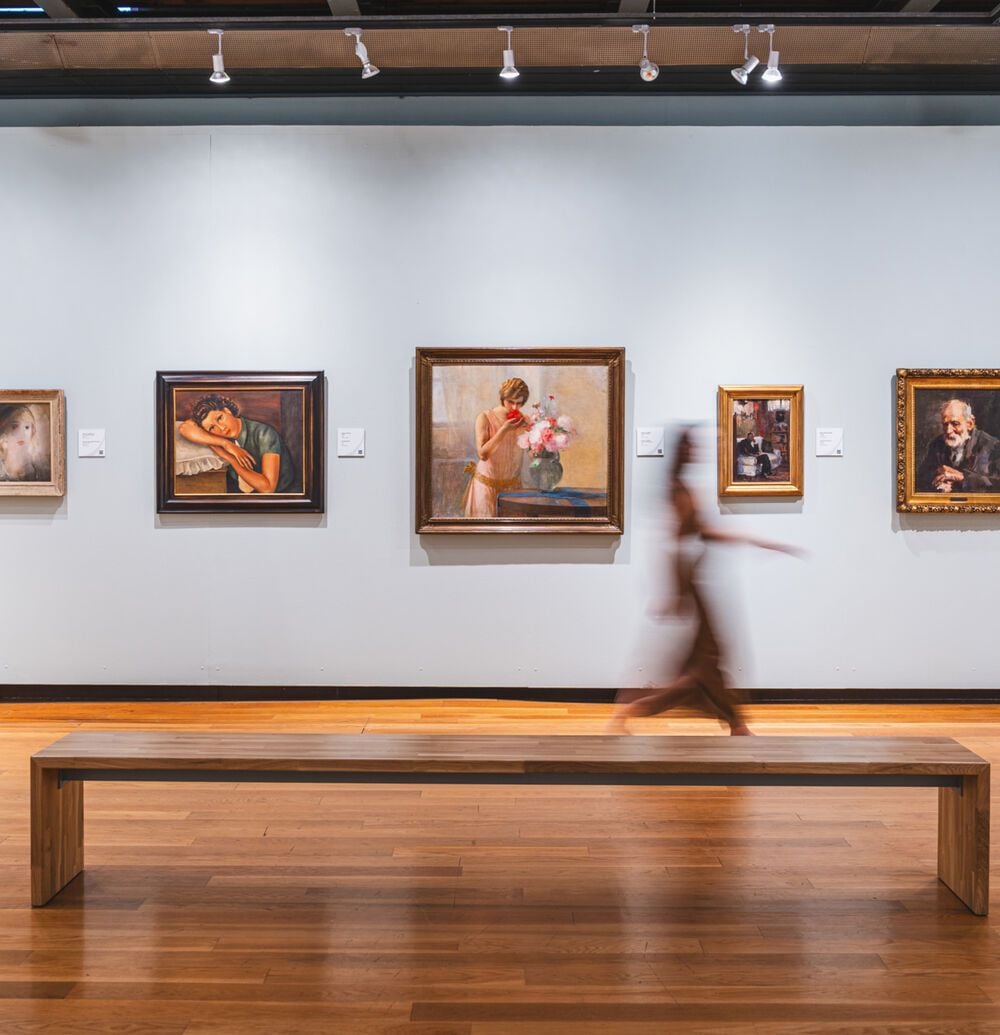
Located in a historic building near the Old Harbour, the Municipal Art Gallery of Chania explores Crete’s relationship with different artistic and cultural movements. Its permanent collection includes paintings, engravings and sculptures by Greek and local artists, reflecting both local traditions and the social and political history of Chania from the 18th century to the present day. The gallery also hosts temporary exhibitions and cultural events.
- Location: Chania Old Town
- Opening hours and admission: Check official site here
- Combine your visit with: Folklore Museum of Chania, Chania Old Town, Old Harbour, Splatzia Square, Byzantine and Post-Byzantine Collection of Chania, Athinagora Square, Egyptian Lighthouse, Jewish Quarter
Byzantine and Post-Byzantine Collection of Chania
The Byzantine and Post-Byzantine Collection of Chania is found in the 15th-century catholicon of the former Monastery of San Salvatore, beside the western fortifications of the Old Town. Originally a Franciscan monastery and later converted into a mosque during Ottoman rule, the building itself reflects Chania’s multicultural past. Inside, you’ll find a collection of mosaics, frescoes, icons, ceramics, coins and more representing religious life and artistic expression during the region’s Byzantine and post-Byzantine periods. Among the highlights are a 6th-century mosaic floor from an early Christian Basilica and portable icons depicting Saint George on horseback.
- Location: Chania Old Town
- Opening hours and admission: Check official site here
- Combine your visit with: Maritime Museum of Crete, Old Harbour, Firka Fortress, Jewish quarter, Egyptian Lighthouse, Jewish Quarter
Museum of Typography
Chania’s Museum of Typography is located in Souda, just outside the city, and examines the role of typography in shaping knowledge, culture and communication. It was founded by Yannis Garedakis, publisher of a local newspaper, together with his wife, Eleni, as a private initiative and follows the development of printing from the era of Gutenberg to modern techniques. Exhibits include working presses, typesetting equipment, wood and metal type, rare books and graphic material, as well as 19th-century cast-iron presses. There are also live demonstrations showing how text was once set and printed by hand.
- Location: Souda
- Opening hours and admission: Check official site here
- Combine your visit with: Halepa, The Archaeological Museum of Chania, Chania Old Town
Folklore Museum of Chania
Located in the heart of the Old Town, opposite the Holy Metropolitan Church of the Presentation of the Virgin Mary, the Folklore Museum of Chania explores how people lived and worked in Crete up to the mid-20th century. Exhibits include raw materials and objects linked to domestic crafts, alongside tools associated with trades such as agriculture, shoemaking and basket weaving. Particular attention is given to weaving and embroidery, with textiles reflecting patterns and techniques found across the island.


Also known as Kritiko Spiti (Cretan House), it recreates the interior of a rural home, with kitchen, living space and bedroom arranged to illustrate daily life.
- Location: Chania Old Town
- Opening hours and admission: Check official site here
- Combine your visit with: Folklore Museum of Chania, Chania Old Town, Old Harbour, Splatzia Square, Byzantine and Post-Byzantine Collection of Chania, Athinagora Square, Egyptian Lighthouse, Jewish Quarter
Historical Archive of Crete
Founded in 1920, the Historical Archive of Crete is one of the oldest archival institutions in Greece and among the most important for understanding Crete’s modern history. Its collections include hundreds of thousands of documents, photographs, newspapers and manuscripts tracing key moments in the island’s political and social life, from the Cretan revolutions and the autonomous Cretan State to Ottoman administration, World War II and the Battle of Crete. The archive holds private collections and personal objects linked to fighters and prominent figures in Cretan history, including Eleftherios Venizelos. A small folklore section includes a representation of a traditional Cretan home.
- Location: Koum Kapi
- Opening hours and admission: Check official site here
- Combine your visit with: Koum Kapi beach, Chania Old Town, The Archaeological Museum of Chania, Egyptian Lighthouse
Archaeological Museum of Kissamos
About 40km west of the city of Chania, in the coastal town of Kissamos, the Archaeological Museum of Kissamos occupies the former Venetian-Ottoman Governor’s House Kissamos was an important harbour that flourished during the Hellenistic and Roman periods as a centre of trade and administration. The museum presents finds from across western Crete, beginning with the Minoan era and moving through the Geometric and Hellenistic periods, when city-states such as Polyrrhenia and Falasarna were at their height. Inscriptions, ceramics and sculpture document the Roman period, and a digital display explains the earthquake of 365 AD that reshaped the region. Part of a Roman bath survives beneath the building. Upstairs, mosaic floors from Greco-Roman villas, along with coins and amphorae, offer a glimpse of urban life in ancient Kissamos.
- Location: Kissamos
- Opening hours and admission: Check official site here
- Combine your visit with: Archaeological Site of Falasarna, Falasarna beach, Balos beach
Folklore Museum of Gavalochori
In the village of Gavalochori, in the Apokoronas region east of Chania town, the Folklore Museum of Gavalochori occupies a traditional two-storey house shaped by both the Venetian and Ottoman periods. Inside, the focus is on domestic life and local crafts that defined rural communities across the area. A reconstructed kamarospito – a vaulted stone house typical of rural Crete – shows how living, storage and work once coexisted in a single space. Displays also cover silk production, ceramics and woodcarving, alongside kopaneli (bobbin lace), made by twisting cotton or silk threads around small wooden bobbins on a cushion. Local women often demonstrate the technique, keeping the craft part of everyday village life. It makes a natural stop when exploring the Apokoronas villages.
- Location: Gavalochori village
- Opening hours and admission: Check official site here
- Combine your visit with: Vamos village, Fres village, Kalyves village, Vrises village, Douliana village, Askyfou village, Almirida beach, Archaeological site of Aptera
Olive and Oil Museum / Dermitzaki Folklore Collectio
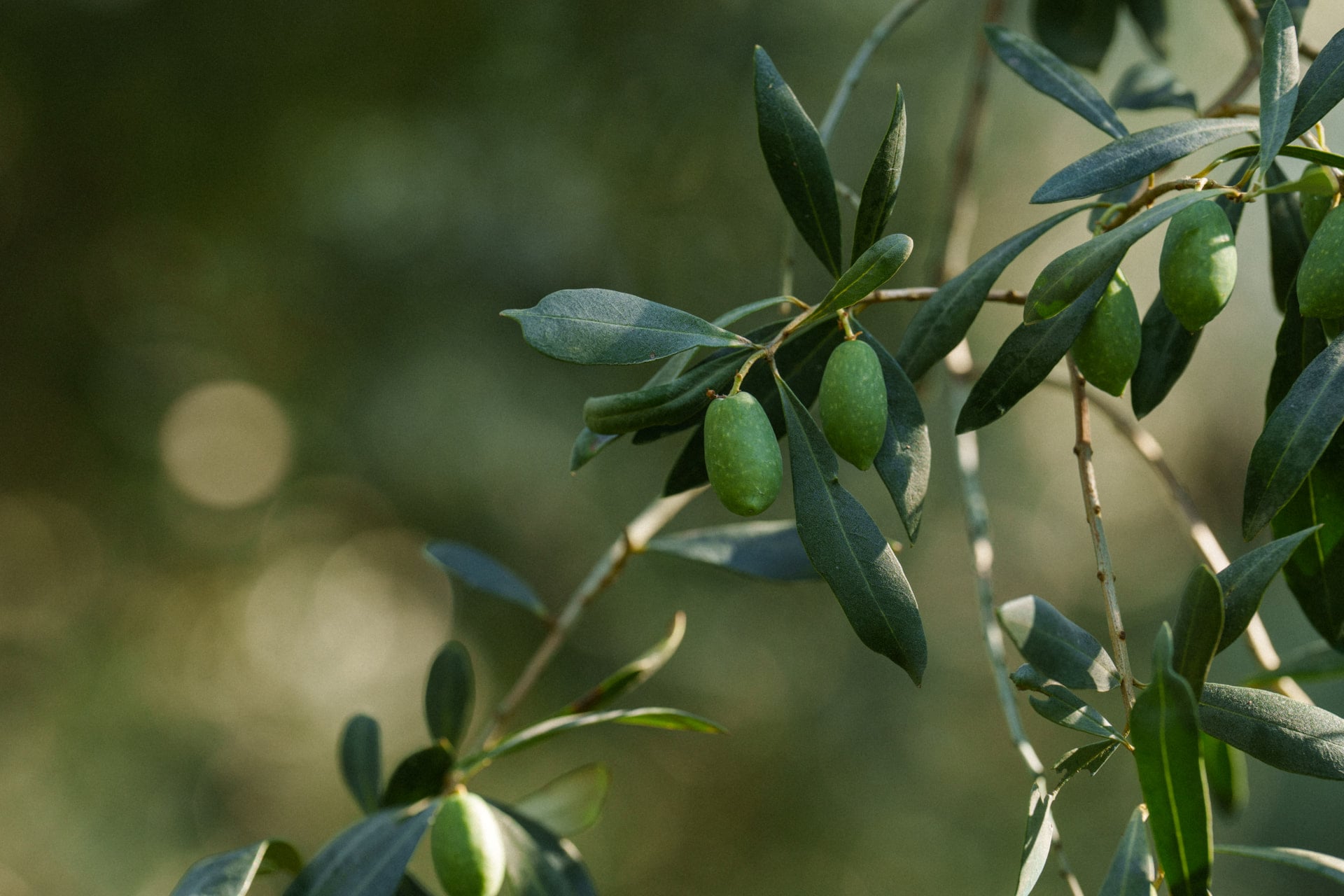
A short drive inland from Chania town, in the village of Vatolakkos, the Olive and Oil Museum centres on one of Crete’s defining products. It is housed in an 18th-century olive oil factory (fabrica) that preserves its original machinery, allowing visitors to see how olive oil was produced before industrial methods took over. The exhibition is complemented by the Dermitzaki Folklore Collection, which features everyday objects linked to farming, bread making and domestic routines. Upstairs, a recreated Cretan bedroom, with woven textiles and embroidery, shifts the focus from production to home life.
Bonus: Take time to walk around Vatolakkos – a working village shaped by olive groves and vineyards – and combine your visit with a tour and wine tasting at nearby Manousakis Winery, which specialises in organic wines.
- Location: Vatolakkos village
- Opening hours and admission: Check official site here
- Combine your visit with: Botanical Garden of Crete, Sarakina Gorge, Kissamos
Museum of Contemporary Art “Olive press”
The Museum of Contemporary Art “Olive press” is so-called because it occupies a former olive oil factory in the village of Dromonero. Once part of a local agricultural cooperative, the building retains elements of its industrial past, including sections of the original olive-press machinery. The permanent collection includes more than 250 works by artists from Greece and abroad, spanning painting, sculpture, printmaking, ceramics, photography, video art and installations. Displayed within the raw former factory spaces, the works create a compelling contrast between contemporary artistic expression and the site’s agricultural past.
- Location: Dromonero village
- Opening hours and admission: Check official site here
- Combine your visit with: Vouves village, Kissamos, Falasarna beach, Palaiochora
12 best museums in Chania
From archaeological and art museums in the Old Town to small village collections, Chania’s museums allow you to move between past and present and understand the full cultural landscape of western Crete.
Discover Greece Your Way
Discover authentic local experiences and secure your bookings for activities and tours with our official online rates.
Chania: Explore the Secrets of Wine and ...
Chania Sunset Jeep Safari Tour
Chania: Explore the White Mountains of C...
Traditional Cretan Dancing Lessons – Day...
The Ultimate Cretan Roadtrip - 10 Days i...
Kissamia Rooms - Next to Night Clubs
Imperium Luxury Villas
Residenza Vranas Boutique Hotel Chania
Souda Plaza Collection
Casa Dei Miracoli
Lycasti
Discover the highest-rated ground transportation services for travelers, based on reviews across Google, Tripadvisor, and Trustpilot.
Welcome Pickups offers a seamless, safe, and enjoyable experience for travelers
Trained Drivers
Hand picked & trained drivers
Low prices
Same price as a regular taxi from the line
Arrival monitoring
Drivers are always on time
Quality support
24/7 email & phone support

Ferries to & from Chania
Find routes, ports & schedules - search below