OVERVIEW
The Polycentric Museum of Aigai is an extraordinary insight into the world of the ancient Macedonians. Located near modern-day Vergina, Aigai was the capital of ancient Macedonia and is where the family of King Philip II of Macedon ruled for more than three centuries. It gathered intellectuals and the elite of the time, becoming a cradle of culture and was where Alexander the Great, Philip II’s son, was crowned before setting out on his legendary empire-building journey across the East.
It is called “polycentric” because it includes several different parts, each with its own focus. The Central Museum Building is a recent addition, housing a wealth of treasures unearthed in the area and packed with historical information. But the most famous part is the Museum of the Royal Tombs, which includes the monumental tomb of Philip II and other family members, rediscovered in the 1970s to international acclaim. Nearby are the remains of the Palace of Aigai, the principal royal residence of the ancient Macedonian kingdom. With elaborate floor mosaics and other impressive architectural and design elements, it was the ultimate symbol of the power and wealth of the Macedonian Empire.
The remaining 1,400 hectares contain hundreds of burial sites of varying size and importance, including the Royal Burial Cluster of the Temenids and the Ancient Theatre, where Philip II was assassinated in 336 BC. There are other important archaeological finds at Aigai that are still under excavation and not yet open to visitors, including the Cluster of the Queens, believed to include the remains of Philip II’s mother (Eurydice) and daughter (Queen Thessaloniki). Some of the artefacts from these tombs are on display in the Central Museum.




DON'T MISS
Highlights of the Polycentric Museum of Aigai near Vergina
Central Museum Building
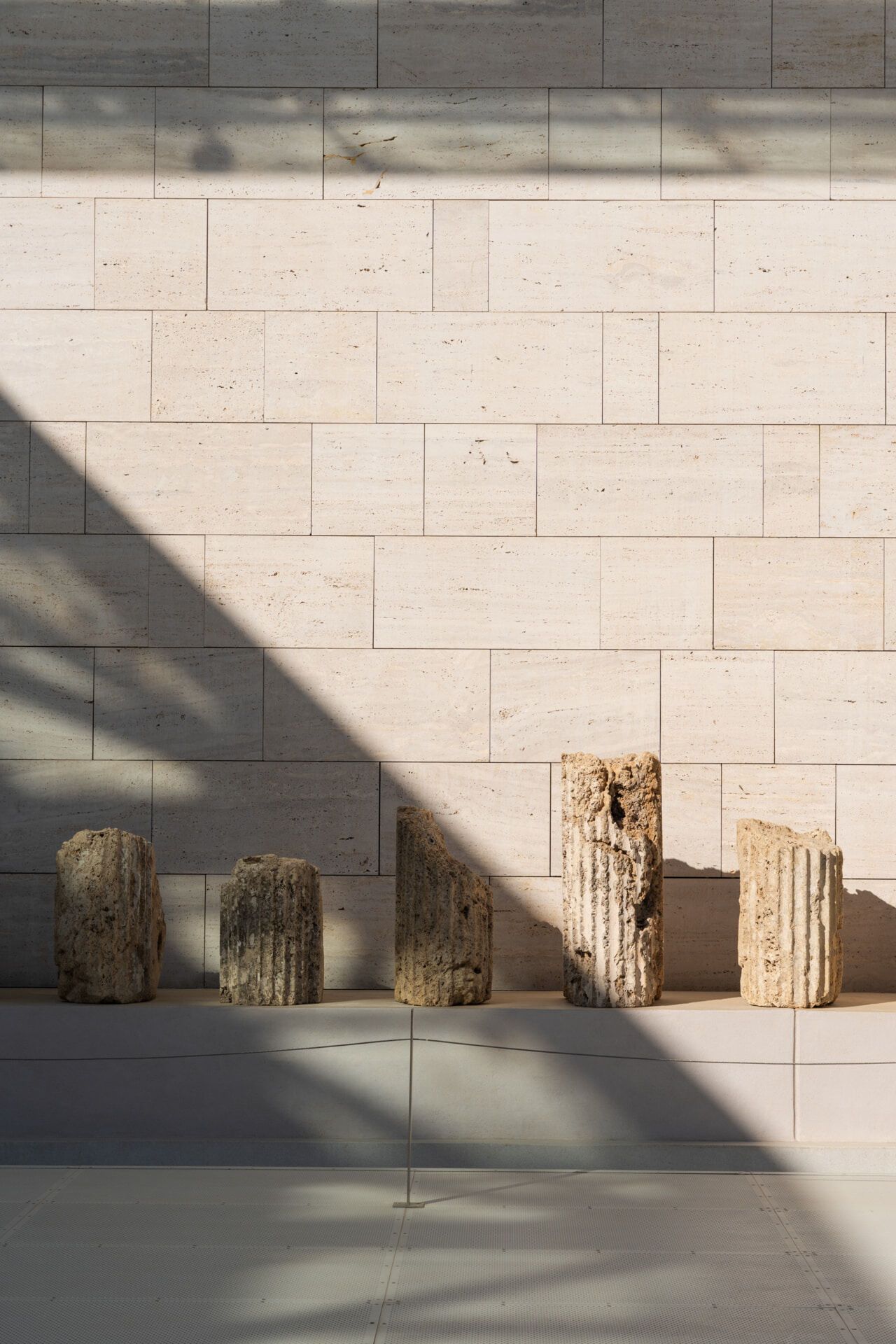
Designed as a gateway to the archaeological complex, the Central Museum Building has permanent and temporary exhibitions showcasing important finds from the area. It covers more than 7,000 square metres of indoor and outdoor exhibition space and includes a glass-roofed atrium with a 30m-long reconstruction of part of the upper facade of the Palace of Aigai, allowing visitors to appreciate its scale.
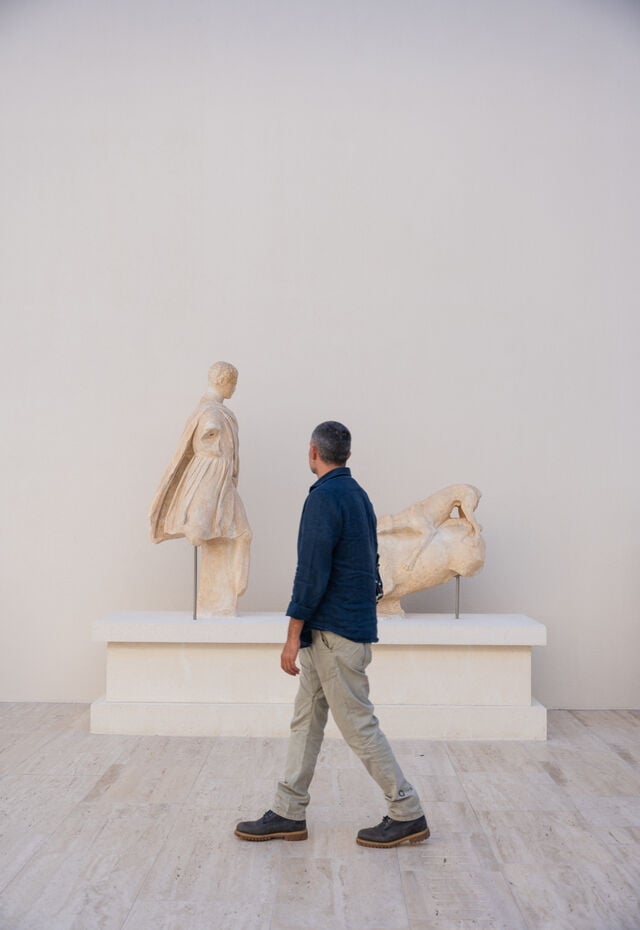
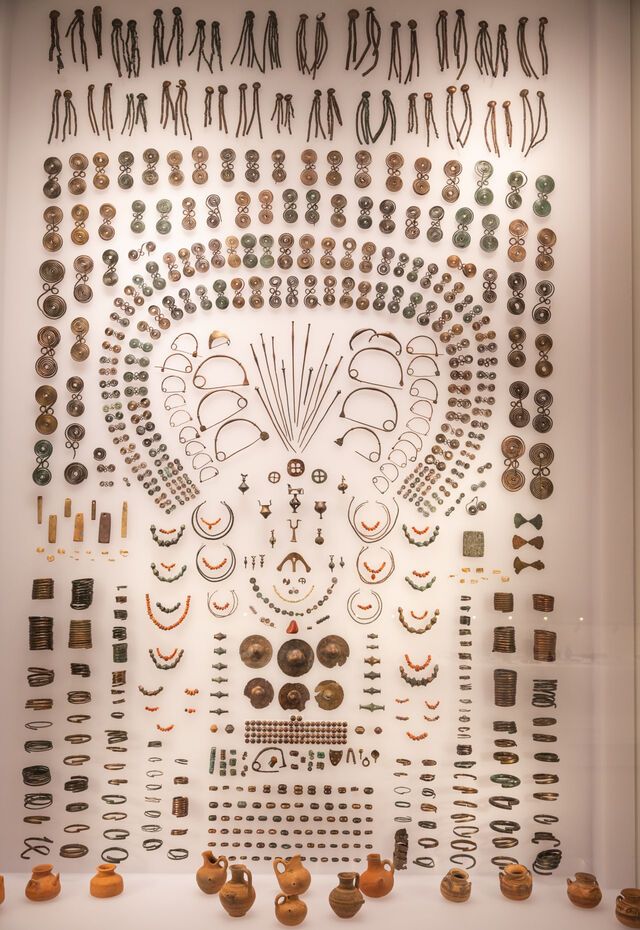
The Central Museum’s main exhibition, known as The Memory of Aigai, showcases artefacts from long-term excavations of the site. It highlights aspects of daily life and religious practices in the ancient city through pottery, tools, jewellery and personal belongings. Weapons include bronze and iron swords, spearheads and arrows, as well as the remains of a sarissa, a 4 to 6.5-metre-long spear introduced by Philip II that accompanied soldiers in life and death. The museum has a wealth of historical information and an exhibition of sculptures, votive offerings and inscriptions from the city's sanctuaries, including a rare veiled statue of Queen Eurydice I of Macedon, Philip II’s mother. The Museum of the Royal Tombs (also known as Burial Cluster A) is not only an archaeological wonder, but also one of the world's great burial sites because its most important tombs were discovered virtuaintact. Covered by a grass mound that recreates the original Macedonian burial site, the underground museum allows visitors to admire the palatial tomb of Philip II, as well as those of Alexander the Great's teenage son, Alexander IV
Philip II's funeral in 336 BC was one of the most lavish in antiquity and his tomb – something between a mini palace and a temple – has standing columns and an antechamber. buried in the antechamber. The subtle lighting gives an even more special aura to the display of treasures, which includes the gold larnax containing Philip II’s remains and his immense ceremonial armour, as well as the intricate (the most precious to have survived from ancient Greece) and other remains from his funeral pyre. Other highlights include Philip II’s silver and gold diadem with a Heracles knot, symbolising strength and eternal unity, and the gold gorytos (quiver and bow case), shin-guards and neck armour of Queen Meda.
Museum of the Royal Tombs
The Museum of the Royal Tombs (also known as Burial Cluster A) is not only an archaeological wonder, but also one of the world's great burial sites because its most important tombs were discovered virtually intact. Covered by a grass mound that recreates the original Macedonian burial site, the underground museum allows visitors to admire the palatial tomb of Philip II, as well as those of Alexander the Great's teenage son, Alexander IV.
Philip II's funeral in 336 BC was one of the most lavish in antiquity and his tomb – something between a mini palace and a temple – has standing columns and an antechamber. It features a gold and ivory deathbed and frescoes above the entrance depicting hunting scenes involving Philip II and Alexander. Meda, Philip’s last wife, was buried in the antechamber. The subtle lighting gives an even more special aura to the display of treasures, which includes the gold larnax containing Philip II’s remains and his immense ceremonial armour, as well as the intricate golden oak wreath (the most precious to have survived from ancient Greece) and other remains from his funeral pyre. Other highlights include Philip II’s silver and gold diadem with a Heracles knot, symbolising strength and eternal unity, and the gold gorytos (quiver and bow case), shin-guards and neck armour of Queen Meda.
The ancient necropolis
Beyond the Royal Tombs, there are hundreds of other burial mounds (tumuli) of varying size and importance, many dating from the Archaic and Classical periods predating the reign of Philip II. Of those excavated, you can visit the Royal Burial Cluster of the Temenids (Cluster C), with a dozen tombs dating from the 6th to the 3rd century BC. Excavations have revealed invaluable information about the burial customs of the period, including some of the earliest evidence of funerary pyres from the area. These include shards of clay pots and fragments of bronze vessels, half-melted helmets, and silver-riveted swords. Some swords have ivory handles or appear to have been deliberately bent. Such finds create a fascinating link between the burial customs of the Macedonians of the archaic times to the world described in the Homeric poems.
The Palace of Aigai
The scale and importance of Aigai are reflected in the remains of the palace built during the reign of Philip II. It was the largest and, together with the Parthenon in Athens, the most significant of classical Greece. Built on a hill, it was three times the size of the Parthenon, with banqueting halls and hundreds of columns, and was visible for miles as a symbol of power and beauty. Its size and opulence set the standard for royal palaces for centuries.
After an extensive restoration programme, the Palace of Aigai has reopened to the public, giving visitors a feeling of the innovative design and full grandeur of the original Macedonian royal court. Covering 15,000 square metres, it contains impressive design elements, including a large open courtyard and a series of Doric colonnades. There are remains of painted plaster walls and relief tiles, as well as exquisite floor mosaics depicting mythological scenes such as the Abduction of Europa. The palace was both a royal residence and an administrative and entertainment centre featuring lustrous marble stucco, a hallmark of elite Macedonian design. Fittingly, it is where Alexander the Great was crowned in 336 BC, following the assassination of his father.
Ancient Theatre
As with every place of importance in antiquity, Aigai had a theatre. But what makes this theatre special is that it appears to be where Philip II was killed by a bodyguard while celebrating his daughter’s marriage. Alexander then took the throne and began the reign that led to the accumulation of Greece's famous empire, stretching from Greece to the Indus Valley and across North Africa.
The Theatre of Aigai was built in the 4th century BC next to the palace and featured a cavea (seating area) on a natural slope. The seating was mainly earthen, with only the front row made of stone. The parodoi (side entrances) and simple stage building were also made of stone. On either side of the stage was an open stoa (portico) and in the centre of the orchestra (performance area) was an altar dedicated to Dionysus, the god of theatre and wine.
Post-Byzantine Church of Saint Demetrius
At the eastern end of the archaeological site is a small Post-Byzantine church (dating from the 17th/18th century) dedicated to Agios Dimitrios, highlighting the site's continued significance through later centuries. It is notable for its architectural design and decoration, including icons and murals depicting religious scenes. Saint Demetrios, a revered Christian martyr, is also the patron saint of Thessaloniki.
GET PLANNING
From Thessaloniki to Vergina:
- By car: 70km (1hr)
- By bus (KTEL): from Makedonia Station via Veria (change bus). Regular daily service.
From Thessaloniki to Veria:
- By car: 73km (1hr5min)
- By bus: More info
- Regular daily service (1-1hr30min)
- By train: Via Platy. More info
From Athens to Veria:
- By car: 507km (5hr)
- By bus (KTEL): Kifissos Station (Athens) two services daily.
- By train: From Larissis Station (Athens) via Platy. More info
From Vergina to Veria
- By car or taxi: 13km (20min)
- By bus
- The Polycentric Museum of Aigai, near Vergina, is open all year round (except national holidays).
- Seasonal opening hours apply
- More info here
- Autumn
- Spring
- Summer
- Winter
- You will need 3-4 hours to fully explore the entire Polycentric Museum of Aigai, although you can choose to visit only parts of it.
- Tickets: €15 (€8 reduced)
- The Polycentric Museum of Aigai is expansive, so wear comfortable shoes and season-appropriate clothes.
- As with any open-air archaeological site, it’s worth checking the weather conditions before you visit.
- A museum shop sells souvenirs, including original copies of Greek antiquities and publications.
- A café is open during museum operating hours.
- Nearby Veria offers very good accommodation, as well as modern and traditional cuisine.
- The Polycentric Museum of Aigai is suitable for visitors with disabilities.