Paros doesn’t announce itself with fuss. It unfolds slowly – an island whose true beauty lives not in spectacle but in the way light falls on a hillside, in the curve of a whitewashed lane, in the scent of sage and thyme growing wild in the countryside. Monasteries nestle silently into the hillsides and fishermen mend their nets with hands as steady as the waves, as if time has never needed to move any faster.
As summer arrives, Paros awakens in a vibrant rhythm as the alleyways of Parikia and Naoussa, the island's two main settlements, thrum with visitors and popular beaches come into their own – Kolymbithres with its sculpted granite formations, Santa Maria with its golden stretch of sand and Parasporos where the water glows a shade of blue that feels almost unreal.
But there’s another side to Paros, on the southern coastline, where summer unfolds with a different kind of energy.
Southern comfort and unhurried days
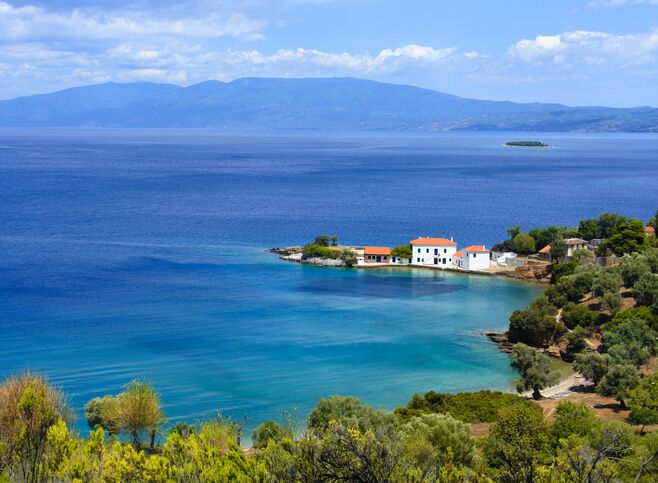
Coastal villages such as Aliki – home to Votsalakia Seaside Escape – make for unhurried days. And south-coast swimming spots such as Faragas, Molos and Lolantonis offer soft sand and crystalline water, each with its own character. There are quiet bays with no facilities all along the coast, begging for an early-morning or afternoon swim. Most are sheltered from northerly winds.
Others hum with the soft buzz of beach bars and windsurf sails. No more than 25 minutes by car along the coast, Golden Beach and Pounda Beach offer world-class conditions for windsurfing and kitesurfing – whether you’re a beginner or a seasoned expert.
Mornings might be spent kayaking along rocky headlands or snorkelling or scuba diving through underwater gardens with shimmering fish – activities offered through Votsalakia Seaside Escape. Or perhaps a private boat trip to Panteronisi, one of the uninhabited islets between Paros and Antiparos.
Exploring the interior
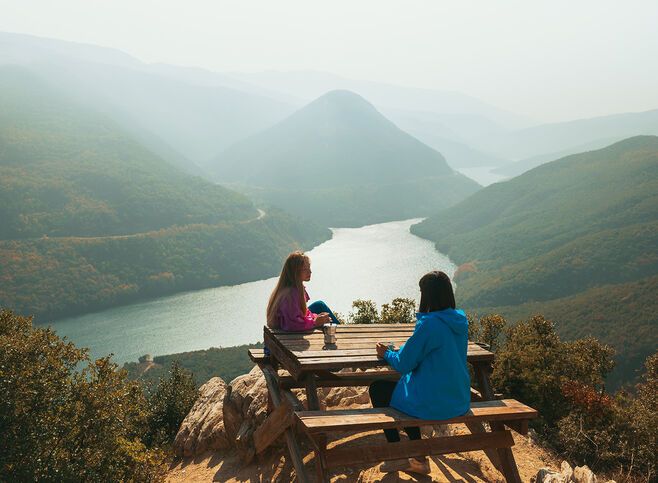
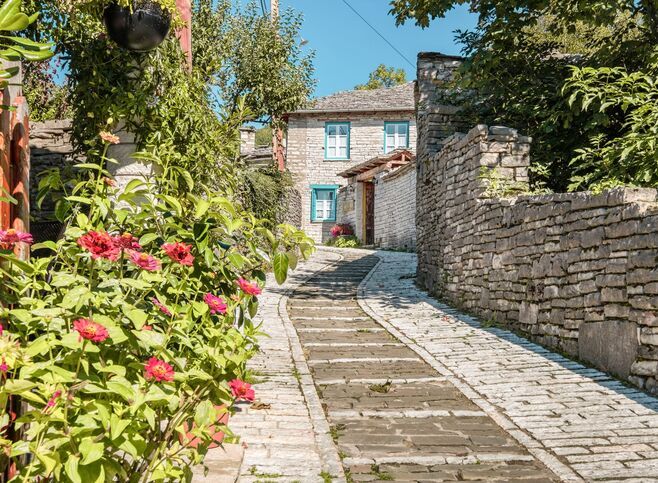
Beyond the coast, Paros remains a land of wandering and exploration. Trails wind through ancient hand-built terraces and pass Byzantine chapels with centuries-old icons. Shepherds greet hikers with a nod, herding goats that know the land better than any map.
Footpaths were once a lifeline between villages where daily life still moves at the scale of human connection: the baker who remembers your favourite pastry, the neighbour who knows your business but also your birthday, and the cat that will absolutely steal your breakfast if you leave the door open.
Local products woven into the landscape
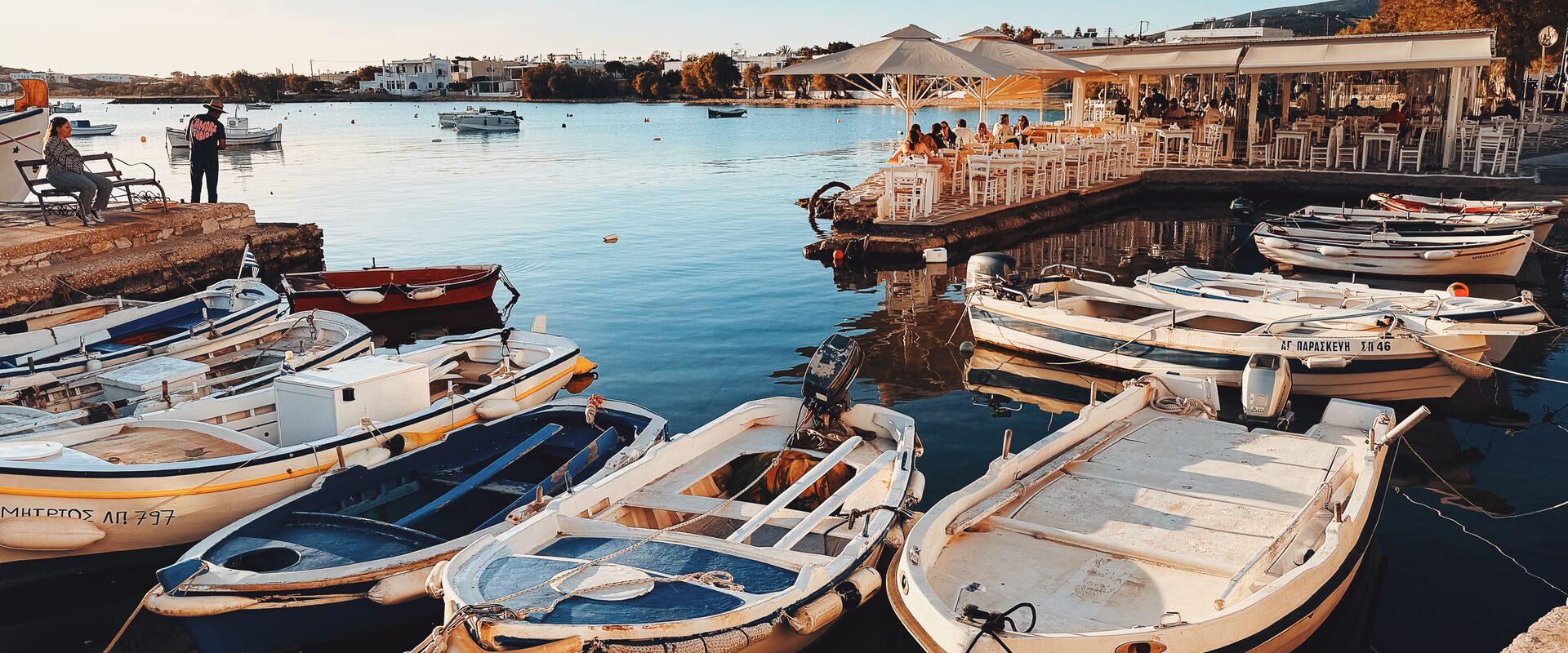
At the same time, modern life has threaded itself softly into this tapestry. Restaurants in Aliki, Dryos and Piso Livadi (other villages on the south coast) reinterpret tradition with care and artistry: grilled amberjack with lemon, sun-dried octopus that crackles on the grill, handmade pasta scented with wild fennel, cheeses from small family farms, and traditional sweets given a contemporary touch. It’s not “farm-to-table” – it’s simply how things have always been done, only now appreciated with fresh eyes.
Similarly, Paros’ vineyards continue a long-standing winemaking heritage. Concentrated in the most significant wine-growing zone, in the foothills of Mount Profitis Ilias in the north, they use the traditional aplotaria method of vines planted at generous distances and left to trail naturally along the ground without support. Newer vineyards follow a more linear layout, allowing for more efficient use of space and improved cultivation. The steady Meltemi winds and the strong, dry breezes that sweep down from the north each summer create a distinctive microclimate ideal for nurturing resilient grape varieties.
Guided winery visits and tasting experiences reveal first-hand the true character of the Cycladic terroir – flavours beautifully complemented by fresh local seafood and classic Greek specialities.
Or it could be a morning spent with a beekeeper who explains – with obvious pride – why thyme honey tastes different depending on the slope where the bees buzzed.
The soft embrace of the seasons
Paros leaves its imprint not through grand spectacles but through sensation. In spring, wildflowers blanket the hills, days grow longer and quiet beaches and scenic trails invite leisurely exploration. At Easter, settlements like Aliki, Marpissa, Prodromos, Lagada and Lefkes preserve customs that are celebrated with deep reverence. In the gentle glow of autumn, meanwhile, activities such as enjoying the olive harvest come into their own.
The last morning always comes too soon. The sea is already bright, the air already warm. You leave with more than you arrived with – though it takes a while to work out exactly what.