

What is Ioannina Best Known For?
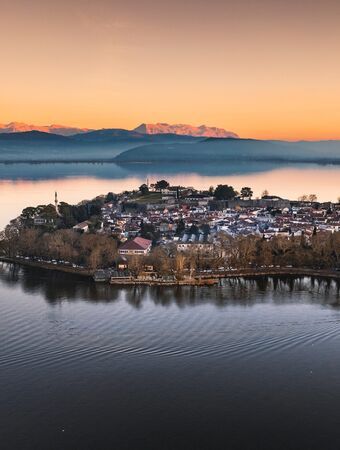
Ioannina is built on the shore of Lake Pamvotida, a body of water which shapes the identity of the city as much as its many historical monuments or student population – misty mornings, gentle ripples, and a small island at its centre, all giving it an atmosphere unlike anywhere else on the Greek mainland.
As the capital of Epirus, Ioannina is a rewarding city break destination – fascinating to explore in its own right, though still relatively unknown among international visitors, and a natural springboard to the stone villages of Zagori and wider landscape of Epirus, as well as the wilder Tzoumerka villages further east.
At the heart of the city is Ioannina's fortified old town. It was first built in the 6th century but its present form and lasting fame came from Ali Pasha, who ruled a semi-autonomous state during the Ottoman occupation, between 1787 and 1822, turning Ioannina into one of the wealthiest and most powerful cities in Greece. The imposing castle walls and cobbled streets of the castle-town still carry the marks of that era.
Long before Ali Pasha, though, Ioannina had already grown into a rare meeting point of cultures – Christian and Muslim communities living side by side, as well as a Jewish community that included Romaniote Jews present since Hellenistic times.
Ioannina was especially famous for its silversmithing tradition, with jewellery and fine metalwork being exported as far as Austria and Russia. There are still workshops in the city that practise that craft, as well as a silversmithing museum that is worth visiting.
It is this mix of history and the lively atmosphere contributed by residents and university students that give Ioannina its special energy – nowhere more so than in the cafes and restaurants looking onto the lake.
What to do in Ioannina
No visit to Ioannina is complete without a walking tour of its Byzantine castle, known simply as Kastro and divided into two walled sections – a northeastern citadel dating back to Byzantine times, and the inner citadel of Its Kale to the southeast, where Ali Pasha built his palace.
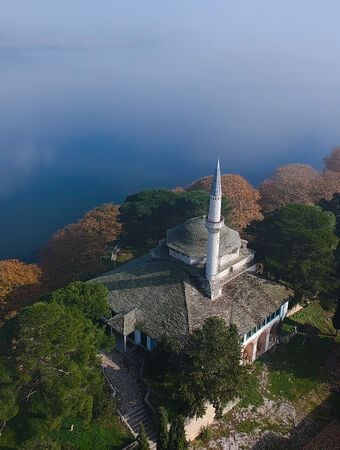
Kastro is best explored by simply wandering its cobbled streets, past old mansions and attractions such as the Aslan Pasha Mosque – now the Ethnographic Museum – and the city's historic Synagogue. Its Kale is best known for Ali Pasha's tomb – set within an intricate iron cage – and the striking Fethiye Mosque overlooking the lake. It is also the location of two of the city's best museums, the Byzantine Museum and the Silversmithing Museum.
Boats leave from near the castle to Nisi, the island at the centre of the lake, where tavernas serve seafood and there are wonderful examples of local architecture. Among the highlights are the Ali Pasha and Revolutionary Period Museum and the Monastery of Saint Pantaleimon, where Ali Pasha was killed in 1822.
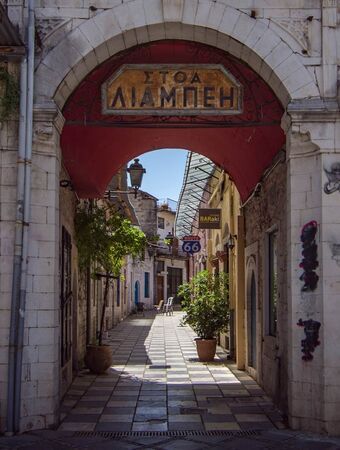
Strolling around Ioannina city offers a different atmosphere, from the cafes and tavernas to the city’s arcades and craftsmen workshops. Litharitsia Park, on a hill above the castle, is one of the most tranquil spots in the city.
Local tavernas around the lake serve up Epirus specialities – best enjoyed at the unhurried pace that defines the city. And the lake itself can be explored by boat or bicycle, on the road that circles it.
Just outside the city is Perama Cave, with stalactites and stalagmites formed over more than a million years. And Mount Mitsikeli rises above the lake towards Ligiades, a traditional village 13 km away with panoramic views over Ioannina.
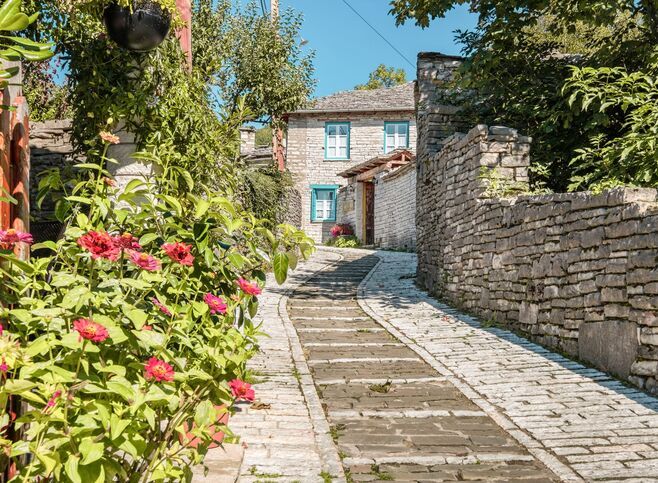
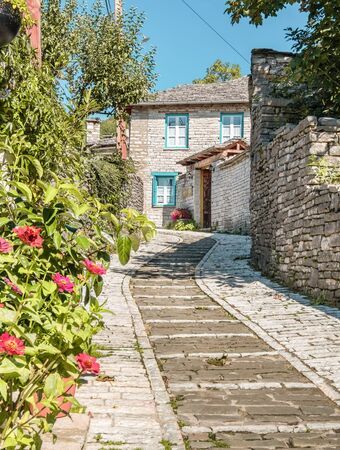
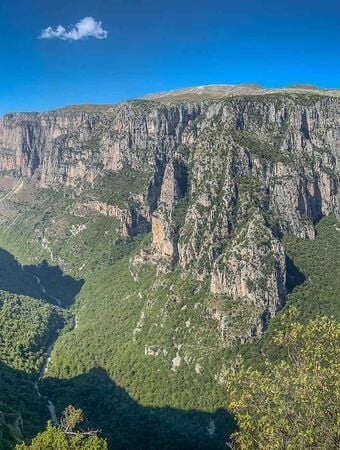
Further afield, the stone villages of Zagori boast traditional stone houses, arched bridges and cobbled paths, within a landscape shaped by the Vikos Gorge – among the most spectacular gorges in the country and a wonderful setting for hikes and other nature activities. The Voidomatis River within the gorge is a popular spot for rafting, especially in spring and autumn
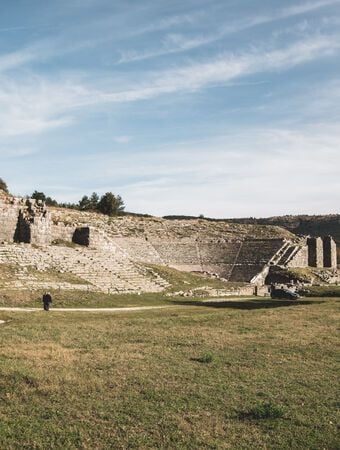
Roughly 20 minutes south of Ioannina, the ancient site of Dodoni holds Greece's oldest oracle, dedicated to Zeus and his consort Dione. It boasts one of the largest ancient Greek theatres, which still hosts performances today.
Best Time to Visit Ioannina
Ioannina is a year-round destination, with the warm and lively atmosphere generated by its permanent residents and student population and the peace and calm of a city relatively unknown among international visitors.
Spring is an ideal time for walking around the city, as well as for excursions further afield to Zagori and the Vikos Gorge, as the weather warms without the summer heat – though it's worth packing for the odd shower. Autumn is also a wonderful time for out-of-city experiences, with the added atmosphere of mist settling over the lake and more frequent showers as the season goes on.
Summer brings the warmest weather to the city itself, though excursions into the mountains offer a cooler escape. Winter is quieter than the rest of the year, with colder and wetter conditions but a more intimate atmosphere – especially in the mountain villages of Epirus.
How to get to Ioannina
Ioannina sits in northwestern Greece and can be reached by road or air.
By road
Driving from Athens takes around 4.5 hours (411 km) via the Olympia Odos and Ionia Odos motorways, while from Thessaloniki it is a more direct 3-hour drive (260 km) along the Egnatia Odos. Daily coach services also run from both cities to Ioannina's central bus station.
By plane
Ioannina's King Pyrrhus National Airport has direct flights to and from Athens (around 1 hour). During the summer, seasonal charter flights also connect Ioannina with several Scandinavian cities. The airport is just a few kilometres from the city centre, easily reached by taxi or local bus.




Planen Sie Ihre Reiseroute für Ioannina
Erhalten Sie KI-gestützte Vorschläge oder arbeiten Sie mit erfahrenen Reiseexperten zusammen
Touren & Aktivitäten in Ioannina
Deine gesamte Urlaubsplanung an einem Ort, buche direkt und profitiere von den offiziellen Online-Preisen.
Ioannina: Dodoni Antikes Theater & Archä...
Kultur-Wanderung zur Burg Ioannina
Zagori: Wanderung durch die Voidomatis-S...
Epirus: Valia Calda Abenteuer Off-Road &...
Metsovo: Averoff Classics - Weingut Tour...
Nefeli Canyon Papingo: B Abschnitt
Wo übernachten in Ioannina
The Lake Hotel Ioannina
Grand Serai Congress & Spa Hotel
Bodrum Suites
Lithia Ioannina
Nantin
Hotel Brettania
Ioannina offers accommodation options to suit many budgets. Within the castle walls, restored mansions have been converted into guesthouses and boutique hotels, and on the lakefront, around Mavili Square, hotels and cafes look out over the water, with the ferries to the island just steps away. The modern city centre, around Pyrrou Square, has the widest range of hotels and is the best base for restaurants and nightlife, all within easy walking distance of the castle.
Shaped by its inland, mountain setting at around 480 metres above sea level, Ioannina has a more changeable, continental climate than Greece's island destinations. Summers are hot and largely dry, with August highs often in the high 20s to low 30s°C, while spring and autumn are milder and more unpredictable, with daytime temperatures generally in the high teens to low 20s°C and a greater chance of showers as autumn progresses. Winters are cooler and wetter, with occasional snow between December and February. It is worth packing layers and rain-ready clothing outside the summer months, especially if you are planning to explore the mountain villages of Epirus.
Epirus is known across Greece for its pies, most made without yeast and often without filo pastry at all. Examples include alevropita – a simple pie of flour, egg and feta, poured straight into the pan and baked until crisp at the edges, and batsaria, which originated in Ioannina itself, layers wild greens between two thin sheets of flour-and-water batter. For a quintessentially local experience, enjoy a meze meal in a tsipouradiko, often rounded off with a spoon sweet or a syrup-soaked siropiasta.
Ioannina is served by two hospitals, the University General Hospital and the "G. Chatzikosta" General Hospital, which alternate emergency cover on different days of the month. Pharmacies are easy to find throughout the city centre, and the emergency number across Greece is 112. If you are heading out to hike in Zagori or the Vikos Gorge, make sure to carry enough water and sun protection, as conditions in the mountains can differ significantly from the city.
Ioannina is the capital of the Epirus region of northwestern Greece, close to the border with Albania. It sits on the shore of Lake Pamvotida, roughly 410 km from Athens and 260 km from Thessaloniki. Surrounded by the Pindus mountains, it is within easy reach of the Zagori villages, the Vikos Gorge and the ancient site of Dodoni, all under an hour's drive away.
Ioannina's compact city centre and castle are easily explored on foot, and walking is the best way to take in the old town's cobbled streets. Local buses connect the centre with the airport and outlying neighbourhoods, while taxis are widely available and inexpensive for shorter trips. Boats run regularly from the lakefront to the island. For day trips into the surrounding countryside – including Zagori, Tzoumerka or Dodoni – hiring a car is the most practical option, since public transport to these areas is limited. Roads are generally well maintained, though mountain routes can be narrow and winding, so it's worth taking extra care, particularly outside the summer months.
Top of the list of things to do in Ioannina is to explore Ioannina Castle, home to Ali Pasha's tomb, the Fethiye Mosque and the city's Byzantine and Silversmithing museums. A boat trip to Nisi, the small island at the centre of Lake Pamvotida, is another must, taking in its monasteries and lakeside tavernas. Beyond the city, Perama Cave and the ancient theatre of Dodoni are both easily reached, while the stone villages of Zagori and the Vikos Gorge reward those with more time to explore further afield.
Yes, Ioannina works well for families, particularly those looking for a mix of history, nature and gentle outdoor activity. The old town is easy to explore on foot and the boat trip to the island is a highlight for all members of the family. Perama Cave offers an easy, memorable outing close to the city, while the Zagori region of Epirus features experiences ranging from hiking to rafting on the Voidomatis River.
Two to three days is enough to see the city itself comfortably – exploring the castle, taking the boat to the island, and enjoying the lakefront and old town at an unhurried pace. Adding a few days for excursions is well worth it, including day trips to Zagori and the Vikos Gorge, a visit to Dodoni, or exploring the Tzoumerka villages. Many visitors choose to stay four or five days in total, splitting their time between the city and the surrounding countryside, without needing to change base.
Yes, Ioannina is an excellent base for day trips, thanks to its position as a gateway to Epirus. The stone villages of Zagori and the Vikos Gorge are under an hour away, as are the Tzoumerka villages and the ancient site of Dodoni. Hiking, rafting on the Voidomatis River and exploring traditional mountain villages are all realistic day trips from the city, with a car recommended for most routes.