

What is Pelion best known for?
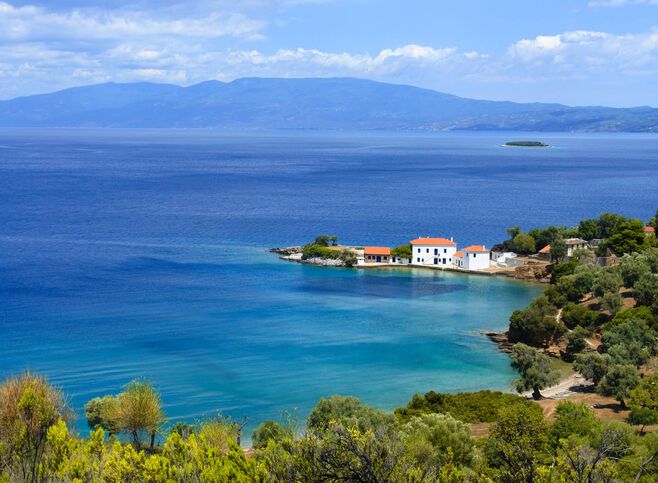
Pelion is a mountain peninsula in Thessaly, rising just outside the city of Volos and reaching out between the Pagasetic Gulf to the west and the Aegean Sea to the east. It is, without doubt, one of the best combinations of mountain and sea that Greece has to offer, and a genuine four-season destination – divided into central, eastern and southern areas, each with its own villages and character.
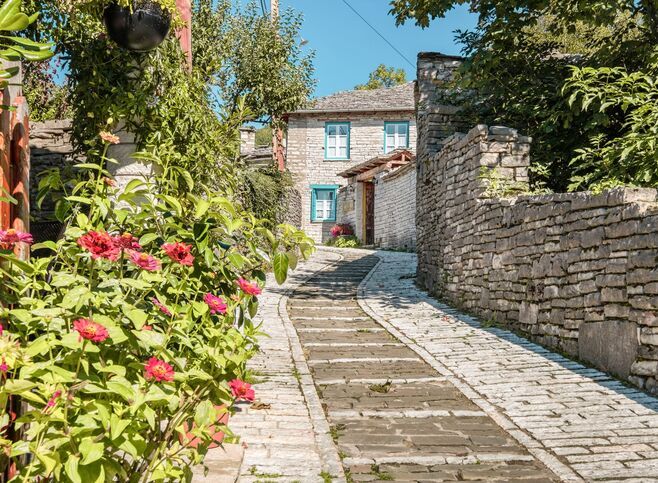
Myths run deep on Mount Pelion. Its forests were home to the half-horse, half-human centaurs of antiquity, including Chiron – the wisest centaur who taught Achilles, Jason and Hercules. Homer wrote of the mountain's healing herbs – a legacy still evident in the shops of many of the 24 villages of the region, whose traditions are preserved through local customs and the characteristic stone-and-wood architecture.
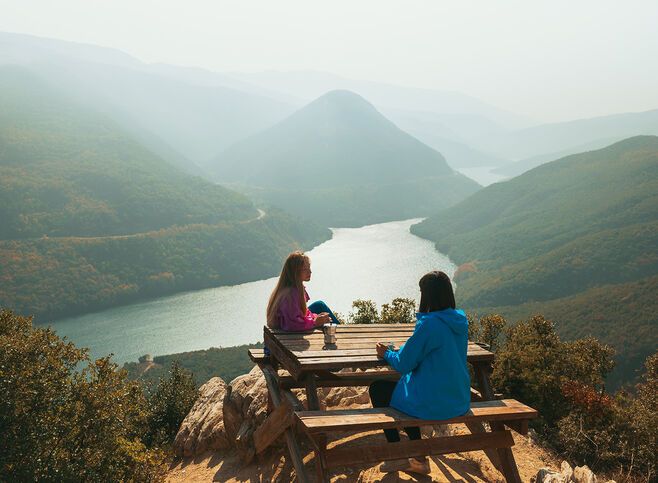
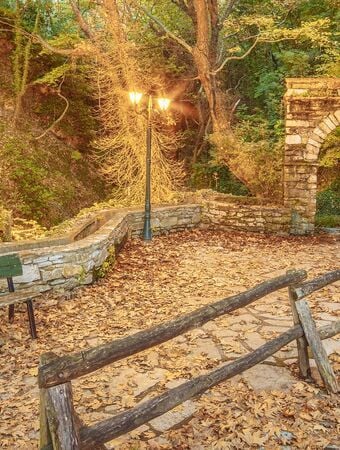
Spring brings Mount Pelion to life with running water, wildflowers and the start of the hiking season, while summer in Pelion means beach days and sea activities along two very different coastlines. In autumn, the forests turn orange and red as mountain paths are blanketed with leaves – and winter brings its own rhythms, including one of only two ski resorts in Greece with sea views.
Each season also brings its own tastes – early summer means sourcherries in Agios Lavrentios and autumn brings the chestnut and apple harvests (including Zagora's PDO apples) alongside the grape harvest. Pelion also produces its own tsipouro (grape distillate), honey and wine, as well as other local products that end up in tavernas and in the stalls of women's cooperatives in villages year-round.
Between the myths, the forests and the beaches, Pelion is rarely a one-visit destination.
What to do in Pelion
Long beach days and forest hikes, folklore museums tucked into centuries-old mansions, wine tasting in family-run vineyards – Pelion is packed with experiences that combine mountain and sea. What joins them all are the villages – the one you're based in, and the ones you move between. So what to do in Pelion often starts with deciding which villages to visit.
Just 12 km up the mountain from Volos, Portaria (home to a Historical and Folklore Museum) is the gateway to Central Pelion. From here, it's a short climb to Makrinitsa, known as the "balcony of Pelion" and with a Museum of Folk Art of its own and a Byzantine Museum with icons by the folk painter Theofilos. The two villages are linked by the Centaur's Path, an easy walking trail for all the family. Close to the peak, you reach Chania, just a handful of kilometres from the Agriolefkes Ski Resort. And some 8 km below is Drakia, notable for its village square shaded by a centuries-old plane tree and war memorials.
Heading south from Volos are Vizitsa and Pinakates, featuring some of Pelion's best-preserved architecture, while Milies is home to a historic library, the 18th-century Church of Taxiarches with its hand-painted frescoes, and the last stop on the Moutzouris steam train. Built in stages at the end of the 19th century to link Volos with the farming villages of the mountain, the narrow-gauge railway still winds its way up from Ano Lechonia, crossing old stone bridges and forested slopes before pulling into Milies' century-old station, from where a cobbled path leads on into the village. Around Argalasti, small wineries dot a landscape that also hides some of the most characterful hidden-gem villages of Pelion.
To the east, Tsagarada and Zagora anchor a coastline where mountain villages sit almost directly above the sea. Tsagarada's square is shaded by a thousand-year-old plane tree, and Zagora is where Pelion's PDO apples are harvested each autumn.
A network of old stone paths and hiking trails connects villages across all regions of Mount Pelion, while summer is when Pelion’s beaches come into their own, including sea kayaking trips to hidden coves and sea caves.
And wherever you find yourself, the food and drink of Pelion is always a highlight – whether you’re at a taverna, enjoying a cooking class or buying local produce.
Best Beaches of Pelion
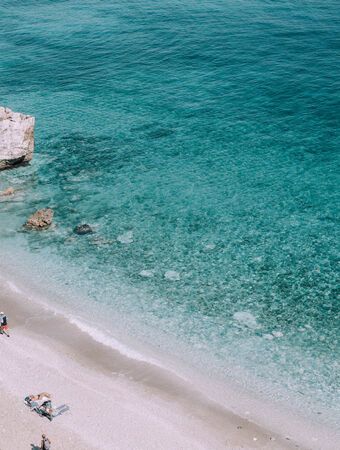
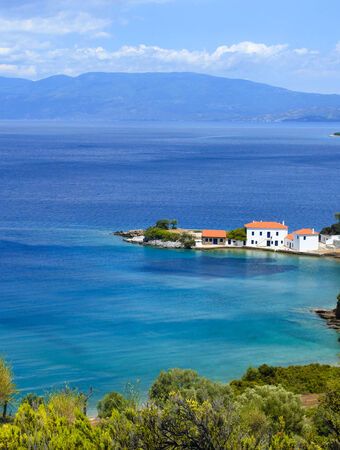
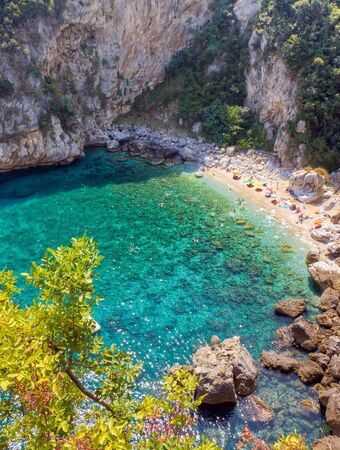
Pelion's coastline changes character depending on which side of the mountain you're on. To the east, the Aegean Sea brings wilder bays and coves, and to the south, within the shelter of the Pagasetic Gulf, the water is calmer and shallower, naturally suited to families. Both coasts share the same green backdrop – with forest running almost to the waterline – and a mix of sand and pebble.
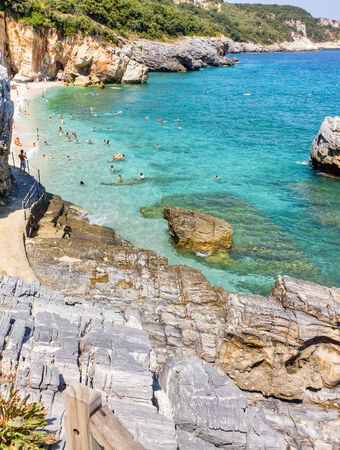
On the eastern coast, Mylopotamos – close to Tsagarada village – is one of Pelion's best-known beaches, split in two by a rocky archway. Further along, Damouchari combines a small port with a quieter beach reached on foot, while nearby Papa Nero and Agioi Saranta offer wide stretches of sand, each with their own beach bar. Horefto, near Zagora, is one of the longest stretches on this side, with beach bars and watersports. For something quieter still, Fakistra is reached down a path through a small gorge and has no amenities at all.
By the Pagasetic Gulf, Kala Nera and Afyssos are among the most organised beaches in Pelion, with easy access to the villages behind them. Nearby, Vathospilia and Tzasteni, both close to Milina, are sheltered coves with calm, shallow water – popular with families, even though facilities are limited.
On the peninsula's southern tip, where the coast opens back onto the Aegean, Vromoneri and Mourtias look out across the water to the island of Skiathos. Further round, Potistika and Paltsi, both near Argalasti, offer the same sense of escape, with golden sand and few crowds. Wherever you end up on this side, it's worth bringing water and shade, since many of the best spots are hard to reach by car.
How to get to Pelion
The best way to reach Pelion is by car, since the mountain's villages are spread across the 80 km length of the peninsula, but it is also possible to reach Pelion by bus and train.
By road: Volos is 330 km (around 3.5 hours) from Athens and 210 km (around 2 hours 20 minutes) from Thessaloniki – and from there, distance will depend on which village you're visiting. The villages of Central Pelion, like Portaria and Makrinitsa, are the closest. Southern villages such as Milies and Vizitsa are around 30 km away from Volos and eastern villages like Tsagarada and Zagora are furthest, at around 50 km along the mountain road. Distances between villages can take longer than the map suggests, given the mountain roads.
By bus: Daily KTEL coach services connect Volos with both Athens (around 4 hours) and Thessaloniki (around 2 hours 30 minutes), with regular onward buses linking Volos to the villages of Pelion, though services become less frequent the further into the mountain you go.
By train: Trains run to Volos from both Athens and Thessaloniki via Larissa. From there, villages such as Portaria and Makrinitsa are close enough to reach by taxi, but a car or bus is the better choice for reaching villages further into the mountain.
By air: Nea Anchialos, Volos's own airport, sits around 30 km from the city and is small and seasonal, with international flights limited to the summer months.



Pelion Seyahat Programınızı Planlayın
AI destekli öneriler alın veya uzman seyahat uzmanlarıyla çalışın
Turlar & Etkinlikler içinde Pelion
Tüm tatil planlama ihtiyaçlarınız tek bir yerde, doğrudan rezervasyon yapmanızı ve resmi çevrimiçi fiyatlardan yararlanmanızı sağlar.
Selanik'ten: Pelion'a Özel Günlük Gezi
8 Günlük Dağ Yürüyüşü Turu Mt. Pelion Ta...
Pelion: Venetos Deniz Mağaraları ve Peli...
Portaria'da Yemek Dersi - Bir Yunan Pide...
Pelion kıyıları: Damouchari ve Veneto'nu...
Pelion'da çiftlikten sofraya yemek dersi
Nerede kalınır Pelion
Balcon Makrinitsa
Kenta Beach Hotel
Damma Mia
Archontiko Michael
Erofili Hotel and Suites
Chroma Pelion Villas
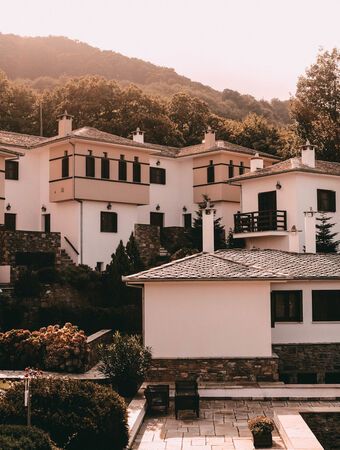
The magic of staying in Pelion's villages is that the accommodation is typically small and traditional rather than large-scale, with converted stone mansions and guesthouses that preserve original wood-panelled interiors and open fireplaces. There is plenty of choice, especially in the larger villages, so it is worth concentrating on the ones that are closest to the experiences you want to enjoy – eg Portaria, Makrinitsa and Chania in Central Pelion; Vizitsa and Pinakates to the south; and Tsagarada and Zagora in the east. Along the coast, small hotels and family-run guesthouses cluster near beaches like Kala Nera, Afyssos and Horefto, offering far easier access to the sea. There are also a handful of working farms that offer agrotourism stays with cooking classes.
Pelion's food is shaped by its seasonal produce. Chestnuts and PDO Zagora apples are two of the joys of autumn, but Pelion also produces pears, walnuts and quinces. Cheeses include PDO feta, hard and yellow kaseri and creamy galotiri. Honey, wine and dried mountain herbs are sold in shops and women's cooperatives across many villages, alongside home-made preserves. Look out for Pelion's tsipouro (distilled from the grape must) and locally pressed extra-virgin olive oil, as well as the region’s own take on baklava, made with walnuts rather than almonds. Tavernas remain the heart of village life in Pelion, with local specialities including tsitsiravla (pickled shoots of pistachios trees), kopanisti Volou (an orange-coloured spicy cheese dip made with pepper, tomato and garlic) and spetzofai (peppers and sausage cooked in tomato sauce).
Pelion's climate is shaped by both its mountain landscape and its position between the Pagasetic Gulf and the Aegean Sea. Coastal villages and beaches enjoy warm, dry summers similar to the rest of the Aegean, while villages up the mountainside stay noticeably cooler, even in July and August. Winter brings regular snowfall to the upper slopes, giving Agriolefkes its ski season and feeding the mountain's rivers in springtime. Rainfall is heaviest between November and March, keeping the forests green year-round.
Pelion is a safe destination and benefits from the facilities and services of Volos, which is the site of the nearest major hospital (the Achillopouleio General Hospital). Larger villages, such as Zagora, Milies and Argalasti, have pharmacies, though less frequently the further you travel from Volos. Bottled water is widely available and food safety standards are high. Hikers should carry enough water and sun protection even in cooler months, as mountain trails offer little shade in places and weather can change quickly. Also be aware that mountain roads and steeper village streets need extra care, especially when driving after dark. For all emergencies, including medical services, the European emergency number 112 can be dialled free of charge.
Pelion is a mountain peninsula in Thessaly, central Greece, reaching out between the Pagasetic Gulf and the Aegean Sea. It sits just outside Volos, around 330 km north of Athens and 210 km south of Thessaloniki, making it an easy add-on to an itinerary in mainland Greece or a destination in its own right.
Yes, particularly the villages and beaches along the Pagasetic Gulf, where the sea is calmer and more sheltered than the Aegean side. Family-run guesthouses are common throughout the mountain, and the mix of easy walking trails, farms and the Moutzouris steam train gives children plenty to do beyond the beach.
A car is by far the easiest way to get around, since Pelion's villages are spread across the mountain and public transport thins out the further you travel from Volos. Buses do connect the larger villages, but a car gives you the flexibility to combine beaches, hiking and village-hopping.
The many villages of Pelion are highlights in themselves because of the preserved stone architecture and traditional village life. The Moutzouris steam train between Ano Lechonia and Milies is another highlight, as are Pelion’s beaches such as Mylopotamos and Damouchari. Hikers shouldn't miss the old stone paths linking villages such as Portaria and Makrinitsa, part of the mythical Centaur's Path.
Most visitors drive, since Pelion's villages are spread across central, southern and eastern areas of the mountain. Buses connect Volos with larger villages, and taxis work well for shorter hops, but a car remains the most flexible way to combine several villages or a village-and-beach day in one trip. Note that roads between villages can be steep and winding.
A long weekend lets you enjoy one or two villages, along with nearby activities, but three to five days lets you experience central, southern and eastern Pelion properly, along with time on the beaches. Given how much the mountain changes with the seasons, many visitors return more than once to see a different side of it.