How a forbidden landscape became a new expression of hospitality
I must have been younger than five the first time I noticed the old winery on Kourouta beach on the Ionian Sea.
For us as kids, it was the forbidden. A long concrete wall separated the sand from an industrial landscape behind it. Rusted pipes, massive structures and enormous wine tanks rising quietly above the sea.
We were told not to go near it.
That, of course, made it even more fascinating.
Sometimes I would climb the concrete slope just enough to look inside. I remember the scale of the tanks, the silence of the place, and the strange feeling that something important had once happened there.
At the time, I didn’t know I was looking at a piece of the region’s industrial history.
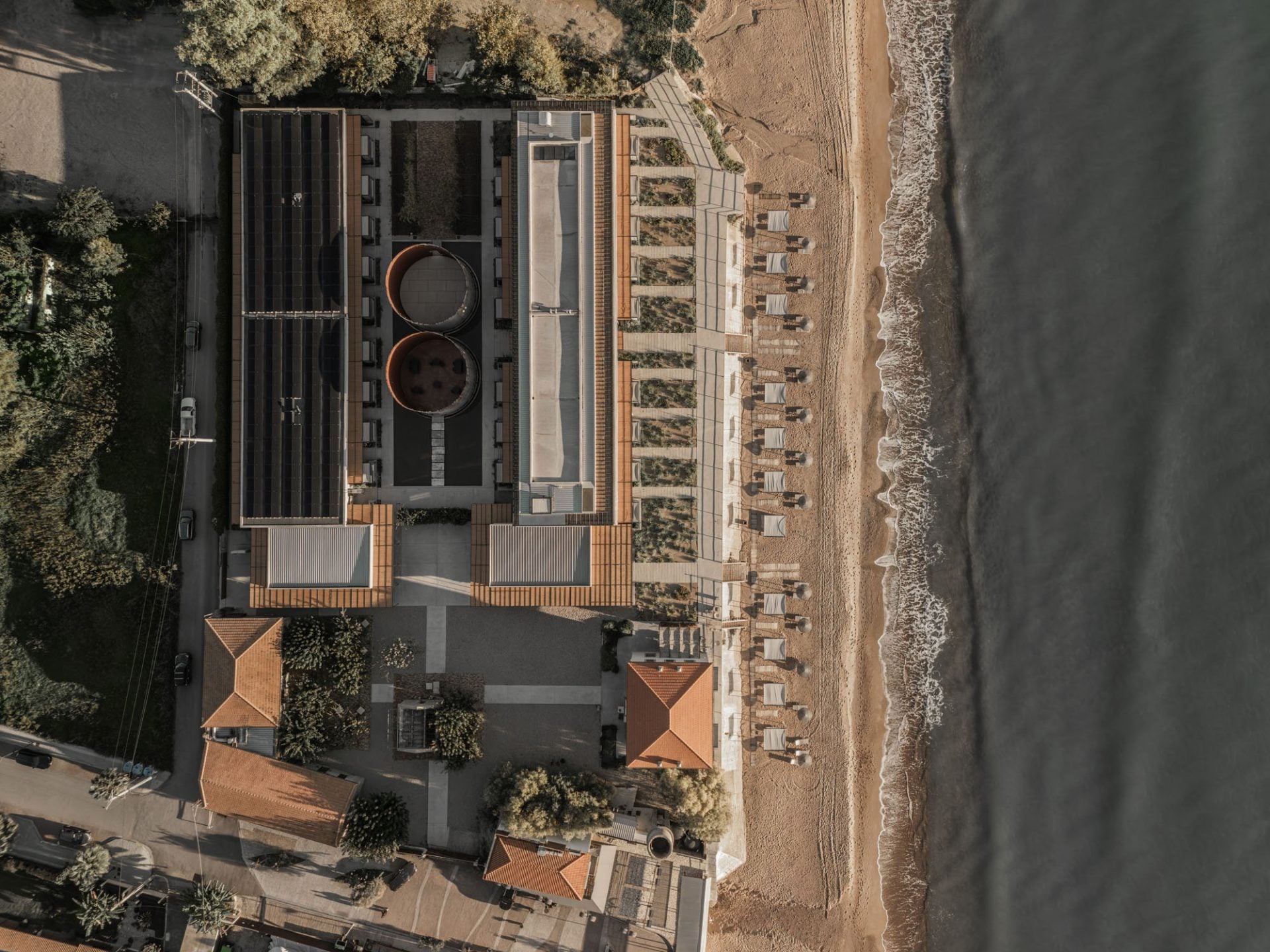
The wine tanks of the 1920s
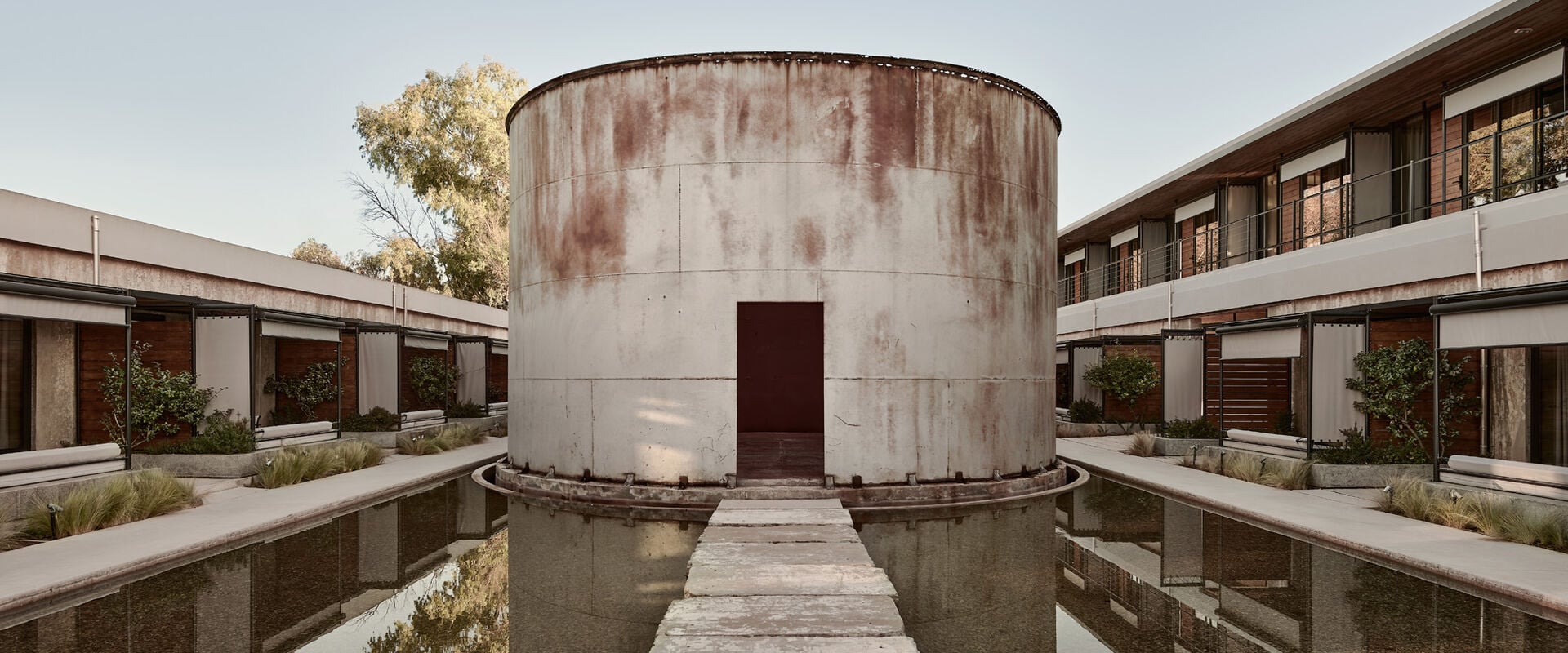
What today is Dexamenes Seaside Hotel in Kourouta, in the northwest Peloponnese, was originally built in the 1920s as an industrial winery.
The concrete tanks were part of the wider infrastructure that supported the agricultural economy of Western Greece. This coastline was not a summer destination; it was a working landscape connected to vineyards, currant and wine production, and international trade routes.
Wine was produced and stored in these tanks before being transported by sea to foreign markets.
The architecture followed pure function: massive concrete volumes positioned directly on the shoreline, designed for production, storage and direct export.
For decades, this winery was active. Eventually the industry faded, but the tanks remained – abandoned but strangely intact, like silent monuments to another era.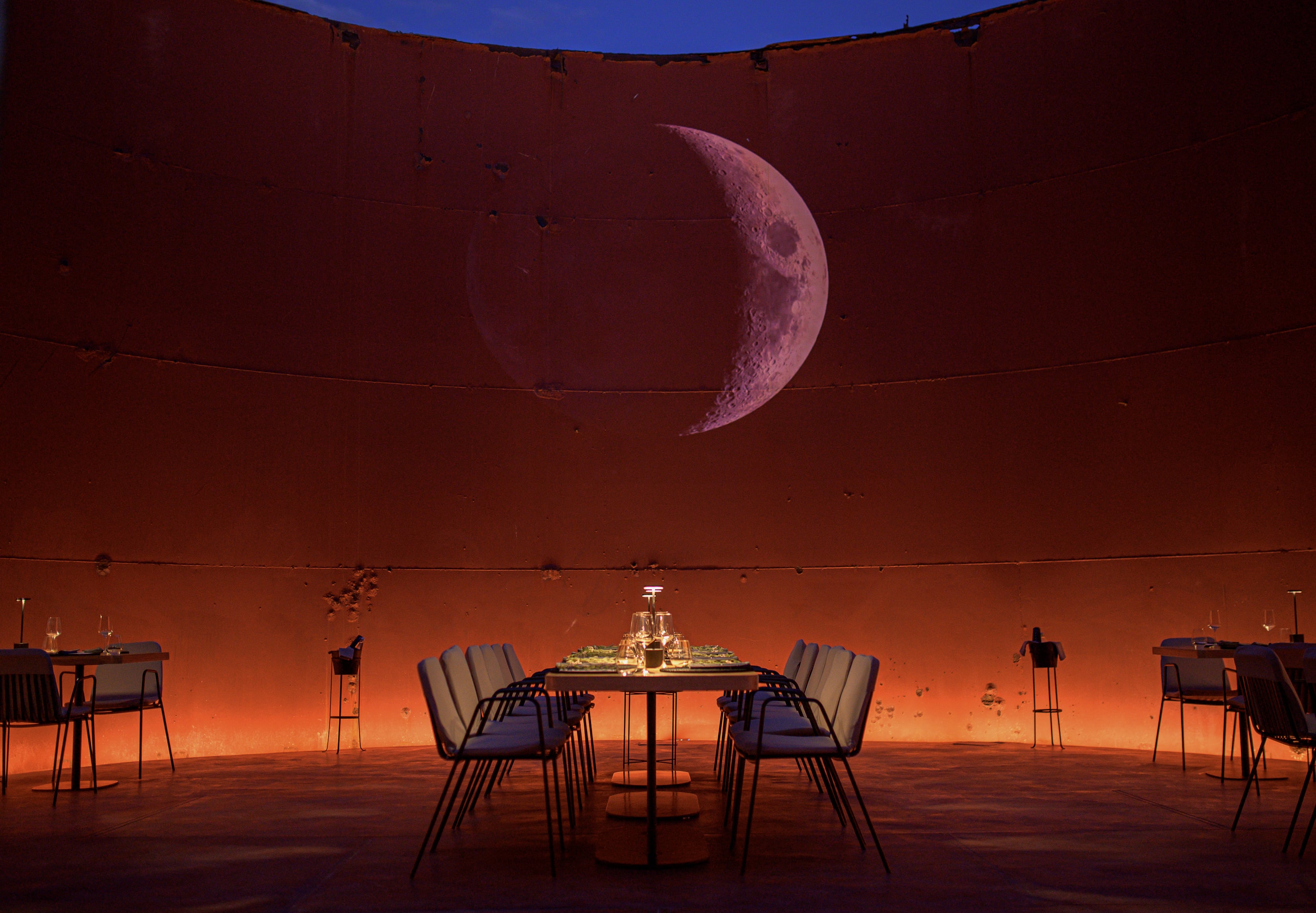
Architecture as a way of listening
So when the idea of transforming the old winery into Dexamenes Seaside Hotel emerged years later, the question was never how to redesign it.
The question was how to respect it.
Together with the architects of K-Studio, we approached the project as an act of reactivation rather than renovation. The goal was not to erase the industrial character of the site, but to allow it to continue telling its story.
The original wine tanks became guest rooms.
The concrete surfaces remained exposed. The proportions of the structures stayed the same. The sea – always present – remained the defining element of the experience.
In many ways, the architecture of Dexamenes is less about design and more about memory.
Guests are not simply staying in a hotel room. They are sleeping inside a piece of industrial heritage on the Ionian coast.
From industrial infrastructure to hospitality experience
What once functioned as infrastructure for wine production has gradually transformed into a place for contemporary hospitality and cultural experiences.
The former wine tanks of Dexamenes no longer store wine, yet wine remains at the centre of the story. Tastings and wine rituals reconnect visitors with the region’s long winemaking tradition and the agricultural history that shaped this coastline.
Some experiences unfold inside the tanks themselves. Through dex.Silo.01, one of the original 1920s wine silos becomes an immersive dining space – a creative gastronomic platform where curated dinners bring together food, art, fermentation and cultural narratives in a setting that still carries the memory of its industrial past.
Elsewhere on the site, private dinners transform former production spaces into intimate environments for gathering and hospitality.
At sunset, the experience shifts to the shoreline. The curated “Iliovasilema” dinners take place once a week by the sea, where guests share simple sea-to-table seafood while watching the sun disappear into the Ionian horizon.

These experiences are not designed as attractions added to the place. They emerge naturally from the identity of the site – from its architecture, its agricultural history and its connection to the surrounding landscape.
A living place that continues to evolve
Today, Dexamenes Seaside Hotel is no longer the mysterious abandoned structure I used to observe as a child from behind a concrete wall.
Yet every time I walk through the site, I still remember that same sense of curiosity.
Back then, the place felt unfinished.
In many ways, it still does – and that is part of its beauty.
Places with history are never truly complete. They continue to evolve, shaped by the people who inhabit them, even temporarily.
The tanks that once held thousands of litres of wine now hold something different: shared meals, conversations, quiet moments and encounters between people and place.
And in that sense, the story of Dexamenes is still being written – one experience at a time, by the sea.